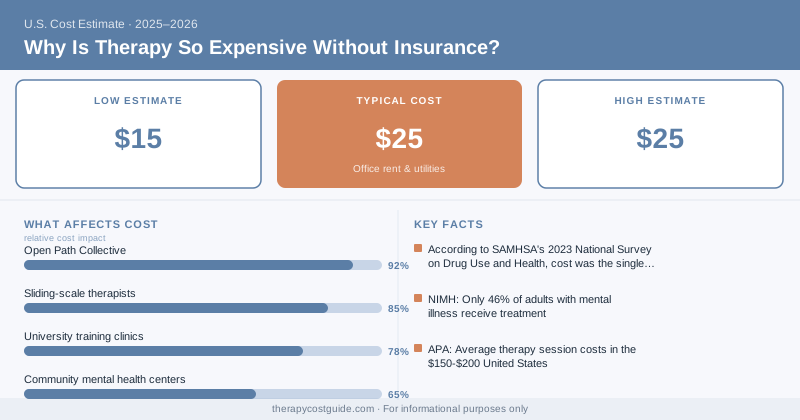
Why Is Therapy So Expensive Without Insurance?
{ if eq .Lang "zh" }{ else }{ end }You saw the number. $175 for fifty minutes. Maybe $250 in a big city. Your gut reaction was probably some version of “for talking?” — and that reaction is fair. But the price isn’t random, and it isn’t pure greed. It’s the sum of a lot of costs you never see.
Let’s pull back the curtain. According to SAMHSA’s 2023 National Survey on Drug Use and Health, cost was the single most-cited reason adults skipped needed mental health care — flagged by nearly 45% of people who knew they needed help but didn’t get it. So this question isn’t academic. It’s why a lot of people go without.
Where Your $175 Actually Goes
Here’s the thing most people miss: that hourly rate isn’t the therapist’s hourly wage. A full-time private-practice therapist sees maybe 20–25 clients a week, not 40, because the work is emotionally draining and the rest of the week goes to notes, billing, and admin no one pays them for.
| Where the Money Goes | Rough Share of Fee | What It Covers |
|---|---|---|
| Office rent & utilities | 15–25% | Private, soundproofed space |
| Self-employment + income tax | 25–35% | Therapists pay both halves of payroll tax |
| Liability insurance & licensing | 5–10% | Malpractice coverage, license renewals, CEUs |
| Unpaid admin time | 10–20% | Notes, billing, scheduling, no-shows |
| Student loan repayment | varies | Often $100K+ for a master’s or doctorate |
| Actual take-home pay | 25–35% | What the therapist keeps |
By the time you net it all out, that $175 session leaves the therapist with maybe $50–$70 in their pocket. Not nothing — but a long way from “$175 an hour for talking.”
The Training Behind the Chair
To sit across from you legally, a therapist needs a master’s or doctorate, plus 2,000–4,000 supervised clinical hours after graduation before full licensure. That’s years of low-paid or unpaid work on top of grad school.
The APA reports that the median student-loan debt for a psychology doctorate runs well into six figures. That debt has to be serviced out of the same fees you pay.
Why Insurance Doesn't Make It Cheaper for the Therapist
Insurers reimburse therapists at rates that are often lower than the cash price — sometimes $70–$110 per session — and they pay 30–90 days late, deny claims, and demand hours of paperwork. That’s why so many good therapists go cash-only or out-of-network. It’s not that they don’t want to help insured clients; it’s that the reimbursement math doesn’t cover their overhead. This is the quiet reason “covered” therapists can be so hard to find.So How Do You Pay Less?
Plenty of ways, and none of them mean settling for worse care.
- Open Path Collective — after a one-time $65 membership, sessions run $30–$80 with fully licensed therapists. The network passed 20,000+ therapists as of 2024.
- Sliding-scale therapists — many private practices set fees by income. You have to ask, but most won’t be offended. See sliding-scale therapy.
- University training clinics — supervised grad students, often $20–$60 a session.
- Community mental health centers — sliding down to $0 for low income.
- Group therapy — often a third of the price of individual sessions for the right concerns.
Our full rundown lives in how to find affordable therapy.
Frequently Asked Questions
Is therapy expensive everywhere in the US? No. Rates swing hard by metro area. A session that’s $250 in Manhattan might be $110 in a smaller Midwestern city. Telehealth has flattened this somewhat, since you can sometimes see a therapist licensed in your state but living somewhere cheaper.
Why is therapy more expensive than a regular doctor’s copay? Often it isn’t — if your therapist is in-network. The sting comes when therapists don’t take insurance, so you pay the full cash rate instead of a copay. Confirm network status with our does insurance cover therapy guide.
Are psychiatrists more expensive than therapists? Generally yes. Psychiatrists are medical doctors who prescribe medication, and their hourly rates run higher. Many people see a lower-cost therapist for talk therapy and a psychiatrist only briefly for meds.
Does paying more mean better therapy? Not reliably. Fit between you and your therapist predicts outcomes far better than price. A great $40 grad-clinic therapist can help you more than a mediocre $250 one.
Why do online subscriptions seem cheaper? Apps like BetterHelp spread a monthly fee across messaging plus shorter sessions, which lowers the headline price. The trade-off is less live time and providers you don’t choose as carefully.
Will therapy costs go down over time? Possibly. Expanded telehealth, parity enforcement, and a growing supply of licensed therapists are slowly pushing prices down in some markets. But demand is rising fast too, so don’t wait for prices to drop before getting help.
{ if eq .Lang "zh" }Disclaimer: TherapyCostGuide provides cost information for educational purposes only. We are not a mental health provider and do not offer clinical advice or treatment. Cost ranges are based on national survey data and vary significantly by location, provider credentials, practice setting, and insurance plan. Always consult a licensed mental health professional for treatment decisions. If you are in crisis, call or text 988 (Suicide & Crisis Lifeline) or go to your nearest emergency room.