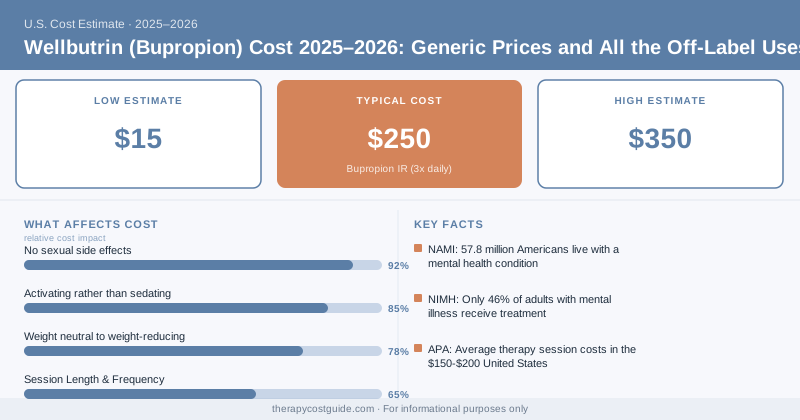
Wellbutrin (Bupropion) Cost 2025–2026: Generic Prices and All the Off-Label Uses
{ if eq .Lang "zh" }{ else }{ end }What if there were a generic antidepressant that also helps people quit smoking, can be used for ADHD, causes less sexual dysfunction than SSRIs, and tends to cause weight loss rather than weight gain? That medication exists — and at $15–$50/month generic, it might be the most underappreciated drug in psychiatry.
That’s bupropion (Wellbutrin). Here’s what it costs and what to know about each of its uses.
Bupropion Cost: Generic vs. Brand
| Formulation | Generic/Month | Brand | Brand/Month |
|---|---|---|---|
| Bupropion IR (3x daily) | $15–$30 | Wellbutrin | $250–$350 |
| Bupropion SR (2x daily) | $20–$40 | Wellbutrin SR | $250–$350 |
| Bupropion XL (1x daily) | $20–$50 | Wellbutrin XL | $300–$400 |
| Bupropion for smoking (SR form) | $25–$50 | Zyban | $200–$300 |
Wellbutrin XL (the brand) at 300mg costs $300–$400/month. Generic bupropion XL at the same dose costs $20–$50. There’s no clinical reason to choose the brand over the generic for most patients.
With insurance, generic bupropion is typically $5–$15/month as a Tier 1 medication.
Bupropion for Depression
Bupropion is an NDRI — it inhibits reuptake of norepinephrine and dopamine, rather than serotonin like SSRIs do. This different mechanism makes it complementary to SSRIs in several ways:
- No sexual side effects: Unlike SSRIs (which cause sexual dysfunction in 30–40% of patients), bupropion has minimal sexual side effects. It’s sometimes added to SSRI therapy specifically to counteract SSRI-induced sexual dysfunction.
- Activating rather than sedating: Bupropion tends to increase energy. This makes it useful for depression with prominent fatigue or “flattening.”
- Weight neutral to weight-reducing: Most antidepressants cause weight gain over time. Bupropion typically doesn’t.
The flip side: it can worsen anxiety in some patients and has a slightly higher seizure risk at high doses (above 450mg/day). It’s contraindicated in patients with seizure disorders, active eating disorders (bulimia/anorexia), or abrupt alcohol or benzodiazepine withdrawal.
Bupropion for Smoking Cessation
Bupropion SR (marketed as Zyban when prescribed for smoking) is FDA-approved for smoking cessation — an unusual feat for an antidepressant. It’s thought to work through dopaminergic effects that reduce nicotine cravings.
Compared to varenicline (Chantix), bupropion has slightly lower quit rates but a better-established safety profile. Compared to nicotine replacement therapy alone, it’s roughly equivalent.
A standard smoking cessation course: start bupropion 1–2 weeks before your quit date, continue for 7–12 weeks. Total medication cost: $30–$80 for a 90-day course of generic bupropion SR.
Zyban (brand name) runs $200–$300/month. Generic bupropion SR is the exact same drug — there’s no reason to pay the Zyban premium.
Bupropion for ADHD (Off-Label)
Bupropion isn’t FDA-approved for ADHD, but it’s one of the most-used off-label treatments for ADHD in adults — particularly when:
- Stimulants are contraindicated (cardiovascular issues, history of substance use disorder)
- Stimulants are unavailable due to shortage or telehealth prescribing restrictions
- ADHD co-occurs with depression (bupropion addresses both)
- The patient can’t tolerate stimulant side effects
The evidence base for ADHD is real but modest compared to stimulants. A 2006 systematic review in the American Journal of Psychiatry found bupropion significantly better than placebo for ADHD, with effect sizes comparable to some non-stimulant options like atomoxetine — but generally below stimulants.
For telehealth patients: bupropion is not a controlled substance, meaning any telehealth provider can prescribe it without in-person visit requirements. This makes it a practical first-line option when stimulants aren’t accessible.
Bupropion Off-Label for ADHD: What to Expect
Response rate: approximately 40–60% achieve meaningful improvement. Onset: 2–4 weeks. Best doses for ADHD: typically bupropion XL 150–300mg once daily. Not as effective as Adderall or Vyvanse for most people, but a real option when stimulants aren’t appropriate or available.Bupropion + SSRI Combinations
One of bupropion’s most common uses isn’t as a standalone treatment but as an add-on to SSRI therapy. Adding bupropion to an SSRI:
- Can augment antidepressant response (useful in partial responders)
- Often reverses SSRI-induced sexual dysfunction
- Can improve energy and motivation that SSRIs may blunt
This combination (SSRI + bupropion) is one of the most commonly prescribed antidepressant combos in the U.S. The combined generic cost is still low: $20–$70/month for both medications.
Insurance Coverage
Bupropion is universally covered by insurance as a generic, typically Tier 1. For smoking cessation, many insurers cover bupropion SR fully under ACA preventive care mandates (smoking cessation is a preventive service). You may pay $0 for bupropion SR when prescribed specifically for smoking cessation under some plans.
Bottom Line
Generic bupropion costs $15–$50/month — one of the most cost-effective options in psychopharmacology. It treats depression, aids smoking cessation, and provides ADHD benefit off-label, with a side effect profile that many patients find preferable to SSRIs (especially regarding sexual side effects and weight). Not the right medication for everyone — anxiety disorders and seizure risk require caution — but its versatility and cost make it underappreciated.
{ if eq .Lang "zh" }Disclaimer: TherapyCostGuide provides cost information for educational purposes only. We are not a mental health provider and do not offer clinical advice or treatment. Cost ranges are based on national survey data and vary significantly by location, provider credentials, practice setting, and insurance plan. Always consult a licensed mental health professional for treatment decisions. If you are in crisis, call or text 988 (Suicide & Crisis Lifeline) or go to your nearest emergency room.