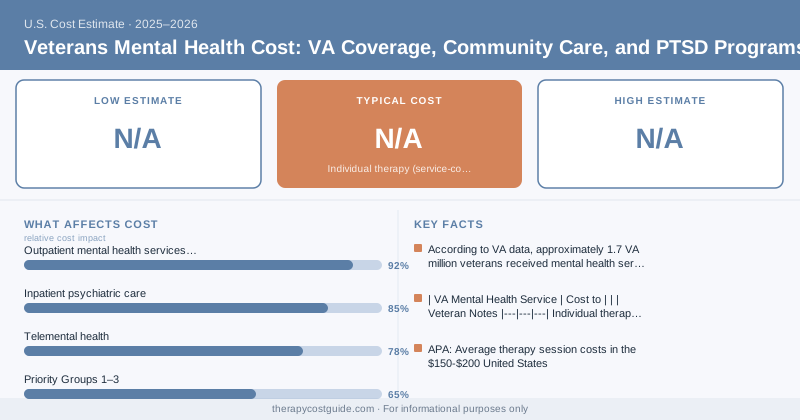
Veterans Mental Health Cost: VA Coverage, Community Care, and PTSD Programs
{ if eq .Lang "zh" }{ else }{ end }Most veterans with mental health needs pay nothing for VA mental health care. That’s the headline. The harder reality is that VA wait times, geographic barriers, and bureaucratic complexity mean “free” doesn’t always mean “accessible.” The Mission Act changed that — here’s how to use the full system.
According to VA data, approximately 1.7 million veterans received VA mental health services in fiscal year 2023 — but the VA estimates 30–40% of veterans with mental health conditions never access VA care. Veteran suicide rates remain significantly higher than the general population, with VA’s 2024 report showing 17.6 veteran suicides per day.
VA Mental Health Coverage: What’s Included
Enrolled veterans get comprehensive mental health benefits through VA, typically at no out-of-pocket cost:
Outpatient mental health services (free for most veterans):
- Individual therapy (CBT, CPT, PE — see below)
- Group therapy
- Psychiatric medication management
- Substance use disorder treatment
- Psychoeducation programs
Inpatient psychiatric care: Covered with no copay for service-connected conditions; minimal copays for non-service-connected care.
Telemental health: VA has an extensive telehealth program. Veterans can receive therapy via video from home.
| VA Mental Health Service | Cost to Veteran | Notes |
|---|---|---|
| Individual therapy (service-connected) | $0 | Free for eligible veterans |
| Individual therapy (non-service-connected) | $0–$50/visit | Copay scale based on priority group |
| Psychiatric medication | $0–$11/month | Priority group dependent |
| Inpatient psychiatric (service-connected) | $0 | |
| Community care provider (via VA auth) | $0–$50/visit | Same copay as VA care |
| Vet Center counseling | $0 | No enrollment required |
VA Priority Groups and Copays
VA care is organized into 8 priority groups, with groups 1–7 having different copay structures:
- Priority Groups 1–3 (combat veterans, Purple Heart recipients, service-connected 50%+ disability): No copays for mental health care
- Priority Groups 4–6: Modest copays: $15–$50/outpatient visit
- Priority Groups 7–8: Means-tested; higher copays but still far below private market rates
Mental health care copays are the same as primary care copays — generally $15–$50 per visit depending on your priority group.
Gold-Standard PTSD Treatments at VA: Free
VA PTSD programs offer evidence-based treatments that many private practices don’t even offer:
Cognitive Processing Therapy (CPT): 12-session structured therapy for PTSD; free through VA. One of the most rigorously studied PTSD treatments, with remission rates of 50–60%.
Prolonged Exposure (PE): Another 12-15 session first-line PTSD treatment; free through VA.
Written Exposure Therapy (WET): Newer, 5-session protocol with comparable outcomes to PE; increasingly available at VA.
EMDR: Available at many VA facilities for trauma.
These are the gold-standard PTSD treatments — identical to what would cost $2,000–$4,000 out of pocket in private practice.
The Mission Act: Community Care When VA Can’t Provide
The VA MISSION Act (2018) significantly expanded veterans’ ability to receive care from non-VA community providers at VA expense when:
- VA can’t provide the service within specified access standards (30 minutes for primary/mental health, 60 minutes for specialty; or 20 days wait time)
- VA determines it’s in the veteran’s best interest
- The veteran lives in a highly rural area
- A VA facility doesn’t have the needed service
How to use it:
- Contact your VA patient aligned care team (PACT) or mental health clinic
- Request a Community Care referral, citing access standard issues
- Once authorized, you can see a community provider at VA rates (your copay, VA pays the rest)
Vet Centers: Mental Health Care Without VA Enrollment
Vet Centers are separate from VA medical centers — they’re community-based counseling centers specifically for combat veterans, sexual trauma survivors, and their families. They don’t require VA enrollment or a service-connected disability rating.
Services are free and include:
- Individual and group counseling
- PTSD treatment
- Readjustment counseling
- MST (military sexual trauma) counseling
- Family counseling
Find your nearest Vet Center at va.gov/find-locations or call 1-877-WAR-VETS (1-877-927-8387), which is a 24/7 line staffed by combat veterans.
VA Mental Health Crisis Services
Veterans Crisis Line: Dial 988, press 1. Available 24/7, staffed by VA responders.
Crisis Text: Text 838255.
Online chat: veteranscrisisline.net
Private Insurance + VA: Coordinating Coverage
Veterans often have both VA benefits and private insurance (from employment). Using both strategically can maximize access:
- VA provides care for service-connected conditions at no cost
- Private insurance can cover non-VA providers you prefer or when VA wait times are unacceptable
- Some veterans use private insurance for therapy with a therapist they chose, while getting medications through VA (where costs are lower)
Disclaimer: TherapyCostGuide provides cost information for educational purposes only. We are not a mental health provider and do not offer clinical advice or treatment. Cost ranges are based on national survey data and vary significantly by location, provider credentials, practice setting, and insurance plan. Always consult a licensed mental health professional for treatment decisions. If you are in crisis, call or text 988 (Suicide & Crisis Lifeline) or go to your nearest emergency room.