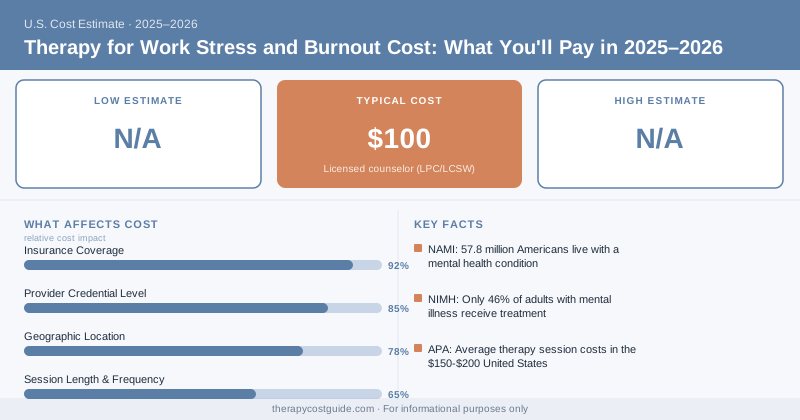
Therapy for Work Stress and Burnout Cost: What You'll Pay in 2025–2026
{ if eq .Lang "zh" }{ else }{ end }You’re dreading Monday by Saturday afternoon. Your sleep is shot, your fuse is short, and the work you used to like now feels like wading through wet cement. That’s burnout — and therapy for it usually costs $100 to $250 per session out of pocket.
The good news? You probably won’t need years of it. Most people working through job-related stress and burnout see real change in a focused stretch of sessions, which keeps the total cost lower than you’d expect.
What Burnout Therapy Costs
Burnout isn’t a separate billing category. You’re paying standard talk-therapy rates, and the price depends on who you see and where.
| Setting | Typical Session Fee | Notes |
|---|---|---|
| Licensed counselor (LPC/LCSW) | $100 – $180 | Most common, handles stress well |
| Psychologist (PhD/PsyD) | $150 – $250 | Higher rate, useful if burnout overlaps depression |
| Online therapy subscription | $260 – $400/mo | Weekly sessions plus messaging |
| Employee Assistance Program (EAP) | $0 for 3–8 sessions | Free through many employers |
| Sliding scale clinic | $30 – $80 | Income-based, often a waitlist |
A typical course of burnout-focused therapy runs 8 to 16 sessions. At an average of $150 a session, that’s roughly $1,200 to $2,400 if you pay full freight — but most people pay far less once insurance or an EAP enters the picture.
Key Takeaway
Burnout therapy is short-term for most people — 8 to 16 sessions. Check your employer’s EAP first; it often covers 3 to 8 sessions at no cost before you spend a dime.Why Burnout Is So Common Right Now
This isn’t just you feeling soft. The American Psychological Association’s 2023 Work in America survey found that 57% of workers reported experiencing negative impacts from work-related stress, including emotional exhaustion and lack of motivation — the textbook markers of burnout. The World Health Organization classifies burnout as an “occupational phenomenon” tied directly to chronic workplace stress.
And it costs real money to ignore. SAMHSA estimates that serious mental illness costs the U.S. economy over $190 billion in lost earnings each year, much of it driven by untreated stress and depression that started at work.
What Treatment Actually Looks Like
Most therapists treat burnout with cognitive behavioral techniques — identifying the thought patterns and boundary problems keeping you stuck, then rebuilding them. If you want a sense of the approach and pricing, CBT is the workhorse here.
Sessions usually focus on:
- Boundary setting — learning to say no without guilt
- Cognitive reframing — challenging the “if I slow down, I’ll fail” stories
- Recovery routines — actual rest, not doom-scrolling on the couch
- Career clarity — sometimes the job really is the problem
Standard weekly individual therapy is the typical format. Some people add a stress-management group for extra support and lower cost.
Cutting the Cost
Start with your employer. Many companies offer an EAP that covers several free sessions — and it’s confidential, despite what people assume. After that:
- Use insurance. If burnout tips into a diagnosable condition like an adjustment disorder, insurance often covers it.
- Ask about sliding scale rates if you’re paying cash.
- Compare your full out-of-pocket math under therapy without insurance before committing.
Frequently Asked Questions
Does insurance cover therapy for burnout? Often, yes — but burnout itself isn’t a billable diagnosis. Your therapist will typically bill under a related diagnosis like an adjustment disorder, anxiety, or depression. If you meet criteria for one of those, insurance usually applies and you’ll pay a copay of $20–$60 per session instead of the full rate.
How many sessions will I need? Most people working specifically on work stress and burnout see meaningful improvement in 8 to 16 sessions. If the burnout is layered on top of long-standing depression or anxiety, it can run longer.
Is an EAP really confidential? Yes. Your employer pays for the program but doesn’t get told who used it or what was discussed. They only see aggregate usage numbers. EAPs are one of the most underused free benefits out there.
{ if eq .Lang "zh" }Disclaimer: TherapyCostGuide provides cost information for educational purposes only. We are not a mental health provider and do not offer clinical advice or treatment. Cost ranges are based on national survey data and vary significantly by location, provider credentials, practice setting, and insurance plan. Always consult a licensed mental health professional for treatment decisions. If you are in crisis, call or text 988 (Suicide & Crisis Lifeline) or go to your nearest emergency room.