Therapy for Teens Cost 2025–2026: What Parents Actually Pay
{ if eq .Lang "zh" }{ else }{ end }Your teenager’s school counselor pulled you aside last week: “I think outside therapy would really help.” Now you’re staring at a list of local therapists with no idea what any of this actually costs, or whether your insurance will help.
Here’s the real number, broken down by how you access it.
Teen Therapy Costs by Access Point
| Access Point | Typical Cost |
|---|---|
| Private-pay individual therapist | $100 – $250/session |
| In-network therapist with insurance | $20 – $50 copay |
| School-based counseling (through district) | Free (limited scope/session count) |
| Teen-focused online therapy platform | $260 – $400/month |
| Community mental health center | $0 – $60/session, sliding scale |
| University training clinic | $30 – $60/session |
Why School Counseling Isn’t Enough — And Why Parents Get Referred Out
School counselors typically handle academic planning, short-term crisis support, and light check-ins — not ongoing clinical treatment for depression, anxiety, or trauma. When a counselor refers you “outside,” it’s because your teen likely needs a level of consistent, clinical care that a school’s limited counseling staff and caseload can’t provide. That referral isn’t a sign of severity necessarily — it’s a structural limit of what schools are staffed to do.
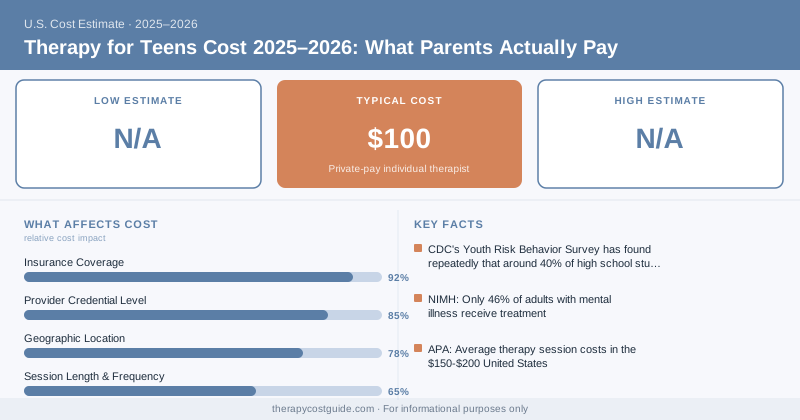
CDC’s Youth Risk Behavior Survey has repeatedly found that around 40% of high school students report persistent feelings of sadness or hopelessness — a scale that far outpaces what school mental health staff, often serving hundreds or thousands of students each, can address one-on-one.
Insurance Coverage for Teens
Most insurance plans cover adolescent mental health care similarly to adult care — an in-network copay of $20–$50 per session is typical. The bigger challenge for many families isn’t cost, it’s finding an in-network child/adolescent specialist with availability; waitlists of 4–8 weeks are common in many areas.
What Confidentiality Actually Looks Like for Minors
Therapist ethics codes generally protect session content as confidential, even from parents, with specific exceptions (safety risk, abuse disclosure, or state law depending on age and jurisdiction). As the parent, you’ll typically get information about attendance, general treatment progress, and safety concerns — not a transcript of what your teen said. This confidentiality boundary is intentional: teens are far more likely to be honest in therapy if they trust the room is private, and that honesty is part of what makes the treatment work.Online Therapy for Teens
Several platforms now specialize in teen therapy specifically, matching adolescents with therapists trained in youth-specific issues. Pricing runs similarly to adult online therapy platforms — roughly $65–$100/week, billed monthly at $260–$400. This can be a lower-friction option for teens uncomfortable with in-person sessions or in areas with long waitlists for in-person adolescent specialists.
What Drives the Price Up or Down
- Specialization matters. A therapist trained specifically in adolescent DBT or eating disorder treatment for teens may charge a premium over a general family therapist.
- Location matters. Urban markets with higher cost of living run $150–$250/session; rural and suburban markets often run $80–$150.
- Frequency matters. Weekly sessions are standard; biweekly stretches the total course longer but reduces monthly spend.
Bottom Line
Expect $100–$250 per session out of pocket, or a $20–$50 copay with in-network insurance. Teen-focused online platforms ($260–$400/month) and community mental health centers (often sliding scale) are the main lower-cost alternatives if in-network availability is limited.
{ if eq .Lang "zh" }Disclaimer: TherapyCostGuide provides cost information for educational purposes only. We are not a mental health provider and do not offer clinical advice or treatment. Cost ranges are based on national survey data and vary significantly by location, provider credentials, practice setting, and insurance plan. Always consult a licensed mental health professional for treatment decisions. If you are in crisis, call or text 988 (Suicide & Crisis Lifeline) or go to your nearest emergency room.