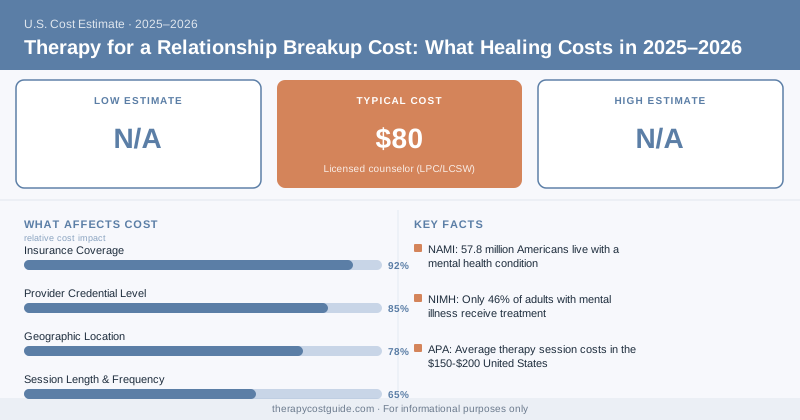
Therapy for a Relationship Breakup Cost: What Healing Costs in 2025–2026
{ if eq .Lang "zh" }{ else }{ end }A breakup can feel physically painful — and that’s not in your head. Brain-imaging research has shown that the end of a serious relationship lights up some of the same regions involved in physical pain and craving. So no, you’re not being dramatic. And therapy to get through it costs about $80 to $250 per session.
The total bill is usually modest, because breakup recovery is typically short-term work. Here’s what to expect.
The Price of Getting Over It
| Option | Typical Cost | Notes |
|---|---|---|
| Licensed counselor (LPC/LCSW) | $80 – $160/session | Most affordable individual option |
| Psychologist (PhD/PsyD) | $150 – $250/session | Higher rate, deeper specialization |
| Online therapy | $260 – $400/month | Weekly sessions plus messaging |
| Group therapy (breakup/divorce) | $30 – $80/session | Cheapest, shared support |
| Sliding scale | $30 – $80/session | Income-based |
A focused course of breakup therapy is often 6 to 12 sessions. At roughly $130 each, that’s $780 to $1,560 out of pocket — less if you use insurance, a group format, or a sliding scale.
Key Takeaway
Breakup recovery is usually short-term. Group therapy for divorce or breakups runs as low as $30 a session and adds something individual therapy can’t: a room full of people who get exactly what you’re going through.Why It Hurts This Much
Grief over a relationship is real grief, and the body treats it that way — disrupted sleep, no appetite, trouble concentrating. The American Psychological Association notes that major relationship transitions, including divorce, rank among the most significant life stressors people face, with measurable effects on mental and physical health.
It’s also widespread. According to CDC data, the U.S. divorce rate has hovered around 2.4 per 1,000 people in recent years, and that doesn’t even count the breakups of long-term unmarried partners. Plenty of people are quietly going through exactly this.
What Therapy Does for a Breakup
A good therapist won’t just nod sympathetically. They’ll help you:
- Process the grief without getting stuck in it
- Untangle the story — what was real, what you’re idealizing, what you learned
- Rebuild identity when “we” has to become “I” again
- Spot patterns so the next relationship isn’t a rerun
Some people find that a breakup surfaces older patterns worth deeper work, in which case standard individual therapy extends beyond the initial crisis. Approaches like CBT help with the obsessive rumination — the replaying-every-text loop.
If the breakup is a divorce involving an ex you’ll co-parent with, some couples briefly use couples therapy to part more cleanly, not to reconcile.
Keeping It Affordable
- Use insurance. Breakup distress that meets criteria for an adjustment disorder is usually covered.
- Try group. A group therapy format for divorce or breakups is cheaper and surprisingly powerful.
- Go online if your schedule’s a mess — see online vs. in-person costs.
- Ask about sliding scale if you’re paying cash.
Frequently Asked Questions
How long does breakup therapy take? For most people, 6 to 12 sessions is enough to move from raw to functional. If the breakup reopened older wounds — childhood attachment issues, repeated relationship patterns — therapy may run longer, but that’s optional deeper work, not a requirement.
Is a breakup “serious enough” to justify therapy? Yes. You don’t need to justify it. Relationship loss is one of the top-ranked life stressors, and seeking support early often shortens how long the pain lasts. You wouldn’t tough out a broken arm to prove you’re strong.
Should I do individual or group therapy after a breakup? Individual therapy gives you private, tailored attention. Group therapy is cheaper and offers the validation of people in the same boat. Many people do well combining them — or starting with group and adding individual sessions if needed.
{ if eq .Lang "zh" }Disclaimer: TherapyCostGuide provides cost information for educational purposes only. We are not a mental health provider and do not offer clinical advice or treatment. Cost ranges are based on national survey data and vary significantly by location, provider credentials, practice setting, and insurance plan. Always consult a licensed mental health professional for treatment decisions. If you are in crisis, call or text 988 (Suicide & Crisis Lifeline) or go to your nearest emergency room.