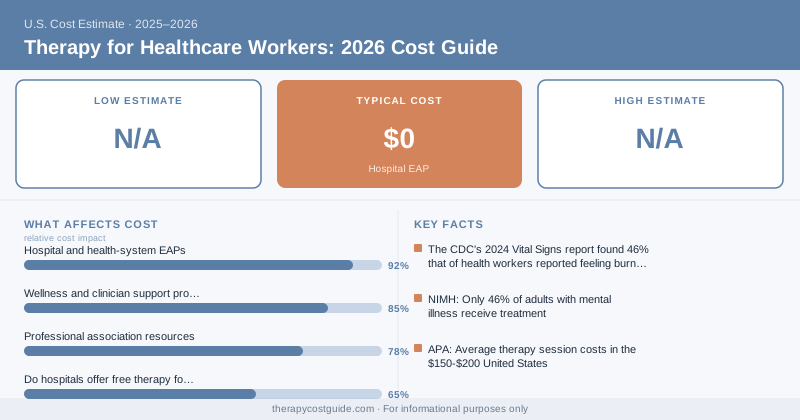
Therapy for Healthcare Workers: 2026 Cost Guide
{ if eq .Lang "zh" }{ else }{ end }Burnout isn’t a buzzword in healthcare; it’s an epidemic with numbers behind it. The CDC’s 2024 Vital Signs report found that 46% of health workers reported feeling burned out often or very often in 2022, up from 32% in 2018. If you spend your shifts caring for everyone else, the question is what your own therapy costs, and how to make it affordable.
You take care of patients all day. Here’s how to take care of the bill.
Where to Look Before Paying Out of Pocket
Healthcare workers usually have more free options than they realize:
Hospital and health-system EAPs — Almost every large employer offers an Employee Assistance Program with 3 to 8 free, confidential sessions per year. These are the fastest no-cost entry point.
Wellness and clinician support programs — Many systems launched dedicated mental health programs after 2020. These can include free therapy sessions, peer support, and crisis lines specifically for staff.
Professional association resources — Nursing, physician, and allied-health associations often maintain low-cost or free counseling referrals for members.
| Channel | Typical Cost | Notes |
|---|---|---|
| Hospital EAP | $0 | 3–8 confidential sessions/year |
| Clinician wellness program | $0 – $40 | Employer-sponsored, post-2020 expansion |
| Insurance (in-network) | $15 – $50 copay | After deductible |
| Private burnout/trauma therapy | $130 – $250 | Out of pocket, specialized |
| Online therapy subscription | $60 – $100/week | Flexible scheduling for shift workers |
Key Takeaway
Most healthcare workers can access 3 to 8 free EAP sessions through their employer, plus expanded clinician wellness programs. For ongoing care, in-network insurance copays run $15 to $50, while private specialized burnout therapy costs $130 to $250 per session.The Shift-Work Problem
Standard 9-to-5 therapy hours don’t work when you’re pulling 12-hour shifts or rotating nights. That’s where online and asynchronous therapy shine. You can message a therapist between rounds or do a video session at 7 a.m. after a night shift.
Online subscriptions typically run $60 to $100 a week, which can beat per-session rates if you’d otherwise pay full price. Our online therapy vs in-person cost comparison shows when each one wins.
Using Your Insurance Smartly
Healthcare workers are often well-insured, but high-deductible plans are common. Until you hit the deductible, you may pay the full negotiated rate per visit. After that, copays are usually modest. Read does insurance cover therapy to confirm your mental health benefits.
If you’re a per-diem, travel, or contract worker without solid coverage, the cash-pay route matters. See therapy cost without insurance for realistic numbers, and look into sliding scale therapy cost clinics that adjust fees to income.
Practical Ways to Cut Costs
- Use your EAP sessions first; they don’t count against insurance.
- Ask HR about clinician-specific wellness benefits, which are often underused.
- Choose online therapy if your schedule rotates, to avoid missed-session fees.
- For peer connection with people who get it, group therapy cost is the lowest-cost ongoing option.
Frequently Asked Questions
Do hospitals offer free therapy for staff? Most large health systems offer an Employee Assistance Program with 3 to 8 free, confidential counseling sessions per year. Many also added dedicated clinician wellness programs after 2020 that include free therapy or peer support.
How much does burnout therapy cost for nurses and doctors? Specialized burnout and trauma therapy runs $130 to $250 per session out of pocket. With in-network insurance, expect a $15 to $50 copay after meeting your deductible.
Can I do therapy around my shift schedule? Yes. Online and asynchronous therapy platforms let you message or video-chat outside standard hours, which suits 12-hour shifts and nights. Subscriptions typically cost $60 to $100 per week.
{ if eq .Lang "zh" }Disclaimer: TherapyCostGuide provides cost information for educational purposes only. We are not a mental health provider and do not offer clinical advice or treatment. Cost ranges are based on national survey data and vary significantly by location, provider credentials, practice setting, and insurance plan. Always consult a licensed mental health professional for treatment decisions. If you are in crisis, call or text 988 (Suicide & Crisis Lifeline) or go to your nearest emergency room.