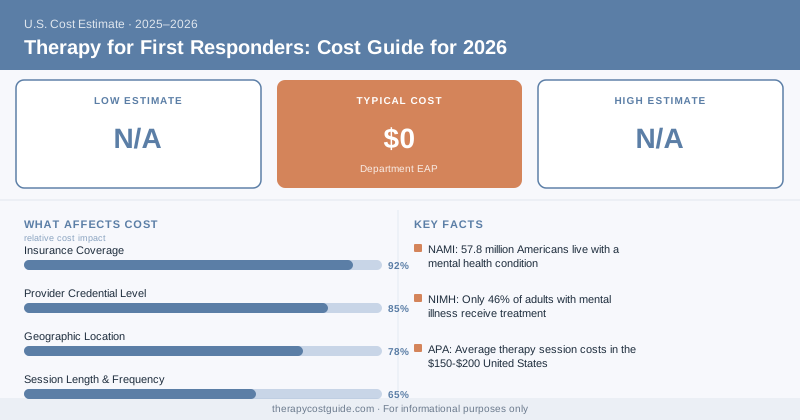
Therapy for First Responders: Cost Guide for 2026
{ if eq .Lang "zh" }{ else }{ end }In 2017, more police officers and firefighters died by suicide than in the line of duty, according to data compiled by the Ruderman Family Foundation. That statistic reshaped how departments think about mental health, and it’s a big reason so many therapy resources for first responders are now free or heavily subsidized.
If you’re a firefighter, police officer, paramedic, EMT, or dispatcher, here’s what therapy actually costs and where the no-cost options are hiding.
Free and Low-Cost Channels First
Before you pay a dime out of pocket, check these:
Employee Assistance Programs (EAPs) — Most departments and municipalities offer an EAP that provides 3 to 8 free counseling sessions per issue, per year. These are confidential and don’t touch your insurance.
Peer support and chaplain programs — Many departments run trained peer support teams at no cost. They’re not a replacement for clinical therapy, but they’re a free first step.
First responder nonprofits — Organizations like the Code Green Campaign and various union-backed funds offer free or subsidized counseling, sometimes with therapists trained specifically in tactical and trauma work.
| Channel | Typical Cost | Notes |
|---|---|---|
| Department EAP | $0 | Usually 3–8 sessions per year, confidential |
| Peer support / chaplain | $0 | Non-clinical first step |
| First responder nonprofit | $0 – $50 | Trauma-trained, sometimes subsidized |
| Insurance (in-network) | $20 – $60 copay | After deductible |
| Specialized trauma therapy (private) | $120 – $250 | EMDR, PTSD-focused, out of pocket |
Key Takeaway
Start with your department’s EAP, which typically covers 3 to 8 sessions for free and confidentially. For ongoing PTSD or trauma work, in-network insurance brings sessions to a $20 to $60 copay, while specialized private trauma therapy runs $120 to $250 per session.Why Trauma Therapy Costs More
First responders often need more than general talk therapy. Treatments like EMDR (Eye Movement Desensitization and Reprocessing) and prolonged exposure therapy for PTSD require specialized training, and those therapists charge a premium.
A specialized trauma session can run $120 to $250 out of pocket. The National Institute of Mental Health notes that PTSD affects about 3.6% of U.S. adults in a given year, but rates among first responders run significantly higher, which is exactly why this specialized care exists.
If you’re comparing approaches, our cbt cost guide covers cognitive behavioral therapy, which is frequently used alongside trauma treatment.
Making Insurance Work for You
Your department health plan covers mental health as an essential benefit. The key is finding an in-network therapist who understands first responder culture, which can be a short list in some areas.
Tele-mental health has widened that pool. You can now work with a first-responder-specialized therapist in another city. See how the costs compare in online therapy vs in-person cost.
If you’re between jobs or your plan has a high deductible, therapy cost without insurance lays out the cash-pay numbers.
Practical Cost-Saving Steps
- Exhaust your EAP sessions before paying out of pocket.
- Ask your union rep about counseling benefits; many maintain funds members don’t know about.
- Use telehealth to reach trauma specialists outside your immediate area.
- For ongoing peer connection, group therapy cost is far cheaper than weekly individual sessions.
Frequently Asked Questions
Is therapy free for first responders? Often the first few sessions are. Department EAPs typically cover 3 to 8 free, confidential counseling sessions per year, and peer support and chaplain programs cost nothing. First responder nonprofits also offer free or subsidized trauma-trained therapists.
How much does PTSD or trauma therapy cost for first responders? Specialized treatments like EMDR and prolonged exposure run $120 to $250 per session out of pocket. With in-network insurance, your copay usually drops to $20 to $60 per visit after the deductible.
Will seeking therapy affect my job or certification? In most cases, no. EAP and therapy records are confidential and separate from your personnel file, protected under HIPAA. A diagnosis by itself generally cannot revoke certification, though you should review your specific department and state policies.
{ if eq .Lang "zh" }Disclaimer: TherapyCostGuide provides cost information for educational purposes only. We are not a mental health provider and do not offer clinical advice or treatment. Cost ranges are based on national survey data and vary significantly by location, provider credentials, practice setting, and insurance plan. Always consult a licensed mental health professional for treatment decisions. If you are in crisis, call or text 988 (Suicide & Crisis Lifeline) or go to your nearest emergency room.