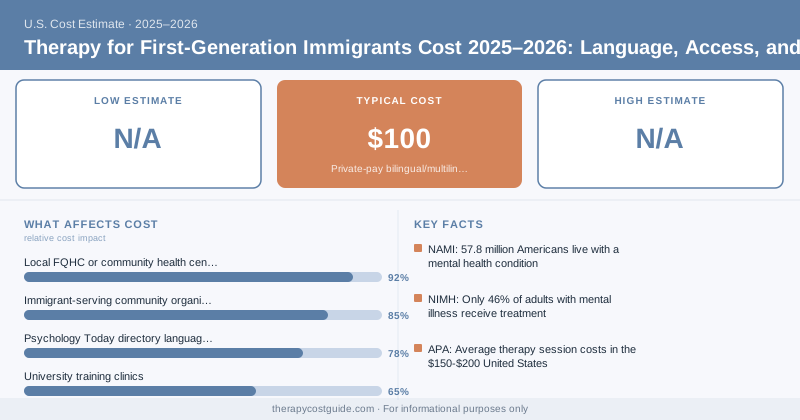
Therapy for First-Generation Immigrants Cost 2025–2026: Language, Access, and Price
{ if eq .Lang "zh" }{ else }{ end }Elena moved to the U.S. at 19 to finish college. She didn’t set foot in a therapist’s office until she was 29, not because things were fine that whole decade, but because she assumed therapy was something else entirely — a luxury for people with more free time, more money, and more comfort talking to a stranger about family matters than she’d been raised to have. When she finally went, at $130 a session with a bilingual therapist covered partly by her new job’s insurance, she realized most of what had kept her away for ten years wasn’t actually about cost.
Cost is still real, though — here’s what it looks like.
Immigrant Mental Health Access Points and Cost
| Access Point | Typical Cost |
|---|---|
| Private-pay bilingual/multilingual therapist | $100 – $250/session |
| In-network insurance (with bilingual provider) | $20 – $60 copay |
| Federally Qualified Health Center (FQHC) | $0 – $50/session, sliding scale, regardless of immigration status |
| Community-based immigrant service organization | Free – $40/session |
| University training clinic (increasingly offers language-matched trainees) | $30 – $70/session |
| Online therapy platforms with language filters | $60 – $100/week |
Language Access Doesn’t Cost Extra — Availability Is the Real Barrier
A common assumption is that therapy in a language other than English, or with a culturally-specific therapist, costs a premium. In practice, bilingual and multilingual therapists typically charge the same standard rates as any other licensed clinician in their area. The actual barrier is supply: many regions have far more demand for Spanish-, Mandarin-, Arabic-, or other-language therapy than there are available licensed providers, leading to longer waits rather than higher prices.
Federally Qualified Health Centers Don't Ask About Immigration Status for Care
Federally Qualified Health Centers (FQHCs) are legally required to serve patients regardless of insurance status, ability to pay, or immigration status, and use an income-based sliding fee schedule for mental health and medical services alike. This makes FQHCs one of the most reliable low-cost, immigration-status-neutral entry points into the mental health system nationally, present in nearly every U.S. county.Confidentiality Concerns Are Common — and Largely Unfounded
A significant barrier for many immigrants, documented and undocumented alike, isn’t cost but a fear that seeking mental health care could somehow affect immigration status or be reported to authorities. This fear is largely unfounded: licensed mental health providers are bound by standard confidentiality laws (including HIPAA) regardless of a client’s immigration status, and routine mental health treatment carries no reporting obligation to immigration authorities. Community-based immigrant service organizations are often especially well-versed in communicating this clearly, which is part of why they remain a trusted first entry point for many.
Cultural Stigma Adds a Non-Financial Cost
APA research on immigrant and first-generation mental health consistently identifies cultural stigma — the idea that seeking therapy reflects personal weakness or family failure — as a barrier that compounds financial and access barriers rather than existing separately from them. Therapists trained in culturally-responsive care are often better equipped to address this directly, incorporating cultural context into treatment rather than treating it as an obstacle to work around.
Where to Start Looking
- Local FQHC or community health center — search HRSA’s health center locator by ZIP code
- Immigrant-serving community organizations — many offer free or low-cost counseling explicitly designed for first-generation experiences
- Psychology Today directory language filters — searchable by specific language and cultural specialization
- University training clinics — increasingly recruit bilingual graduate trainees, offering reduced rates with real language match
Bottom Line
Bilingual and culturally-responsive therapy doesn’t cost more than standard therapy — $100–$250/session privately, less with insurance — but availability, not price, is the bigger barrier in many areas. FQHCs and community immigrant service organizations offer reliable low-cost or free access regardless of immigration status.
{ if eq .Lang "zh" }Disclaimer: TherapyCostGuide provides cost information for educational purposes only. We are not a mental health provider and do not offer clinical advice or treatment. Cost ranges are based on national survey data and vary significantly by location, provider credentials, practice setting, and insurance plan. Always consult a licensed mental health professional for treatment decisions. If you are in crisis, call or text 988 (Suicide & Crisis Lifeline) or go to your nearest emergency room.