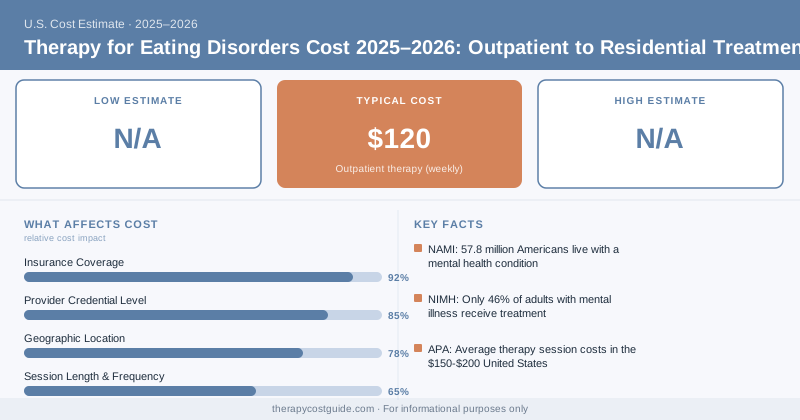
Therapy for Eating Disorders Cost 2025–2026: Outpatient to Residential Treatment
{ if eq .Lang "zh" }{ else }{ end }A landmark study cited by the National Eating Disorders Association estimates that 28.8 million Americans will have an eating disorder at some point in their lives. That’s roughly 9% of the population — a number most people wouldn’t guess, because eating disorders remain one of the most under-discussed and under-treated categories of mental illness, partly because the treatment system is genuinely complicated and expensive to navigate.
Here’s the full cost picture across every level of care.
Eating Disorder Treatment Costs by Level of Care
| Level of Care | What’s Included | Typical Cost |
|---|---|---|
| Outpatient therapy (weekly) | Individual therapy with ED-specialized therapist | $120 – $250/session |
| Outpatient + dietitian | Therapy + medical nutrition therapy | $250 – $500/week combined |
| Intensive Outpatient (IOP) | 3 hrs/day, 3–5 days/week | $350 – $500/day |
| Partial Hospitalization (PHP) | 6–8 hrs/day, meals included | $500 – $1,200/day |
| Residential treatment | 24/7 care, all meals, full team | $1,000 – $2,000/day |
| Inpatient medical stabilization | Hospital-level medical monitoring | $2,000 – $4,000+/day |
A full 30-day residential stay runs $30,000–$60,000 — among the most expensive categories of mental health treatment that exists, which is precisely why insurance coverage battles are so common in this space.
Why Eating Disorder Treatment Requires a Full Team
Unlike many mental health conditions treatable with therapy alone, eating disorders almost always require a coordinated team: a therapist for the psychological work, a registered dietitian for nutrition rehabilitation, and a physician for medical monitoring (eating disorders carry serious physical health risks, including cardiac complications). Skipping any one piece of that team isn’t just a treatment gap — it can be medically unsafe.
Why Insurance Fights Over Residential Coverage
The Mental Health Parity and Addiction Equity Act requires insurers to cover eating disorder treatment comparably to medical/surgical care, and several major legal settlements have forced insurers to improve residential coverage practices. Still, prior authorization denials and disputes over “medical necessity” for residential level of care remain common. A strong, detailed letter from your treatment team documenting failed attempts at lower levels of care significantly improves approval odds — don’t accept a first denial as final.What Determines Which Level of Care You Need
Level of care isn’t a preference — it’s a clinical determination based on medical stability, weight trajectory, and safety. A person who’s medically stable but struggling behaviorally may do well in outpatient or IOP. Someone who is medically unstable (dangerous vital signs, rapid weight loss, electrolyte imbalances) needs residential or inpatient stabilization regardless of cost, because the physical risks at that point are life-threatening.
Eating disorder treatment plans typically step down gradually — residential to PHP to IOP to outpatient — rather than jumping straight from crisis-level care to a single weekly session, both for clinical safety and because insurers usually require documented step-down rather than an abrupt discontinuation of intensive care.
Financial Assistance Options
- Project HEAL — a nonprofit that provides financial grants specifically for eating disorder treatment for those who can’t afford it
- NEDA Helpline — free navigation support to help you find lower-cost or insurance-covered options in your area
- Sliding-scale specialized clinics — some university-affiliated eating disorder programs offer reduced rates based on income
Bottom Line
Outpatient eating disorder treatment with a full team (therapist, dietitian) runs $250–$500 a week. Residential treatment, needed for medically unstable cases, runs $30,000–$60,000 for a typical 30-day stay. Insurance parity law requires coverage, but expect to advocate — sometimes formally appeal — for approval at higher levels of care.
{ if eq .Lang "zh" }Disclaimer: TherapyCostGuide provides cost information for educational purposes only. We are not a mental health provider and do not offer clinical advice or treatment. Cost ranges are based on national survey data and vary significantly by location, provider credentials, practice setting, and insurance plan. Always consult a licensed mental health professional for treatment decisions. If you are in crisis, call or text 988 (Suicide & Crisis Lifeline) or go to your nearest emergency room.