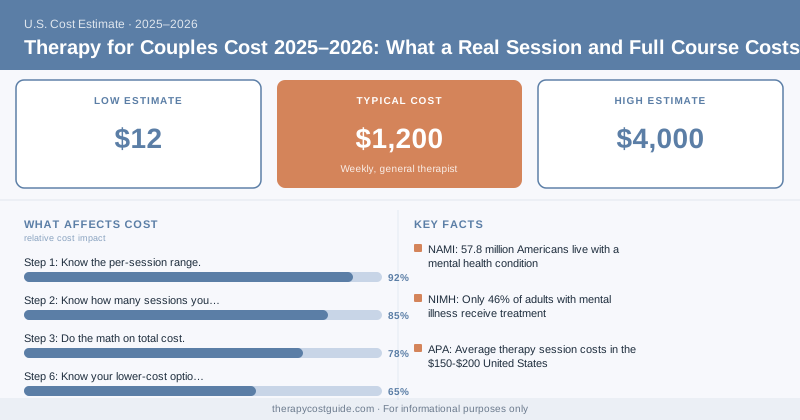
Therapy for Couples Cost 2025–2026: What a Real Session and Full Course Costs
{ if eq .Lang "zh" }{ else }{ end }Here’s a protocol for understanding what couples therapy will actually cost you, step by step, before you book a first session.
Step 1: Know the per-session range. Couples therapy costs $100–$300 per session nationally, with specialized, certified couples therapists (Gottman Method, Emotionally Focused Therapy) often at the higher end of that range.
Step 2: Know how many sessions you’ll likely need. Most couples complete 12–20 sessions for a focused issue (communication, a specific conflict pattern, rebuilding trust). Ongoing maintenance therapy can extend well beyond that.
Step 3: Do the math on total cost.
| Format | Sessions | Total Cost |
|---|---|---|
| Weekly, general therapist | 12 – 20 sessions | $1,200 – $4,000 |
| Weekly, Gottman/EFT-certified therapist | 12 – 20 sessions | $1,800 – $6,000 |
| Intensive weekend format (Gottman workshop-style) | 1 multi-day intensive | $2,500 – $6,000 |
| Online couples counseling (e.g., ReGain) | Weekly, subscription | $280 – $400/month |
| University training clinic | 12 – 20 sessions | $300 – $800 total |
Step 4: Understand why insurance almost never covers this cleanly. Insurance is built around billable individual diagnoses — depression, anxiety, adjustment disorder — not “relationship counseling” as a category. Many therapists who see couples bill the session under one partner’s individual diagnosis code (like an adjustment disorder related to relationship stress) to make it insurance-eligible, but this isn’t universal, and some therapists decline to do this because it can misrepresent the actual treatment focus. Ask directly before assuming coverage.
Step 5: Consider whether specialized training is worth the premium. Couples therapy research consistently shows structured, evidence-based approaches like the Gottman Method and EFT produce measurably better outcomes than general talk therapy for relationship-specific issues. A $20–$50/session premium for that training is, for many couples, worth the cost difference — though a skilled generalist therapist can still be effective, especially for less entrenched issues.
The Intensive Weekend Option
Couples in crisis, or those with limited time for weekly sessions, sometimes choose an intensive format: 1–3 full days of concentrated therapy work, often at $2,500–$6,000 total. This compresses roughly 15–20 weeks of standard therapy into a few days. It’s not cheaper than weekly sessions, but it front-loads the cost and time commitment rather than spreading it over months — useful for couples facing a near-term decision point (like considering separation) who need faster clarity.Step 6: Know your lower-cost options. Marriage counseling through university psychology training clinics runs $30–$60 per session with supervised graduate students. Some religious organizations and community centers offer subsidized or free premarital and couples counseling. Online platforms designed for couples typically run $280–$400/month for unlimited messaging plus weekly video sessions — often cheaper than two weekly in-person sessions combined.
The American Association for Marriage and Family Therapy notes that couples typically wait an average of six years of relationship unhappiness before seeking therapy — meaning by the time most couples start, the issues have compounded, sometimes requiring more sessions than if therapy had started earlier. Starting sooner, even at the same per-session cost, can mean a shorter and less expensive total course.
Bottom Line
Budget $1,200–$6,000 for a full course of couples therapy depending on format and therapist training level. Insurance rarely covers it directly, so most couples pay out of pocket — university training clinics and online platforms are the main lower-cost alternatives.
{ if eq .Lang "zh" }Disclaimer: TherapyCostGuide provides cost information for educational purposes only. We are not a mental health provider and do not offer clinical advice or treatment. Cost ranges are based on national survey data and vary significantly by location, provider credentials, practice setting, and insurance plan. Always consult a licensed mental health professional for treatment decisions. If you are in crisis, call or text 988 (Suicide & Crisis Lifeline) or go to your nearest emergency room.