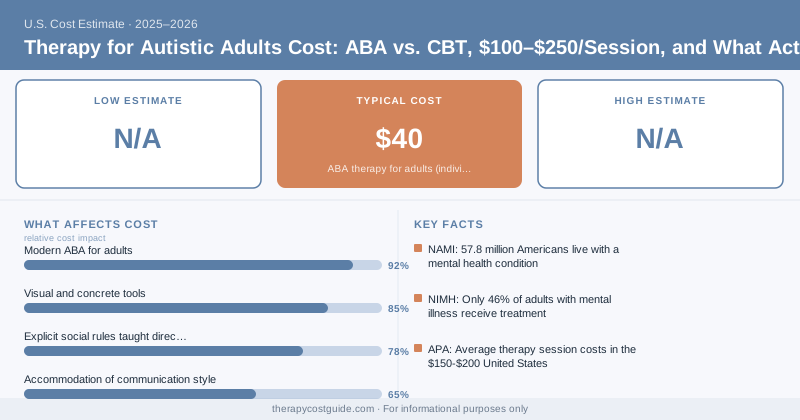
Therapy for Autistic Adults Cost: ABA vs. CBT, $100–$250/Session, and What Actually Works
{ if eq .Lang "zh" }{ else }{ end }Autistic adults seeking therapy often hit two walls simultaneously: the first is finding a therapist who actually knows how to work with autism in adults (not children), and the second is cost. ABA — the most commonly known autism intervention — was designed for children, is expensive, and is increasingly controversial when applied to adults. Here’s what therapy actually costs for autistic adults, what the current evidence supports, and what to ask when finding a therapist.
Therapy Cost for Autistic Adults
| Therapy Type | Per Session | Typical Course | Total Cost |
|---|---|---|---|
| CBT adapted for autism (individual) | $100 – $200 | 16 – 24 sessions | $1,600 – $4,800 |
| ABA therapy for adults (individual) | $100 – $250 | Ongoing or 40+ hours | $4,000 – $10,000+ |
| DBT adapted for autism | $100 – $200 | 6 months (weekly) | $2,400 – $4,800 |
| Occupational therapy (social/sensory) | $100 – $200 | 12 – 20 sessions | $1,200 – $4,000 |
| Autism-specific peer support groups | $0 – $50 | Ongoing | $0 – $600/year |
| Social skills groups for autistic adults | $50 – $150/session | 8 – 16 weeks | $400 – $2,400 |
ABA for Adults: The Controversy and the Cost
Applied Behavior Analysis is the most insurance-covered autism intervention in the U.S. Most state mandates require commercial insurers to cover ABA for autism. But most of that coverage — and most of the research — is for children.
For autistic adults, ABA applied in its traditional form (discrete trial training, intensive behavioral modification focusing on compliance) has become deeply controversial. Many autistic adults who received ABA as children have reported experiencing it as traumatizing. The Autistic Self Advocacy Network and many autistic adults oppose compliance-based ABA specifically because it prioritizes masking autistic traits over wellbeing.
Modern ABA for adults — when adapted appropriately — can focus on:
- Specific skill acquisition the adult wants (not behavior compliance)
- Self-directed goals
- Strategies the person finds helpful
But “ABA” as a label covers an enormous range of practices. Demand clear descriptions of what a provider actually does in sessions before agreeing.
CBT Adapted for Autism: Better Evidence for Adults
For autistic adults, CBT adapted for autism has more research support than traditional ABA for most mental health presentations. Research published in Autism Research (2021) found significant improvements in anxiety, depression, and emotional regulation for autistic adults receiving autism-adapted CBT compared to standard CBT.
Key adaptations that make CBT work for autistic adults:
Visual and concrete tools: Charts, worksheets, and visual representations of concepts rather than purely verbal discussion. Metaphors grounded in the individual’s interests.
Explicit social rules taught directly: Rather than implying social expectations, autism-adapted CBT teaches them explicitly — removing the guessing that causes distress.
Accommodation of communication style: Sessions may be slower-paced, allow longer processing time, or use alternative communication methods if needed.
Addressing autistic-specific concerns: Burnout, sensory overwhelm, masking exhaustion, identity development, and the grief that can accompany late diagnosis — all require specific therapeutic frameworks.
Late Diagnosis and Therapy: Specific Needs
Many autistic adults receive their diagnosis in their 30s, 40s, or even later. Late diagnosis typically brings a complex emotional process: relief at finally having an explanation, grief for decades of struggling without appropriate support, anger at being missed, and the work of identity reconstruction.
Therapists who work with late-diagnosed autistic adults need to understand this process specifically. Many therapists with general autism training are oriented toward early childhood intervention — not toward supporting an adult who is actively renegotiating their entire life narrative.
Ask potential therapists directly: “What experience do you have supporting adults who received an autism diagnosis in adulthood?” This question quickly distinguishes those with relevant experience from those who work primarily with children or families.
Insurance Coverage for Autism Therapy in Adults
ABA for adults: 49 states have insurance mandates requiring coverage for ABA for autism — but most mandates have age limits (often ending at 18 or 21). Check your state’s specific mandate. If you’re over 21, coverage may be discretionary rather than mandated.
CBT and other individual therapy: Covered by standard mental health benefits with an appropriate diagnosis. Autism Spectrum Disorder (ASD, F84.0) is an insurers-covered diagnosis. Sessions with a licensed therapist using CBT bill as standard individual therapy.
ABA in adults without a mandate: If your state’s mandate doesn’t cover adults, ABA may still be covered if your plan voluntarily includes it. Call your insurer and ask specifically about ABA coverage for adults with ASD.
What Autistic Adults Actually Report Helping
Beyond the clinical evidence, what do autistic adults themselves find therapeutic? A qualitative study in Autism in Adulthood (2020) surveyed autistic adults about therapeutic experiences:
Helpful: Therapists who accepted their autism rather than trying to change autistic traits; explicit, direct communication without social subtext; therapists who had knowledge of autistic experiences without defaulting to stereotypes; validation of their specific challenges; helping them reduce masking rather than increase it.
Unhelpful or harmful: Therapists who tried to make them “seem less autistic”; pathologizing normal autistic traits; social skills groups focused on neurotypical mimicry; and therapists who had good intentions but applied child-focused autism frameworks to adults.
Finding Neurodiversity-Affirming Therapists
Not all therapists who list “autism” on their profile are neurodiversity-affirming. This is an important distinction.
Signs of a neurodiversity-affirming approach:
- Views autism as a neurological difference, not a disorder to be corrected
- Focuses on reducing distress and supporting the patient’s goals, not on reducing autistic traits
- Familiar with autistic burnout, masking, and the specific challenges of adulthood
- Open to feedback about what’s working and adjusting approach accordingly
Resources for finding affirming therapists:
- Therapist directories specifically for autistic people: autisticadvocacy.org
- Psychology Today filter for “autism” + reading the therapist’s actual profile language
- AASPIRE (Autistic Adults and Spouses/Partners of Autistic Adults Research & Engagement) lists resources
- Autism Women and Nonbinary Network (AWN) peer support and resource lists
Disclaimer: TherapyCostGuide provides cost information for educational purposes only. We are not a mental health provider and do not offer clinical advice or treatment. Cost ranges are based on national survey data and vary significantly by location, provider credentials, practice setting, and insurance plan. Always consult a licensed mental health professional for treatment decisions. If you are in crisis, call or text 988 (Suicide & Crisis Lifeline) or go to your nearest emergency room.