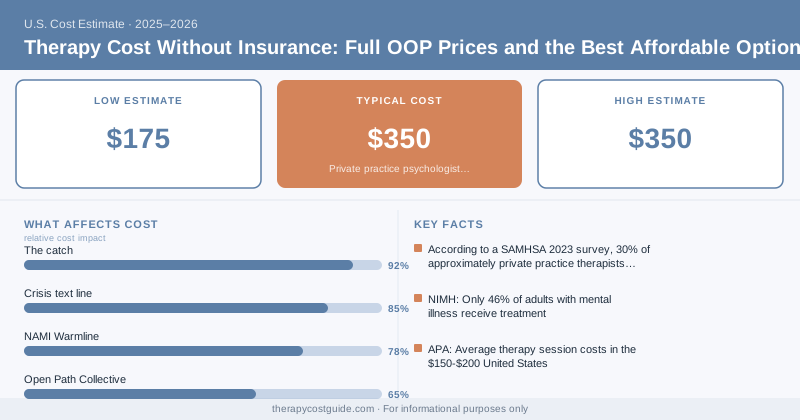
Therapy Cost Without Insurance: Full OOP Prices and the Best Affordable Options
{ if eq .Lang "zh" }{ else }{ end }Sarah was 28, uninsured, and had been putting off calling a therapist for two years. When she finally looked up session fees, the $200 number she found felt impossible. What she didn’t know was that there were four legitimate ways to see a licensed therapist for under $60 a session — she just didn’t know where to look.
Here’s the full picture: what therapy actually costs without insurance, and the best options for making it work on a real budget.
What You’ll Pay Out of Pocket
Without insurance, you’re paying the therapist’s full private-pay rate. That range is wide:
| Setting / Provider Type | Session Cost OOP | Notes |
|---|---|---|
| Private practice psychologist (PhD/PsyD) | $175 – $350 | Full rate, no negotiation typical |
| Private practice LPC/LCSW | $100 – $200 | Most common mid-range option |
| Sliding scale private practice | $50 – $120 | Ask directly; many don’t advertise |
| Community mental health center | $5 – $50 | Income-based, may have wait lists |
| University training clinic | $20 – $60 | Supervised grad students, quality varies |
| Open Path Collective | $30 – $80 | Network of therapists, $65 membership |
| Online therapy (BetterHelp/Talkspace) | $60 – $100/wk | Video + messaging, no insurance billing |
Option 1: Ask About Sliding Scale
Many therapists maintain a small number of “sliding scale” slots — sessions priced based on your income rather than their standard rate. Most don’t advertise this prominently because they don’t want to be overwhelmed with requests.
The right way to ask: “I’m very interested in working with you. I don’t currently have insurance coverage. Do you have any sliding scale availability, and if so, what’s your range?” A therapist who has sliding scale will tell you. One who doesn’t will say so without judgment.
According to a SAMHSA 2023 survey, approximately 30% of private practice therapists offer sliding scale to at least some clients. The sliding scale range varies — it might be $80–$150 vs. a standard rate of $175.
Option 2: Community Mental Health Centers
Federally funded community mental health centers operate on a sliding fee schedule tied to federal poverty level guidelines. If your household income is below 200% of the federal poverty level (about $29,000 for a single person in 2025), you may qualify for very low or even no-cost care.
Services typically include:
- Individual therapy with a licensed clinician
- Psychiatric medication management
- Crisis services
- Case management and peer support
To find a center near you: call 211 (dial 2-1-1) or visit findtreatment.gov. Your county health department’s behavioral health division also maintains a list.
The catch: wait lists. Community mental health centers are chronically underfunded and often have wait lists of 4–12 weeks for non-crisis appointments. For a mental health crisis, they typically have same-day or next-day crisis walk-in services.
What to Do While Waiting for a Community Center Appointment
If you’re on a wait list, you don’t have to just wait. Consider:
- Crisis text line: Text HOME to 741741 — free, confidential support 24/7
- NAMI Warmline: Many states have peer-support warmlines, free to call
- Open Path Collective: Lower-cost private therapy while you wait for community placement
- Self-help apps: Woebot (CBT-based AI), Calm, Headspace — not therapy substitutes, but helpful for managing symptoms while waiting
If symptoms worsen significantly, return to the community center and request crisis services rather than waiting for your scheduled intake.
Option 3: University Training Clinics
Graduate programs in psychology, counseling, and social work operate training clinics where supervised students provide therapy at reduced rates. This is one of the most underutilized affordable therapy resources in the country.
What you get: a therapist-in-training who is:
- At minimum a second-year graduate student (several semesters into clinical training)
- Closely supervised by a licensed clinician who reviews cases and may observe sessions
- Using evidence-based approaches from current training (often CBT, DBT skills, or person-centered approaches)
What you pay: typically $20–$60 per session depending on the clinic. Some offer a sliding scale within that range.
What to expect: sessions may be observed or recorded for supervision purposes (you’re told and consent), and your therapist may change if they graduate or advance to a new placement. The supervision-heavy environment actually produces careful, well-monitored care.
Find clinics by searching “[your city] university counseling training clinic” or checking the APA accredited program list at accreditation.apa.org.
Option 4: Open Path Collective
Open Path (openpath.com) is a network of mental health professionals who offer sessions at $30–$80 to people who qualify (income under $100,000 for individuals, under $125,000 for couples or families). Joining costs a one-time $65 fee.
The therapists in Open Path are fully licensed and are voluntarily offering reduced rates. The quality varies — it’s a large network — but you can filter by specialty, location, and whether they offer video sessions.
Option 5: Employer EAP
If you’re employed (even part-time or without health insurance), check whether your employer has an Employee Assistance Program (EAP). EAPs frequently offer:
- 6–10 free confidential therapy sessions per year
- Referrals to in-network therapists after EAP sessions end
- Financial counseling and legal services (often bundled)
EAP sessions are confidential — your employer doesn’t know you used the benefit or what you discussed. Find your EAP by checking your pay stub, benefits portal, or calling HR.
Disclaimer: TherapyCostGuide provides cost information for educational purposes only. We are not a mental health provider and do not offer clinical advice or treatment. Cost ranges are based on national survey data and vary significantly by location, provider credentials, practice setting, and insurance plan. Always consult a licensed mental health professional for treatment decisions. If you are in crisis, call or text 988 (Suicide & Crisis Lifeline) or go to your nearest emergency room.