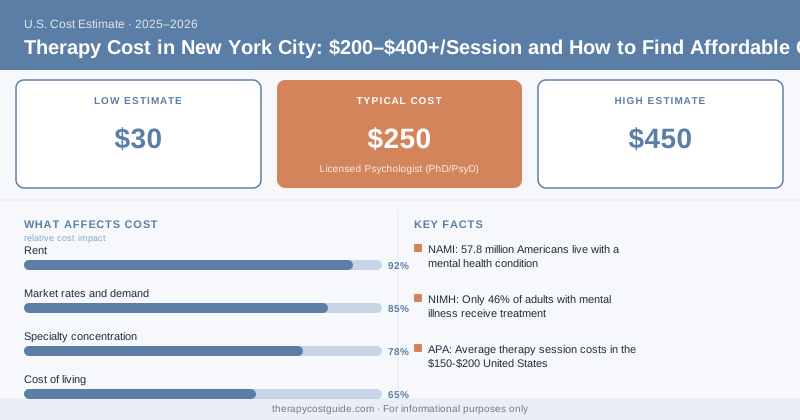
Therapy Cost in New York City: $200–$400+/Session and How to Find Affordable Care
{ if eq .Lang "zh" }{ else }{ end }New York City has more therapists per capita than almost any city in the world. It also has among the highest therapy rates in the country. A 50-minute session with a psychologist in Midtown Manhattan can run $400–$500. In the Bronx, the same credential might charge $150. Here’s how to navigate NYC’s therapy market — including the state-specific insurance rules that can significantly reduce your cost.
NYC Therapy Cost by Provider Type
| Provider Type | Session Rate (NYC) | With In-Network Insurance |
|---|---|---|
| Licensed Social Worker (LCSW) | $150 – $280 | $20 – $50 copay |
| Licensed Mental Health Counselor (LMHC) | $140 – $260 | $20 – $50 copay |
| Licensed Psychologist (PhD/PsyD) | $250 – $450 | $30 – $70 copay |
| Psychiatrist (therapy + meds) | $350 – $600 | $40 – $80 copay |
| Marriage and Family Therapist (MFT) | $150 – $280 | $20 – $50 copay |
| Telehealth therapist (NY-licensed) | $100 – $220 | $20 – $50 copay |
Rates vary significantly by neighborhood. Manhattan (especially UES, UWS, West Village, Midtown) commands the highest rates. Brooklyn therapists average 15–25% lower than Manhattan. Queens and the Bronx are typically 20–35% lower than Manhattan for comparable credentials.
New York’s Two Mental Health Mandates
New York State has two insurance provisions that specifically benefit therapy-seekers:
1. New York Mental Health and Substance Use Disorder Parity Law: Requires all state-regulated insurance plans to cover mental health and SUD treatment at the same level as medical/surgical care. Copays for mental health sessions must be equal to or lower than medical specialist copays.
2. The New York “Direct Access” Law: Allows patients to access mental health services directly without a primary care referral. You don’t need your doctor to refer you to a therapist in New York. This matters because it removes a step that delays care in some other states.
These protections apply to fully insured plans regulated by New York State. Self-insured employer plans (common at large companies) are regulated by federal ERISA and aren’t subject to state mandates — check whether your employer plan is fully insured or self-insured.
How to Find Out If Your Plan Is Fully Insured or Self-Insured
This distinction determines which parity laws apply to your plan. Call your HR department and ask: “Is our health plan fully insured or self-insured?” Alternatively, look at your plan documents — self-insured plans often say “administrative services only” (ASO) or have an insurance company logo that says “Claims Processed by [Insurer Name]” rather than “[Insurer Name] Insurance.”
If your plan is self-insured, you’re still protected by federal MHPAEA, but New York’s additional state-level protections don’t apply.
Why NYC Therapy Is So Expensive
Rent: Office space in Manhattan is among the most expensive in the world. A therapist renting a consulting office 3 days/week might pay $2,000–$5,000/month for office time. This overhead directly drives session rates.
Market rates and demand: NYC has many high-income professionals willing to pay premium rates. Therapists with strong reputations in desirable neighborhoods charge accordingly.
Specialty concentration: NYC attracts highly specialized therapists — trauma specialists, eating disorder experts, LGBTQ+ specialists, executive coaches with therapy backgrounds. Specialization commands premium rates.
Cost of living: NYC-based therapists have higher personal costs of living, which factors into sustainable rate-setting.
Borough-by-Borough Variation
Manhattan: Highest rates, most therapists, most diversity of specialties. Worth it for specialties not available elsewhere; overpaying for general therapy if you’re flexible on location.
Brooklyn: Second most expensive borough. Williamsburg, Park Slope, and Cobble Hill have therapists at Manhattan-adjacent prices. East Flatbush and Flatlands have more affordable options.
Queens: Significantly more affordable than Manhattan. Jackson Heights has Spanish-speaking therapists; Flushing has Mandarin and Korean-speaking providers. Strong diversity of culturally competent options.
The Bronx: Lowest average therapy rates in NYC. Community mental health centers well-represented. Some of the most culturally diverse providers in the city.
Staten Island: Fewer therapists overall; rates similar to outer boroughs.
Finding Affordable Therapy in NYC
NYC Well: NYC’s mental health helpline (1-888-NYC-WELL). Free counseling up to 3 sessions; referrals to low-cost providers throughout the five boroughs. Available 24/7.
NYC Community Mental Health Centers: The city funds a network of community mental health clinics offering sliding-scale therapy. Rates start at $0 for qualifying income levels. Search nyc.gov for “mental health services by borough.”
Graduate training clinics: NYC has many graduate psychology and social work programs with low-cost training clinics. New York University, Columbia, Fordham, and the City University of New York all have training clinics. Sessions are conducted by supervised graduate students. Rates: $20–$50/session typically.
Open Path Collective (openpathcollective.org): Network of licensed therapists who offer sessions at $30–$80 for clients who can’t afford standard rates. Strong NYC presence.
Alma (helloalma.com): NYC-founded platform connecting patients with in-network therapists. Focuses on insurance coverage; many therapists on the platform accept major NYC insurance plans.
Zocdoc: Filter by insurance, location, and mental health specialty. Shows real-time availability and insurance acceptance.
Telehealth as a Cost-Saving Option
With telehealth, geography matters less than your insurance network. A licensed NY therapist practicing via telehealth in central Brooklyn can charge $130–$180/session versus $300–$400 for an equivalent in-person Manhattan provider. Both bill under the same CPT codes and are covered by insurance at the same copay rate.
New York state telehealth parity laws require insurers to cover telehealth mental health services at the same rate as in-person services. You don’t pay more for in-person just because your insurer prefers it.
For most outpatient mental health presentations, telehealth is clinically equivalent to in-person therapy. The evidence base for telehealth CBT, DBT, and other modalities is robust. The main reasons to prefer in-person are personal preference, crisis stabilization needs, or specific modalities that require physical presence (EMDR with specific tools, biofeedback, etc.).
{ if eq .Lang "zh" }Disclaimer: TherapyCostGuide provides cost information for educational purposes only. We are not a mental health provider and do not offer clinical advice or treatment. Cost ranges are based on national survey data and vary significantly by location, provider credentials, practice setting, and insurance plan. Always consult a licensed mental health professional for treatment decisions. If you are in crisis, call or text 988 (Suicide & Crisis Lifeline) or go to your nearest emergency room.