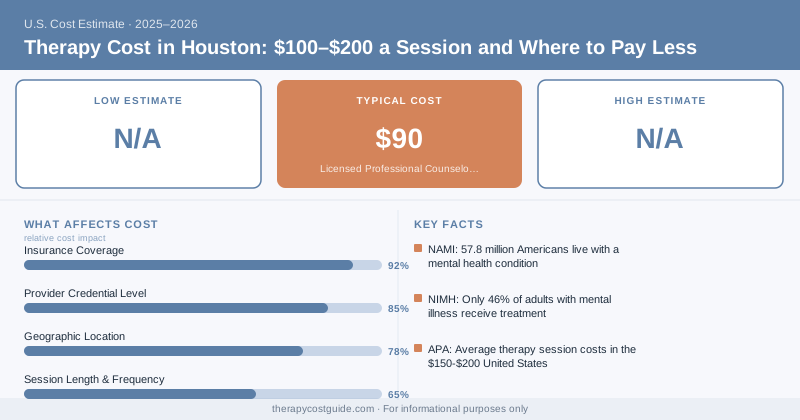
Therapy Cost in Houston: $100–$200 a Session and Where to Pay Less
{ if eq .Lang "zh" }{ else }{ end }A weekly therapy habit in Houston will cost you less than it would almost anywhere on either coast. Most licensed therapists here charge between $100 and $200 a session, and you can find genuinely good clinicians on the lower end of that. Texas has no state income tax and a relatively affordable cost of living, and that filters straight into what your therapist needs to charge to keep the lights on. Here’s what you’re actually looking at across the Bayou City.
What Houston Therapists Charge
Houston is the fourth-largest city in the country, so supply is decent. The metro has thousands of licensed providers, which keeps prices from spiking the way they do in tighter markets. Still, where you sit in town matters.
| Provider Type | Typical Houston Rate | In-Network Copay |
|---|---|---|
| Licensed Professional Counselor (LPC) | $90 – $160 | $20 – $40 |
| Licensed Clinical Social Worker (LCSW) | $100 – $170 | $20 – $40 |
| Psychologist (PhD/PsyD) | $140 – $220 | $30 – $55 |
| Marriage and Family Therapist | $100 – $170 | $20 – $40 |
| Telehealth (TX-licensed) | $80 – $150 | $20 – $40 |
Compare that to San Francisco or Boston, where the same psychologist credential easily runs $250–$350, and Houston starts looking like a bargain. The trade-off is that demand here is real. The federal government has designated parts of Harris County as Mental Health Professional Shortage Areas, so popular therapists often have waitlists. If you’re flexible on timing, you’ll have more luck. For a fuller breakdown of one-on-one rates nationally, see our guide to individual therapy cost.
Neighborhood Differences
- Inner Loop (Montrose, Heights, River Oaks, Rice Village): Highest concentration of private practice. Rates skew to the upper end, $150–$220, and many of these therapists don’t take insurance.
- The Medical Center / Museum District: Heavy academic and hospital presence, lots of psychologists, intake-heavy practices.
- West Houston / Energy Corridor / Katy: More insurance-friendly suburban practices, $100–$180.
- East End and Northside: Growing number of bilingual (Spanish/English) counselors, which matters in a city where roughly a third of residents speak Spanish at home.
Key Takeaway
Houston therapy averages $100–$200 a session — well below coastal cities. The real bottleneck isn’t price, it’s availability, since parts of Harris County are federally designated provider shortage areas. Book early and stay flexible on scheduling.Why Going Without Insurance Isn’t Always a Disaster Here
A 2024 KFF analysis found that mental health providers are far more likely to be out-of-network than other medical specialists, and Houston is no exception — plenty of the city’s best therapists are cash-pay only. The good news is that Houston’s baseline rates are low enough that paying out of pocket is more survivable than it would be in New York. If you’re weighing your options, our piece on therapy cost without insurance walks through the math, and does insurance cover therapy explains what your plan owes you.
Low-Cost Therapy in Houston
You’ve got real options if $150 a week isn’t realistic:
- The Harris Center for Mental Health and IDD: The local community mental health authority. Sliding-scale and Medicaid services across Harris County.
- University of Houston Psychological Research and Services Center: A training clinic where supervised doctoral students provide therapy at reduced rates.
- Council on Recovery and The Montrose Center: Nonprofits offering sliding-scale counseling, the latter with a focus on LGBTQ+ Houstonians.
- Federally Qualified Health Centers (Legacy Community Health): Integrated behavioral health at income-based fees.
University training clinics are an underrated deal — you’re seeing a grad student who’s closely supervised by a licensed psychologist, often for $30–$60. More on that model in sliding scale therapy cost.
Telehealth in a Sprawling City
Houston is enormous and traffic is brutal. A 45-minute drive to a Montrose office can turn a 50-minute session into a two-hour ordeal. That’s why telehealth has stuck around hard here. Texas-licensed therapists can see you anywhere in the state, and platforms like Headway, Alma, and Grow Therapy all have solid Houston networks. For many people the convenience is what makes weekly therapy actually sustainable. We compare formats in online therapy vs in-person cost.
Frequently Asked Questions
Is therapy cheaper in Houston than in Dallas or Austin? Roughly comparable to Dallas and a bit cheaper than Austin, which has tighter supply and a higher cost of living. All three Texas metros run well below the coasts.
Why do so many good Houston therapists not take insurance? Insurance reimbursement rates in Texas are often lower than a therapist’s cash rate, and the paperwork is heavy. Many providers opt out to keep their practices viable, which is part of why therapy is so expensive even in an affordable city.
Where do I start if I have almost no money? The Harris Center and Legacy Community Health both work on income-based fees, and UH’s training clinic offers very low rates. Our free low-cost therapy options guide lists more.
{ if eq .Lang "zh" }Disclaimer: TherapyCostGuide provides cost information for educational purposes only. We are not a mental health provider and do not offer clinical advice or treatment. Cost ranges are based on national survey data and vary significantly by location, provider credentials, practice setting, and insurance plan. Always consult a licensed mental health professional for treatment decisions. If you are in crisis, call or text 988 (Suicide & Crisis Lifeline) or go to your nearest emergency room.