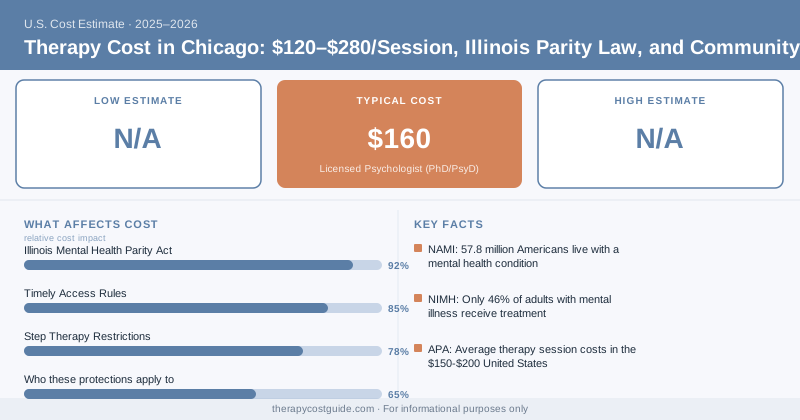
Therapy Cost in Chicago: $120–$280/Session, Illinois Parity Law, and Community Health Centers
{ if eq .Lang "zh" }{ else }{ end }Chicago’s therapy market sits comfortably between New York and smaller Midwest cities: you can find a licensed therapist in Lincoln Park charging $250/session, and you can find comparable credentials in Logan Square charging $120. The gap matters — over 20 sessions, that’s $2,600 in savings. Here’s how to navigate Chicago’s therapy costs, use Illinois’s insurance protections, and find affordable care throughout the city.
Chicago Therapy Cost by Credential
| Provider Type | Typical Rate (Chicago) | In-Network Insurance Copay |
|---|---|---|
| LCPC (Licensed Clinical Professional Counselor) | $100 – $200 | $20 – $45 copay |
| LCSW (Licensed Clinical Social Worker) | $110 – $210 | $20 – $45 copay |
| Licensed Psychologist (PhD/PsyD) | $160 – $280 | $30 – $60 copay |
| Marriage and Family Therapist | $110 – $200 | $20 – $45 copay |
| Psychiatrist (therapy sessions) | $250 – $450 | $40 – $70 copay |
| Telehealth IL-licensed therapist | $80 – $170 | $20 – $45 copay |
Chicago is notably more affordable than NYC and LA for equivalent credentials. A PhD-level psychologist in the Loop or Lincoln Park charges $220–$280; the same credential in Manhattan’s Upper West Side would charge $350–$450. For budget-conscious Chicagoans, the relative affordability is a genuine advantage.
Illinois Mental Health Parity Protections
Illinois has the Illinois Mental Health and Developmental Disabilities Code and the Illinois Insurance Code, which together provide strong parity protections for mental health coverage:
Illinois Mental Health Parity Act: Requires state-regulated health insurance plans to cover mental health and SUD conditions at the same level as physical health conditions. Copays for mental health sessions must equal medical specialist copays.
Timely Access Rules: Illinois requires insurers to maintain adequate networks of mental health providers. If your insurer can’t provide an in-network appointment within a reasonable timeframe, they may be required to authorize out-of-network care at in-network rates.
Step Therapy Restrictions: Illinois limits “fail first” protocols for mental health treatment. Insurers cannot require you to fail on a less expensive treatment before approving a more appropriate one in all cases.
Who these protections apply to: State-regulated fully insured plans. Self-insured employer plans (regulated by federal ERISA) are subject only to federal MHPAEA, not these additional state protections.
The Illinois Behavioral Health Ombudsman Program
Illinois has a Behavioral Health Ombudsman at the Illinois Department of Insurance. If your insurer denies mental health treatment or imposes more restrictive requirements than for physical health care, the ombudsman can help you appeal and file complaints.
Contact the IDI at insurance.illinois.gov or 1-866-445-5364. This is a free service available to all Illinois residents with state-regulated health insurance. Keeping a written record of all insurance communications before calling the ombudsman strengthens your case significantly.
Neighborhood Variation in Chicago
Lincoln Park / Lakeview / Wicker Park: Highest concentration of private practice therapists in the city; higher rates ($150–$280). Many therapists in these neighborhoods don’t accept insurance.
Logan Square / Pilsen / Humboldt Park: More culturally diverse therapist population; rates often $100–$180. Growing number of bilingual (Spanish/English) therapists in Pilsen and Humboldt Park.
Hyde Park / South Shore: University of Chicago concentration drives availability of graduate training clinics. Rates more moderate; strong academic mental health presence.
Northwest Side (Avondale, Jefferson Park): Suburban-adjacent pricing; more likely to take insurance; $100–$180 for most credentials.
South Side (Bronzeville, Woodlawn, Chatham): Historically underserved; fewer private practice options but strong community mental health center presence; Thresholds and NAMI Chicago active.
Community Mental Health Resources in Chicago
Thresholds: One of Chicago’s largest non-profit mental health organizations. Offers services on sliding scale for people with serious mental illness. thresholds.org.
NAMI Chicago: Mental health resources, support groups, and referrals throughout Cook County. namichicago.org; helpline 312-563-0445.
Chicago Department of Public Health Behavioral Health Services: City-funded mental health clinics throughout Chicago. Sliding-scale fees. Search “Chicago behavioral health clinic” at cityofchicago.org.
Heartland Health Centers (FQHC): Network of Federally Qualified Health Centers throughout Chicago with integrated mental health services at sliding-scale fees. heartlandhealthcenters.org.
Howard Brown Health: Focuses on LGBTQ+ health including mental health services. Sliding-scale fees. Multiple Chicago locations. howardbrown.org.
Trilogy Behavioral Healthcare: Non-profit providing mental health and substance use services in Chicago. Accepts Medicaid and sliding-scale fees.
University of Chicago Counseling Training Clinic: Reduced-rate therapy conducted by supervised graduate students. Call the UChicago psychology department for current availability.
Chicago’s Telehealth Options
Illinois’s telehealth parity law requires insurers to reimburse telehealth mental health visits at the same rate as in-person visits. Chicago’s telehealth market is robust:
- Platforms like Alma, Headway, and Grow Therapy have strong Chicago-area networks
- Many Chicago-based therapists offer telehealth to Illinois residents statewide
- Telehealth eliminates commute costs in a city where CTA and parking can add real time and expense to therapy appointments
For people on Chicago’s North Side who work downtown and live north, telehealth can eliminate a 45-minute commute entirely — making therapy more sustainable week after week.
What to Expect From Your First Session
Chicago therapists, like most, bill for an initial intake session ($140–$300) that differs from regular sessions. The intake is longer (60–75 minutes vs. 45–50) and includes:
- Comprehensive mental health history
- Current symptoms and concerns
- Goals for therapy
- Discussion of modality and approach
- Practical logistics: frequency, length, cancellation policy
Some therapists charge more for the intake session; others charge the same rate. Always ask when scheduling. In Chicago’s competitive market, many therapists offer a free 15–20 minute phone consultation before the intake — use this to assess fit before committing to a paid session.
{ if eq .Lang "zh" }Disclaimer: TherapyCostGuide provides cost information for educational purposes only. We are not a mental health provider and do not offer clinical advice or treatment. Cost ranges are based on national survey data and vary significantly by location, provider credentials, practice setting, and insurance plan. Always consult a licensed mental health professional for treatment decisions. If you are in crisis, call or text 988 (Suicide & Crisis Lifeline) or go to your nearest emergency room.