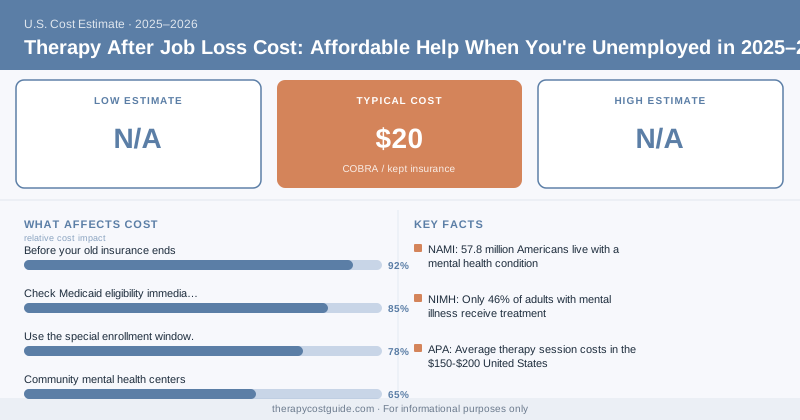
Therapy After Job Loss Cost: Affordable Help When You're Unemployed in 2025–2026
{ if eq .Lang "zh" }{ else }{ end }Losing a job hits twice. There’s the lost paycheck, and then there’s the identity gut-punch — the 3 a.m. spiral of “what now” and “what’s wrong with me.” Therapy can help with the second part, and the cruel irony is that you need it right when money is tightest.
Here’s the reality: depending on your coverage and a few smart moves, therapy after job loss can cost anywhere from $0 to $200 per session. Let’s map out the cheap paths first.
What It Costs When Money Is Tight
| Option | Typical Cost | Best For |
|---|---|---|
| COBRA / kept insurance | $20 – $60 copay | If you can afford the premium |
| Marketplace plan (ACA) | $0 – $50 copay | Subsidies are big at low income |
| Medicaid | $0 – $5 | If income now qualifies you |
| Community mental health center | $0 – $50 | No or low insurance |
| Sliding scale therapist | $30 – $80 | Cash pay, income-based |
| Full private pay | $100 – $200 | Last resort while uninsured |
The single most important thing to know: losing your job often makes you newly eligible for low-cost or free options you couldn’t get before. Your income just dropped, which can qualify you for Medicaid or much larger ACA subsidies.
Key Takeaway
Job loss is a “qualifying life event.” You get a 60-day special enrollment window to buy a subsidized marketplace plan — and your lower income may now qualify you for Medicaid or near-free coverage. Don’t assume you’re stuck paying full price.You’re Not Overreacting
Job loss is one of the most stressful life events a person can go through — researchers rank it alongside divorce and the death of a loved one. A National Institute of Mental Health–funded body of research has long linked unemployment to sharply higher rates of depression and anxiety, with risk climbing the longer the unemployment lasts.
And it’s common: per the U.S. Bureau of Labor Statistics, millions of Americans experience involuntary job separation in any given year. The emotional fallout — shame, panic, loss of routine — is a normal response to an abnormal stressor, not a character flaw.
How to Get Help Cheaply
Before your old insurance ends, book a session. Coverage usually runs through the end of your termination month. If a few sessions help, great.
Check Medicaid eligibility immediately. With zero income, many people qualify. Coverage includes mental health, and copays are $0–$5. See Medicaid therapy coverage for what’s included.
Use the special enrollment window. Losing job-based coverage triggers a 60-day window to buy a marketplace plan, and subsidies scale with your now-lower income.
Community mental health centers treat people regardless of ability to pay. Combine that with a sliding scale option and you can often get individual therapy for $30 a session or less.
If you do end up paying cash for a stretch, the full breakdown is in therapy without insurance.
What Therapy Focuses On
Therapists usually work on the practical and the emotional at once: rebuilding daily structure, managing the financial-panic thought loops, processing the grief and anger, and protecting your confidence before interviews. Short-term, action-focused approaches like CBT tend to fit this moment well.
Frequently Asked Questions
Can I afford therapy if I have no income right now? Very likely yes. With little or no income, you may qualify for Medicaid (copays near $0) or large ACA subsidies. Community mental health centers and sliding-scale therapists exist precisely for this situation. The “I can’t afford it” assumption keeps a lot of people from help they actually qualify for.
Does COBRA cover therapy? Yes — COBRA continues your old plan exactly, including mental health benefits. The catch is you pay the full premium yourself, which is often expensive. Compare it against a subsidized marketplace plan before assuming COBRA is your only option.
How long should I stay in therapy after a layoff? Many people just need a focused stretch — say 6 to 12 sessions — to stabilize, process the loss, and get re-grounded before the job hunt. If the layoff triggered a deeper depression, longer treatment may help.
{ if eq .Lang "zh" }Disclaimer: TherapyCostGuide provides cost information for educational purposes only. We are not a mental health provider and do not offer clinical advice or treatment. Cost ranges are based on national survey data and vary significantly by location, provider credentials, practice setting, and insurance plan. Always consult a licensed mental health professional for treatment decisions. If you are in crisis, call or text 988 (Suicide & Crisis Lifeline) or go to your nearest emergency room.