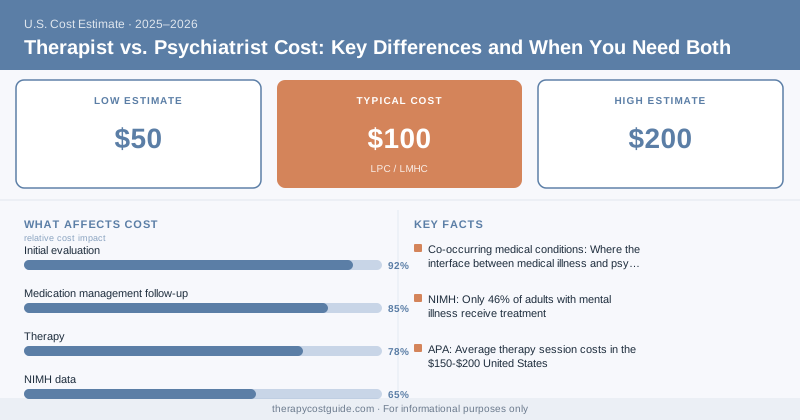
Therapist vs. Psychiatrist Cost: Key Differences and When You Need Both
{ if eq .Lang "zh" }{ else }{ end }In 2010, a 45-minute psychiatric medication management visit cost about $100–$150. By 2024, that same visit runs $200–$500 at a private practice psychiatrist. Meanwhile, therapy sessions have increased modestly but remain far more accessible.
The psychiatrist shortage is real — and it’s one of the most significant structural problems in mental health care. Understanding the difference between these providers, what they each cost, and when you actually need both can save thousands of dollars and months of waiting.
Therapist vs. Psychiatrist: Cost Comparison
| Provider | Education | Session Cost | Prescribes? | Typical Visit Type |
|---|---|---|---|---|
| LPC / LMHC | Master’s | $100 – $200 | No | Therapy, 50 min |
| LCSW | Master’s (MSW) | $100 – $200 | No | Therapy, 50 min |
| PhD/PsyD Psychologist | Doctoral | $150 – $300 | Rarely* | Therapy/testing |
| Psychiatrist (MD/DO) | Medical degree + residency | $200 – $500 | Yes | Eval + med mgmt |
| NP (Psychiatric Nurse Practitioner) | Master’s/Doctoral nursing | $100 – $250 | Yes | Eval + med mgmt |
| PA (Physician Assistant, psychiatric) | Master’s | $100 – $200 | Yes (supervised) | Eval + med mgmt |
*Psychologists can prescribe in New Mexico, Louisiana, Illinois, Iowa, and the U.S. military — otherwise no.
What Psychiatrists Actually Do (And Don’t Do)
This surprises many patients: most psychiatrists today primarily do medication management, not therapy. In the 1970s and 1980s, psychiatrists commonly provided psychotherapy. That has largely shifted.
A typical psychiatrist workflow today:
- Initial evaluation: 45–90 minutes, comprehensive psychiatric assessment, $300–$500
- Medication management follow-up: 15–30 minutes, every 1–3 months, $200–$350/visit
- Therapy: Relatively rare from psychiatrists; when offered, costs $300–$500/session
This model emerged from economic pressures: the same psychiatrist who charges $300 for a 30-minute medication check can earn 2–3x more per hour than doing 50-minute therapy sessions.
The Split Treatment Model: Cost-Effective and Evidence-Based
Split treatment — seeing a therapist for weekly sessions and a psychiatrist quarterly for medication management — is the standard of care for most moderate-to-severe mental health conditions. It’s also cheaper than getting both from a psychiatrist. A psychiatrist seeing you monthly for therapy would cost $2,400–$6,000/year for sessions alone. A therapist at $150/session weekly ($7,800/year) plus a psychiatrist quarterly at $300/visit ($1,200/year) totals $9,000 — but you’re getting weekly therapy instead of monthly, which is substantially more treatment. When split care is feasible, it’s almost always the superior clinical and cost model.When Do You Need a Psychiatrist?
Not everyone does. Many people receive adequate mental health care from their primary care physician (who can prescribe antidepressants and anxiolytics) plus a therapist. When a psychiatrist adds real value:
- Complex medication needs: Multiple medications, treatment-resistant depression, bipolar disorder, schizophrenia, or presentations where getting the medication right is genuinely complex
- Diagnostic uncertainty: When you need a comprehensive psychiatric evaluation to distinguish between similar presentations (e.g., bipolar II vs. treatment-resistant depression vs. ADHD)
- Failed primary care medication: If your PCP has tried 2+ antidepressants and they haven’t worked, a psychiatrist’s expertise in augmentation strategies and diagnostic refinement adds value
- Conditions requiring specialty medication: Lithium monitoring, clozapine (requires REMS registry), stimulants for adult ADHD in some states, MAOIs
- Co-occurring medical conditions: Where the interface between medical illness and psychiatric condition requires physician-level training
NIMH data shows that only about 25% of people with serious mental illness receive appropriate medication management from a psychiatrist; the majority who receive medication get it from primary care physicians.
The Psychiatrist Shortage: A Practical Reality
There aren’t enough psychiatrists. NAMI reports that psychiatrists are the second most difficult specialty for patients to access (after neurology), with average wait times of 25+ days and many areas having no accepting psychiatrists at all.
This has practical consequences:
- Psychiatric Nurse Practitioners (PMHNPs) now provide the majority of psychiatric medication management in many areas — at $100–$250/visit, with significantly shorter wait times
- Telepsychiatry has expanded access dramatically: services like Talkiatry, Done, Cerebral (with caveats), and psychiatrist-staffed telehealth platforms can typically see patients within days, at $150–$300/visit
- Primary care prescribers: For uncomplicated depression and anxiety, your PCP is a legitimate starting point for medication — they’ll refer if complexity warrants it
Telehealth Psychiatry: The Practical Option for Most People
For someone who needs psychiatric medication management without extreme complexity, telehealth psychiatry has become the most practical option:
- Average wait time: 3–7 days vs. 25–60 days for in-person psychiatrists
- Cost: $150–$300/session, often cheaper than in-person private practice
- Insurance: Most major telehealth psychiatric platforms accept insurance
- Good for: ADHD evaluation, antidepressant management, initial psychiatric evaluations, anxiety medication
Not ideal for: involuntary treatment needs, patients requiring in-person assessments, complex medication regimens requiring laboratory monitoring visits, or presentations requiring urgent in-person intervention.
Building Cost-Efficient Mental Health Care
The most cost-efficient model for most adults with depression, anxiety, or PTSD:
- Start with your PCP: Evaluate for medication; if a standard first-line antidepressant is appropriate, your PCP can prescribe it
- Add a therapist: Weekly sessions with an in-network LPC, LCSW, or licensed counselor at $20–$60 copay
- Add psychiatric consultation if needed: Telehealth PMHNP or psychiatrist for complex medication questions, quarterly follow-ups
This model can deliver comprehensive mental health care for many people at $200–$600/month total — significantly less than seeing a psychiatrist weekly or navigating complex out-of-network care.
{ if eq .Lang "zh" }Disclaimer: TherapyCostGuide provides cost information for educational purposes only. We are not a mental health provider and do not offer clinical advice or treatment. Cost ranges are based on national survey data and vary significantly by location, provider credentials, practice setting, and insurance plan. Always consult a licensed mental health professional for treatment decisions. If you are in crisis, call or text 988 (Suicide & Crisis Lifeline) or go to your nearest emergency room.