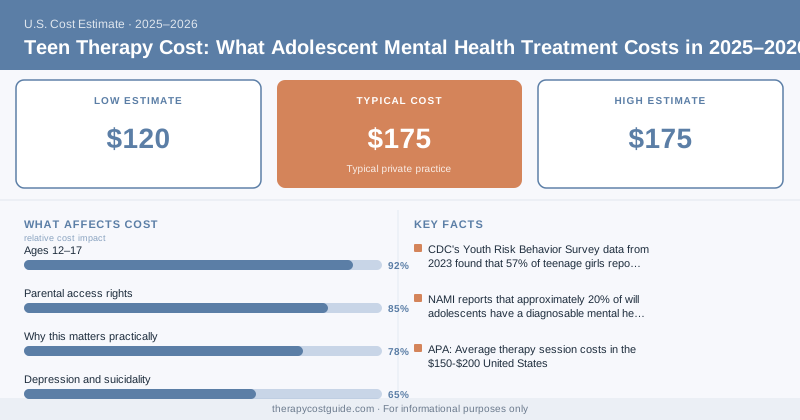
Teen Therapy Cost: What Adolescent Mental Health Treatment Costs in 2025–2026
{ if eq .Lang "zh" }{ else }{ end }Adolescent mental health has deteriorated dramatically over the past decade. CDC’s Youth Risk Behavior Survey data from 2023 found that 57% of teenage girls reported persistent feelings of sadness or hopelessness — the highest rate recorded in the survey’s history. Among all teens, 42% reported persistent sadness in 2021, up from 28% in 2011.
The demand for adolescent therapists is vastly outpacing supply. Here’s what teen therapy costs, what the most effective approaches are, and how to navigate an overwhelmed system.
Teen Therapy Session Costs
| Setting | Cost Per Session | Notes |
|---|---|---|
| Private practice adolescent therapist | $100 – $250 | Licensed clinician, teen specialization |
| Group practice therapist | $90 – $200 | Often more insurance contracts |
| Community mental health center | $10 – $80 | Sliding scale, income-based |
| School-based therapist | Often free | During school hours, district-funded |
| DBT skills group (adolescent) | $50 – $100/session | Group format, typically with individual therapy |
| Intensive Outpatient Program (IOP) for teens | $200 – $500/day | Higher level of care |
| Telehealth adolescent therapist | $70 – $180 | Platform or independent, ages 13+ typically |
| Typical private practice | $120 – $175 | Most U.S. markets |
Parent consultation sessions — typically every 3–6 sessions — are billed separately at the same rate. Many adolescent therapists schedule monthly parent meetings as part of the treatment structure.
Confidentiality Rules for Adolescent Therapy: What Parents Need to Know
Confidentiality for teens is legally complex and varies by state. Here’s the general framework:
Ages 12–17: In most states, adolescents have some independent right to confidentiality in mental health treatment. The therapist generally:
- Won’t share session content with parents without the teen’s consent
- Will share information if there’s risk of harm (suicidality, abuse, danger to others)
- May share general treatment progress without specific content
Parental access rights: Most states give parents legal access to minor children’s medical records. However, many adolescent therapists negotiate a working agreement at the outset: parents receive general updates but not session-specific content, to preserve the therapeutic relationship.
Why this matters practically: A teenager who doesn’t trust that their therapist won’t report everything to their parents won’t disclose anything meaningful. Confidentiality isn’t just an ethical rule — it’s a clinical necessity for effective adolescent therapy. Most experienced adolescent therapists explicitly discuss this with both the teen and the parent in the first session.
Involving Parents Without Breaking Confidentiality
Effective adolescent therapy usually involves parents — but strategically. The therapist might meet with parents separately to provide psychoeducation, offer parenting guidance, or coordinate family communication strategies. Family sessions may address relationship patterns. But the individual teen’s session content typically stays protected. This three-layer structure (teen individual sessions + parent consultations + occasional family sessions) is the evidence-based model for most adolescent presentations.Best Approaches for Teen Mental Health Conditions
Depression and suicidality: The Adolescent Depression Empowerment and Psycho-Social Supports (ADEPT) model and Interpersonal Therapy for Adolescents (IPT-A) have the strongest evidence. CBT is also effective.
Anxiety: CBT for anxiety in adolescents has excellent RCT evidence. Family-based approaches that address parent anxiety alongside the teen’s are particularly effective for younger adolescents.
Emotional dysregulation and self-harm: DBT (Dialectical Behavior Therapy) is the gold-standard for adolescents with severe emotional dysregulation, non-suicidal self-injury, and borderline personality features. DBT-A (adolescent adaptation) is shorter than standard adult DBT and typically involves families.
Trauma: TF-CBT (Trauma-Focused CBT) has excellent evidence for adolescents; designed for ages 3–18. EMDR is also effective for single-incident trauma.
ADHD: Behavioral strategies, CBT adapted for ADHD, and skills training (often including organizational skills) in combination with medication management.
DBT for Teens: The Most Important Development in Adolescent Therapy
DBT for Adolescents (DBT-A) deserves specific attention because it’s become the primary evidence-based treatment for the cluster of problems that’s become most prevalent in teen girls: emotional dysregulation, suicidal ideation, self-harm, and severe depression.
DBT-A was developed by Alec Miller and Jill Rathus specifically for adolescents and includes:
- Individual therapy: Weekly 50-minute sessions
- Family skills training group: Teens and parents learn DBT skills together (weekly, 90 minutes)
- Phone coaching: Between-session contact with the therapist during crises
Standard DBT-A runs 16–24 weeks. Cost at full standard program:
- Individual sessions: $120–$180/week = $1,920–$4,320 total
- Skills group: $50–$100/session = $800–$2,400 total
- Total program cost (out of pocket): $2,720–$6,720
With insurance: individual therapy copays ($20–$60) plus group copays, total often $500–$1,800 for the full program.
NAMI reports that approximately 20% of adolescents will have a diagnosable mental health condition before age 18, and suicide is the second leading cause of death for people aged 10–34.
Insurance Coverage for Teen Therapy
Adolescent mental health services are covered by insurance under the same mental health parity rules as adult services. Key points:
- Medicaid and CHIP: Cover mental health services for children and adolescents; may have better coverage than commercial insurance for serious presentations
- ACA marketplaces: Essential health benefits include mental health, children’s behavioral health services
- School-based services through IEP: Free for students with qualifying disabilities; can include individual therapy as a related service
DBT programs sometimes require specific pre-authorization as “intensive outpatient” rather than standard therapy — the group component in particular. Get pre-authorization before starting a full DBT-A program if possible.
Finding an Adolescent Therapist
This is genuinely difficult. Adolescent therapist waitlists of 2–4 months are common in most U.S. metro areas. Strategies:
- Contact multiple therapists simultaneously — add yourself to waitlists broadly
- Ask about telehealth — virtual waitlists are often shorter, and telehealth is appropriate for most teen presentations
- Ask your pediatrician — pediatric offices increasingly have embedded behavioral health counselors who can provide bridge support
- School counselors — can provide short-term support and know community referral resources
- Crisis resources for urgent situations: Crisis Text Line (text HOME to 741741), 988 Suicide and Crisis Lifeline (call or text 988)
Resources for Adolescent Mental Health
- NAMI Teen and Young Adult Helpline: Call/text 988 — free, confidential
- Crisis Text Line: Text HOME to 741741
- 988 Suicide and Crisis Lifeline: 988 (call or text)
- Psychology Today: Filter by “adolescents” age range and location
- Child Mind Institute (childmind.org): Excellent psychoeducation for parents and teens; professional referral resources
- SAMHSA: findtreatment.samhsa.gov for community-based adolescent services
Disclaimer: TherapyCostGuide provides cost information for educational purposes only. We are not a mental health provider and do not offer clinical advice or treatment. Cost ranges are based on national survey data and vary significantly by location, provider credentials, practice setting, and insurance plan. Always consult a licensed mental health professional for treatment decisions. If you are in crisis, call or text 988 (Suicide & Crisis Lifeline) or go to your nearest emergency room.