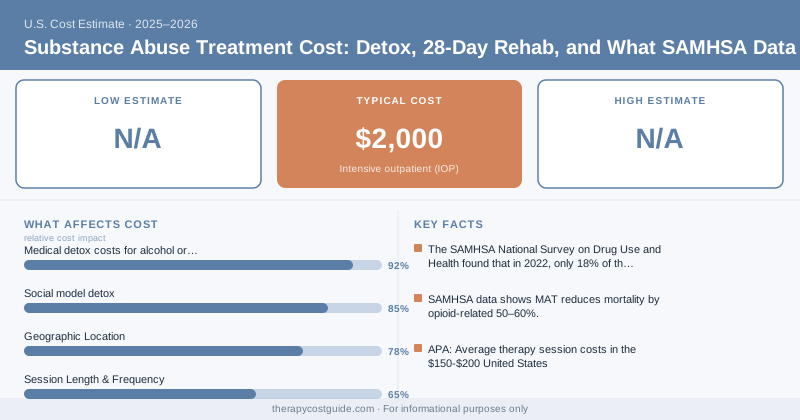
Substance Abuse Treatment Cost: Detox, 28-Day Rehab, and What SAMHSA Data Shows
{ if eq .Lang "zh" }{ else }{ end }The SAMHSA National Survey on Drug Use and Health found that in 2022, only 18% of the 48.7 million Americans with a substance use disorder received any treatment. Cost is the most frequently cited barrier — but the range of what treatment actually costs is enormous. Here’s an honest breakdown.
Cost by Treatment Level
| Treatment Level | Daily Cost | Total Typical Cost | Duration |
|---|---|---|---|
| Medical detox (inpatient) | $500 – $2,000 | $3,000 – $14,000 | 3 – 7 days |
| Short-term residential (28-day) | $200 – $2,000 | $6,000 – $60,000 | 28 days |
| Long-term residential (90-day) | $150 – $1,200 | $12,000 – $108,000 | 60 – 90 days |
| Intensive outpatient (IOP) | $100 – $500 | $2,000 – $8,000 | 8 – 12 weeks |
| Outpatient (weekly sessions) | $100 – $250/session | $2,400 – $6,000 | 12 months |
| Methadone maintenance | $10 – $20/day | $3,600 – $7,200/year | Ongoing |
| Medication-assisted treatment (buprenorphine) | $8 – $20/day | $2,900 – $7,300/year | 6+ months |
The 28-day model became standard in American addiction treatment partly due to insurance — historically, 30 days was the coverage limit for many plans. Today, evidence strongly supports longer treatment durations for better outcomes, but cost and insurance constraints often drive people toward the 28-day model.
Medical Detox: Why It Can’t Be Skipped for Some Substances
Not everyone needs medical detox. For opioid use disorder, marijuana, or stimulants, medically supervised detox is often not required for safety. But for alcohol and benzodiazepine dependence, withdrawal can be life-threatening — seizures and delirium tremens can occur without proper medical management.
Medical detox costs for alcohol or benzo dependence: $500–$2,000/day for 3–7 days. With insurance, your cost-share is typically the deductible + 20–30% coinsurance. Without insurance, $3,000–$14,000 out-of-pocket.
Social model detox: Some community facilities offer non-medical detox support (monitoring, peer support, comfort measures) for substances where withdrawal isn’t medically dangerous. Cost: $300–$600/day, sometimes less.
The 28-Day Rehab Cost Breakdown
The $6,000–$60,000 range for a 28-day program breaks down to roughly three tiers:
Budget tier ($6,000–$12,000): Publicly funded or non-profit facilities. Often group-based with limited individual therapy. May have waitlists. Clinical quality varies widely.
Mid-range ($12,000–$30,000): Private facilities with Joint Commission accreditation, licensed counselors, individual therapy 3–5x/week, and structured aftercare planning. This is where most commercially insured patients land.
Luxury tier ($30,000–$60,000+): Resort-like facilities in Malibu, Scottsdale, or similar. Private rooms, spa services, gourmet meals, celebrity and executive clientele. Clinical programming is similar to mid-range; you’re paying primarily for amenities and privacy.
The Evidence on 28 Days vs. 90 Days
A frequently cited NIDA finding: patients who remain in treatment for longer periods have better outcomes. Research consistently shows 90 days of treatment produces significantly better sustained sobriety rates than 28-day programs.
If you’re weighing cost vs. duration, the $12,000–$25,000 you spend on an additional 60 days may save significantly more in future treatment costs, lost employment, and legal issues. Ask your treatment team about outcome data for their specific program length.
Insurance Coverage for SUD Treatment
The Affordable Care Act classified substance use disorder treatment as an Essential Health Benefit, meaning all marketplace plans must cover it. The Mental Health Parity and Addiction Equity Act (MHPAEA) requires coverage comparable to medical/surgical benefits.
What this means in practice:
- Medical detox: Usually covered as medical hospitalization
- Residential rehab: Requires prior authorization; typically covered for medically necessary stays
- IOP and outpatient: Covered with standard cost-sharing
What insurers routinely try to deny:
- Long-term residential (60–90 days): Insurers often try to push patients to step down after 14–28 days even when clinically inappropriate. Appeal denials aggressively with your treatment team’s support.
- Out-of-network facilities: Coverage is often 40–60% of “usual and customary” rates, leaving significant patient responsibility
The Tim Ryan Fairness Act (pending as of 2025): Proposed legislation that would strengthen MHPAEA enforcement for SUD treatment. Check current status as it may affect coverage requirements.
Medication-Assisted Treatment: The Most Underutilized Affordable Option
For opioid use disorder, FDA-approved medications — methadone, buprenorphine (Suboxone), and naltrexone — are the most effective treatments. SAMHSA data shows MAT reduces opioid-related mortality by 50–60%. Yet fewer than 40% of people with OUD receive it.
Buprenorphine (Suboxone): Generic available, $8–$20/day. Requires a waivered prescriber. Medicaid covers it in all states; Medicare Part D covers it. Commercial insurance almost universally covers it with a prescription.
Methadone (for OUD): Must be dispensed at a federally certified Opioid Treatment Program (OTP). Cost is $10–$20/day, typically covered by Medicaid. Commercial insurance coverage varies.
Naltrexone (Vivitrol, injectable): $1,200–$1,500/month for the monthly injection. Generic oral tablets: $50–$100/month. Insurance coverage is widespread.
Finding Affordable Treatment
SAMHSA’s National Helpline: 1-800-662-4357 — Free, confidential, 24/7. Treatment referrals in your area, including free and sliding-scale programs.
SAMHSA Treatment Locator: findtreatment.gov — Filter by payment type (free, Medicaid, sliding scale).
State-funded treatment: Every state has substance use disorder treatment funding through SAMHSA block grants. Income-eligible individuals can often access residential or IOP treatment at very low or no cost. Search “[your state] substance use disorder treatment assistance.”
FQHC-based outpatient SUD treatment: Federally Qualified Health Centers provide outpatient SUD treatment (counseling + MAT) on a sliding-scale basis. Many have same-week appointments. Find one at findahealthcenter.hrsa.gov.
Veterans: VA provides comprehensive SUD treatment including residential, IOP, and MAT at no cost for eligible veterans.
{ if eq .Lang "zh" }Disclaimer: TherapyCostGuide provides cost information for educational purposes only. We are not a mental health provider and do not offer clinical advice or treatment. Cost ranges are based on national survey data and vary significantly by location, provider credentials, practice setting, and insurance plan. Always consult a licensed mental health professional for treatment decisions. If you are in crisis, call or text 988 (Suicide & Crisis Lifeline) or go to your nearest emergency room.