SonderMind Cost 2026: Insurance Copays vs. $75–$150 Self-Pay Sessions
{ if eq .Lang "zh" }{ else }{ end }In 2010, finding an insurance-friendly therapist meant calling a dozen offices and hearing “not accepting new clients” each time. SonderMind exists to kill that phone-tag — it matches you with a licensed therapist who takes your plan, then bills your insurance directly. Your cost? Usually just a copay.
So the price you pay isn’t really set by SonderMind. It’s set by your insurance card. Here’s how that shakes out.
SonderMind’s Pricing Model
SonderMind is a therapist-matching service, not a subscription app. You answer a few questions, get matched to a provider in your state, and book sessions. If that provider is in-network with your insurance, you pay your plan’s copay or coinsurance — nothing more.
Self-pay clients pay the therapist’s session rate, which SonderMind has historically positioned in the $75–$150 range depending on the provider.
| Payment Method | Typical Cost Per Session | Set By |
|---|---|---|
| In-network copay | $20 – $50 | Your insurance plan |
| Coinsurance before deductible | $75 – $140 | Negotiated rate |
| Self-pay | $75 – $150 | Individual therapist |
| Initial intake / longer session | Slightly higher | Provider |
Key Takeaway
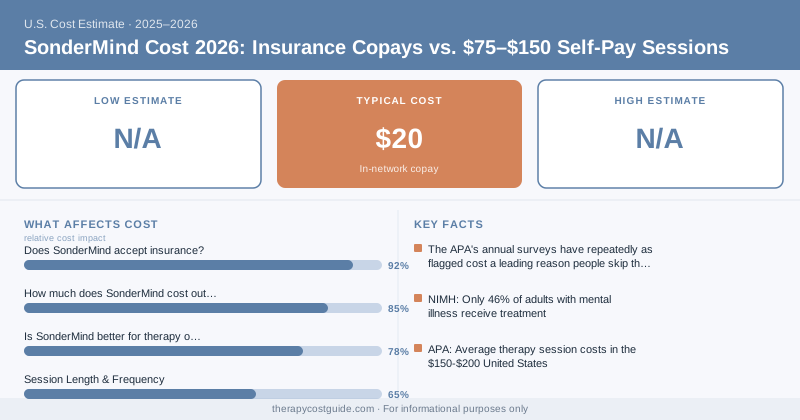
SonderMind matches you to insurance-accepting therapists and bills your plan. Insured clients typically pay only a copay (often $20–$50). Self-pay clients pay the therapist’s rate, usually $75–$150 a session.The Insurance Reality Behind the Price
People assume online therapy means a flat monthly fee. With SonderMind, that’s wrong. Because it runs everything through your benefits, your out-of-pocket cost mirrors a standard in-network office visit. The APA’s annual surveys have repeatedly flagged cost as a leading reason people skip therapy — and a $30 copay is a lot easier to absorb than a $300 monthly subscription.
If you want to see how marketplace billing compares to flat-fee apps side by side, our online therapy platforms comparison covers it.
What You Get
- A licensed therapist matched to your needs, location, and plan
- Full-length live video sessions (45–55 minutes typical)
- Direct insurance billing
- The ability to re-match if the fit isn’t right
There’s no required messaging plan and no app subscription layered on top. You’re essentially getting traditional therapy with the admin handled for you.
Cost Pitfalls to Know
Your deductible is the big variable. On a high-deductible plan you haven’t met, you may owe the full negotiated rate per session until you reach it — then your copay takes over. Some plans, though, waive deductibles for outpatient behavioral health entirely.
SonderMind Compared to Other Platforms
If you’ve priced BetterHelp, you know it charges a flat monthly fee outside of insurance. SonderMind does the opposite — for insured clients, the copay model is almost always cheaper. If you’re paying cash, weigh SonderMind’s self-pay rates against the budget options in how to find affordable therapy and therapy cost without insurance.
Also note: SonderMind delivers real live therapy sessions, comparable to local individual therapy cost, not async chat.
Frequently Asked Questions
Does SonderMind accept insurance? Yes. SonderMind partners with major insurers and bills them directly. Accepted plans vary by state, so you’ll confirm your specific coverage during the matching process.
How much does SonderMind cost out of pocket? With in-network insurance, most clients pay a copay of roughly $20–$50 per session. Without insurance, self-pay rates generally fall between $75 and $150 depending on the provider.
Is SonderMind better for therapy or psychiatry? SonderMind focuses primarily on therapy with licensed counselors and psychologists. If you mainly need medication management, compare options in our guide to telehealth psychiatry cost.
{ if eq .Lang "zh" }Disclaimer: TherapyCostGuide provides cost information for educational purposes only. We are not a mental health provider and do not offer clinical advice or treatment. Cost ranges are based on national survey data and vary significantly by location, provider credentials, practice setting, and insurance plan. Always consult a licensed mental health professional for treatment decisions. If you are in crisis, call or text 988 (Suicide & Crisis Lifeline) or go to your nearest emergency room.