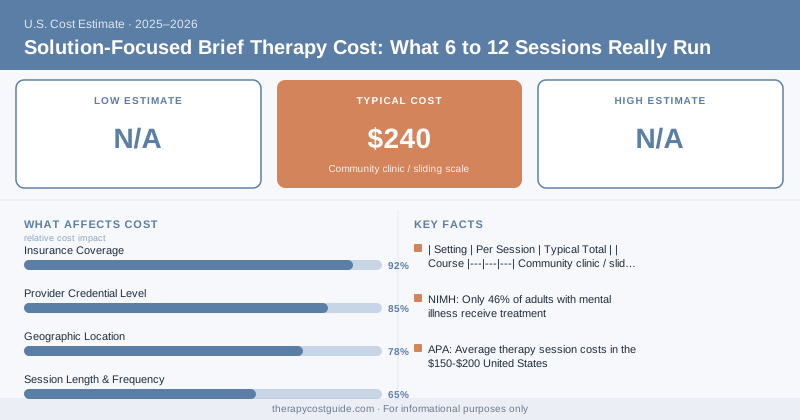
Solution-Focused Brief Therapy Cost: What 6 to 12 Sessions Really Run
{ if eq .Lang "zh" }{ else }{ end }Most people who walk into solution-focused brief therapy (SFBT) finish in 5 to 8 sessions. That’s the whole point. At $100 to $200 a session, you’re looking at a total of roughly $500 to $1,600 for a complete course of treatment, which is a fraction of what open-ended talk therapy can run over a year.
SFBT skips the deep dive into your childhood. Instead, your therapist helps you picture what your life looks like once the problem is solved, then works backward to small, doable steps. It’s fast, practical, and goal-driven. That brevity is exactly why it tends to cost less overall, even though the per-session rate looks identical to other modalities.
What You’ll Actually Pay Per Session
The hourly rate for SFBT isn’t special. It tracks the local market for any licensed therapist. What changes the math is the number of sessions.
| Setting | Per Session | Typical Total Course |
|---|---|---|
| Community clinic / sliding scale | $40 – $90 | $240 – $720 |
| Licensed therapist (LPC, LCSW) | $100 – $160 | $600 – $1,280 |
| Psychologist (PhD/PsyD) | $150 – $250 | $900 – $2,000 |
| Online platform (subscription) | $60 – $100 effective | varies by plan |
A 2013 meta-analysis published in Research on Social Work Practice reviewed 43 studies and found SFBT produced meaningful improvement in the majority of cases, often in fewer sessions than traditional approaches. Fewer sessions means a smaller bill, which is the practical payoff for your wallet.
Key Takeaway
SFBT’s per-session price is normal ($100–$200), but the short course length keeps total spending low. Budget for 6–8 sessions and you’ll likely land between $600 and $1,600 out of pocket without insurance.Why It’s Cheaper Than Long-Term Therapy
Compare this to psychodynamic or open-ended approaches that can run weekly for a year or more. The American Psychological Association notes that the average course of psychotherapy historically ran far longer than what brief models target. SFBT was designed in the 1980s specifically to be efficient.
That efficiency matters if you’re paying cash. If you’ve been wondering why is therapy so expensive, the answer often comes down to volume, lots of sessions over a long stretch. SFBT attacks the volume problem directly.
Insurance and SFBT
Most insurers don’t reimburse based on the named modality. They reimburse the CPT code, usually 90834 (45-minute psychotherapy) or 90837 (60-minute). So whether your therapist practices SFBT, CBT, or something else, the coverage rules are identical.
After your deductible, a typical copay lands between $20 and $50 per visit. For a 6-session course, that’s $120 to $300 total. Worth confirming whether your plan covers it before you start, since the rules vary by state and carrier. Our guide on does insurance cover therapy walks through how to verify your benefits.
SFBT vs. Other Short-Term Options
SFBT isn’t the only fast model. Acceptance and commitment therapy can also be delivered briefly, and structured CBT protocols often run 12 to 16 sessions. SFBT tends to be the shortest of the bunch, which gives it the edge on total cost when your goal is specific and concrete.
If your concern is broad or rooted in long-standing patterns, a brief model may leave you wanting more. In that case the lower sticker price can be misleading, because you might layer on a second course later.
Frequently Asked Questions
How many SFBT sessions will I need? Most people complete treatment in 5 to 8 sessions. Some resolve a single, well-defined goal in as few as 3. If you’re still going after 12 sessions, it’s worth asking whether SFBT is the right fit or whether a different approach makes sense.
Is SFBT cheaper than CBT? Per session, no, the rates are basically the same. Over a full course, usually yes, because SFBT typically wraps up faster. CBT protocols often run 12 to 20 sessions, so the total can be double.
Can I do solution-focused therapy online? Yes. SFBT translates well to video because it’s conversation-driven and doesn’t require physical materials. Online platforms can lower your effective per-session cost, especially on a subscription plan. See online therapy vs in-person cost for the trade-offs.
{ if eq .Lang "zh" }Disclaimer: TherapyCostGuide provides cost information for educational purposes only. We are not a mental health provider and do not offer clinical advice or treatment. Cost ranges are based on national survey data and vary significantly by location, provider credentials, practice setting, and insurance plan. Always consult a licensed mental health professional for treatment decisions. If you are in crisis, call or text 988 (Suicide & Crisis Lifeline) or go to your nearest emergency room.