Sober Living Home Cost 2025–2026: Monthly Rates and What's Included
{ if eq .Lang "zh" }{ else }{ end }David finished 30 days of inpatient rehab on a Friday. Going straight home that weekend felt too risky — same house, same triggers, same everything. Instead, he moved into a sober living home for $600 a month: a shared room, a curfew, mandatory house meetings, and drug testing. Six months later, he credits that in-between step as much as the rehab itself.
Here’s what sober living actually costs, and how it fits into a recovery budget.
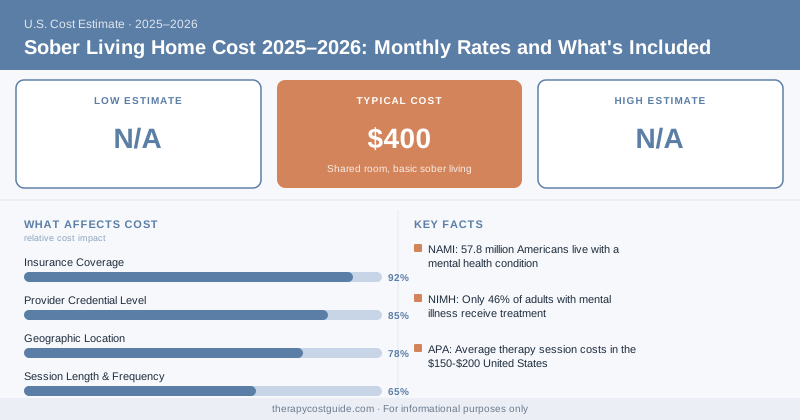
Sober Living Home Costs
| Room Type / Program Level | Typical Monthly Cost |
|---|---|
| Shared room, basic sober living | $400 – $800 |
| Private room, basic sober living | $800 – $1,500 |
| Structured program (added counseling/accountability) | $1,200 – $2,000 |
| Upscale/high-cost-area sober living | $2,000 – $3,500 |
| Executive/luxury sober living | $3,500 – $6,000+ |
Most sober living homes require a security deposit similar to standard rental housing, typically one month’s rent, plus proof of income or a clear plan for how you’ll pay ongoing rent.
Why Insurance Doesn’t Cover This
Sober living homes are residential housing arrangements, not licensed clinical treatment facilities — there’s no medical or therapeutic billing code that applies, because the home itself doesn’t provide clinical treatment (though residents often continue outpatient therapy or IOP separately while living there). This is the key distinction from inpatient rehab or partial hospitalization programs, which are licensed treatment and typically insurance-billable.
What NARR Certification Actually Verifies
The National Alliance for Recovery Residences (NARR) is the leading certifying body for sober living homes, evaluating safety standards, staff qualifications, house rules enforcement, and operational transparency. Because sober living homes are largely unregulated at the state level compared to licensed treatment facilities, NARR certification is one of the few reliable signals of quality. Ask directly whether a home is NARR-certified (or certified by a state-level equivalent) before signing a lease, especially for a first stay.What’s Typically Included in the Rent
- A bed (shared or private room) in a supervised, substance-free house
- House rules enforcement: curfews, chores, mandatory house meetings
- Random or scheduled drug/alcohol testing
- A house manager or peer leader on-site or on-call
- Access to a recovery-oriented community of housemates in similar stages of recovery
What’s typically not included: clinical therapy, medication management, or meals in most (though not all) homes — residents usually continue outpatient treatment separately and are expected to work or attend school while living there.
How Long People Typically Stay
There’s no fixed timeline — some residents stay 90 days as a structured bridge between inpatient treatment and independent living; others stay a year or more, especially if it provides stability they don’t yet have elsewhere. NARR research and clinical literature generally associate longer stays in structured recovery housing with better sustained recovery outcomes, though individual circumstances vary substantially.
SAMHSA data on substance use disorder recovery consistently identifies stable, substance-free housing as one of the strongest predictors of sustained recovery — which is precisely the gap sober living homes are designed to fill between intensive treatment and fully independent living.
What Determines Cost in Your Area
- Local cost of living — sober living rent tracks local rental market rates broadly, so coastal and major metro areas run higher than rural or lower-cost regions
- Structure level — homes with added on-site counseling, more intensive drug testing, or lower resident-to-staff ratios cost more than a purely peer-managed house
- Room privacy — private rooms typically cost 50–100% more than shared rooms
Bottom Line
Sober living homes cost $400–$1,500 a month for most standard shared or private rooms, rarely covered by insurance since they’re housing rather than clinical treatment. NARR certification is a meaningful quality signal worth prioritizing in this loosely regulated space.
{ if eq .Lang "zh" }Disclaimer: TherapyCostGuide provides cost information for educational purposes only. We are not a mental health provider and do not offer clinical advice or treatment. Cost ranges are based on national survey data and vary significantly by location, provider credentials, practice setting, and insurance plan. Always consult a licensed mental health professional for treatment decisions. If you are in crisis, call or text 988 (Suicide & Crisis Lifeline) or go to your nearest emergency room.