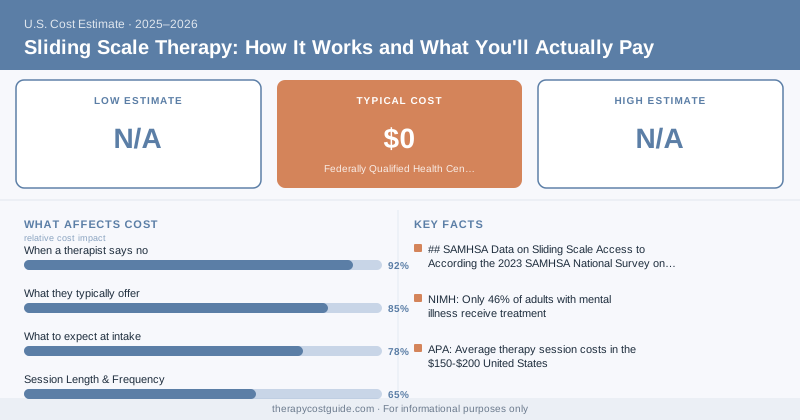
Sliding Scale Therapy: How It Works and What You'll Actually Pay
{ if eq .Lang "zh" }{ else }{ end }“Sliding scale” sounds like a polite way of saying “we’ll charge you whatever you can afford,” but it’s actually a structured pricing model — one that can make the difference between accessing therapy and not.
Here’s exactly how it works.
What Sliding Scale Actually Means
A sliding scale fee is a session price that adjusts based on your income and household size. Rather than a fixed per-session rate, you’re assigned a fee that represents a manageable percentage of your income.
Community mental health centers — the most common providers of sliding scale care — typically use the federal poverty level (FPL) guidelines to determine fees. A household at 100% FPL might pay $5–$10 per session; a household at 200% FPL might pay $30–$50.
Private therapists who offer sliding scale set their own income brackets. A common structure:
- Income under $30,000: sessions at $50–$80
- Income $30,000–$50,000: sessions at $80–$120
- Income $50,000–$75,000: sessions at $120–$150
- Income above $75,000: full rate
| Setting | Typical Sliding Scale Range | Income Verification? |
|---|---|---|
| Federally Qualified Health Center | $0 – $50 | Yes, documentation required |
| Community mental health center | $5 – $60 | Yes, income documentation |
| Open Path Collective | $30 – $80 | Self-reported under $100K |
| Private practice (therapist’s own scale) | $50 – $120 | Usually self-reported |
| University training clinic | $20 – $60 | Often self-reported |
How to Ask a Private Therapist for Sliding Scale
This conversation makes many people uncomfortable, but therapists who offer sliding scale expect it. Here’s a straightforward script:
“I’m interested in working with you, but I’m concerned about the cost. Do you have any sliding scale availability? My income is [amount], and I’m trying to figure out what’s realistic.”
Being specific about your income helps. Saying “I can’t afford your full rate” is less useful than “I earn $35,000 a year and currently paying $1,200 in rent.” Therapists who offer sliding scale are making a judgment call about what you can afford — give them information to work with.
When a therapist says no: Ask if they know other therapists in the area who have sliding scale openings. Therapists often refer to each other and may know who has capacity.
Sliding Scale vs. Reduced Rate: An Important Distinction
Some therapists offer a “reduced rate” to everyone, separate from income-based sliding scale. A reduced rate might be a flat $100 (vs. their standard $175) — available to anyone who asks, not income-verified.
True sliding scale ties the fee to your specific income and adjusts accordingly. Both are worth asking about. When calling a therapist, ask both: “Do you offer a sliding scale based on income?” and “Do you have a reduced rate available?”
Community Mental Health: The Full Sliding Scale Experience
Community mental health centers (also called community behavioral health centers or mental health centers) are the primary source of income-based sliding scale care in the United States. They’re funded through a combination of state, federal, and county money specifically to serve people who can’t afford private care.
What they typically offer:
- Individual therapy
- Group therapy
- Psychiatric services (medication management)
- Substance use treatment
- Crisis services (often 24/7)
- Case management
What to expect at intake:
- An eligibility screening call or visit
- Income documentation (pay stubs, tax return, or self-certification for very low incomes)
- An intake assessment with a clinician
- Assignment to a therapist (or wait list)
The SAMHSA estimates there are approximately 9,000 federally certified behavioral health treatment facilities in the United States. Find your nearest one at findtreatment.gov or by calling 211.
What Sliding Scale Doesn’t Cover
Sliding scale typically applies to outpatient therapy sessions. It often does not reduce the cost of:
- Psychological testing and assessment
- Intensive outpatient or partial hospitalization programs (though these have separate financial assistance programs)
- Medications (those require pharmacy assistance programs separately)
- Crisis stabilization beyond the immediate visit
SAMHSA Data on Sliding Scale Access
According to the 2023 SAMHSA National Survey on Drug Use and Health, the single most commonly cited barrier to mental health treatment among adults who felt they needed care but didn’t receive it was cost (32%). Among those who did access sliding scale care at community health centers, 78% reported that the reduced cost was the primary reason they were able to access treatment at all.
The system isn’t perfect — wait times at community centers are real, and the level of care varies. But for many people, sliding scale is the difference between getting help and going without.
{ if eq .Lang "zh" }Disclaimer: TherapyCostGuide provides cost information for educational purposes only. We are not a mental health provider and do not offer clinical advice or treatment. Cost ranges are based on national survey data and vary significantly by location, provider credentials, practice setting, and insurance plan. Always consult a licensed mental health professional for treatment decisions. If you are in crisis, call or text 988 (Suicide & Crisis Lifeline) or go to your nearest emergency room.