Seasonal Affective Disorder Treatment Cost: 2026 Price Guide
{ if eq .Lang "zh" }{ else }{ end }A $60 light box is the single most cost-effective mental health purchase a lot of people will ever make. That’s the strange thing about seasonal affective disorder — one of its frontline treatments is a one-time gadget you can buy online, no prescription needed. But for many people SAD needs more than light, and that’s where the real costs come in.
Let’s walk through what each piece actually costs.
What SAD Treatment Costs
Treatment for seasonal affective disorder usually combines one or more of three approaches: light therapy, talk therapy, and medication. Here’s how the numbers shake out.
| Treatment | Typical Cost | Notes |
|---|---|---|
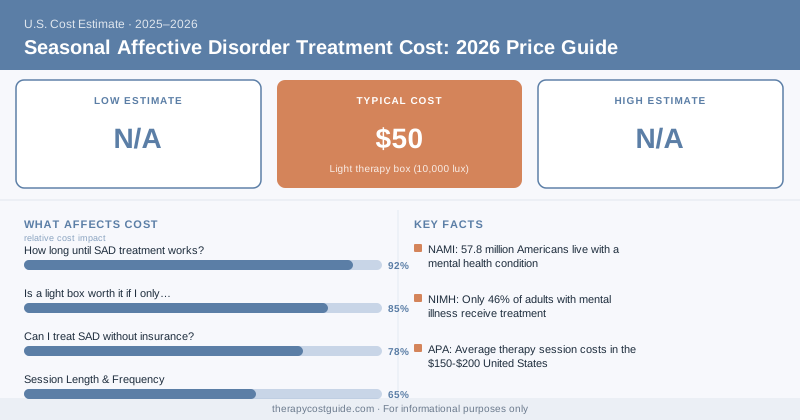
| Light therapy box (10,000 lux) | $50 – $300 one-time | No prescription needed |
| Individual therapy session | $100 – $200 | Often CBT-based |
| Psychiatry/medication visit | $150 – $400 initial, $75–$200 follow-up | For SSRIs |
| SSRI medication (generic) | $4 – $30/month | With or without insurance |
| Vitamin D supplement | $5 – $20/month | Often recommended alongside |
The total really depends on your path. Someone who responds to a light box alone might spend $60 total. Someone doing weekly therapy plus an antidepressant could spend $400–$800 a month before insurance.
Light Therapy: The Cheapest Frontline Option
A 10,000-lux light box is the standard recommendation. You use it 20–30 minutes each morning during fall and winter. The good news is you buy it once and use it for years.
Cheaper models run $50–$80. Higher-end boxes with better light coverage and adjustable settings hit $150–$300. You don’t need a prescription, and a single box can be shared by a household.
Key Takeaway
Light therapy is the most affordable evidence-based SAD treatment — a $50–$300 one-time purchase that often works on its own. If symptoms persist, layering in CBT and medication is the next step.Therapy for SAD
A specific form of cognitive behavioral therapy adapted for seasonal patterns (sometimes called CBT-SAD) has solid research behind it. Sessions run $100–$200 each, and a typical course is 8–16 weeks.
Research from a University of Vermont study found CBT-SAD actually outperformed light therapy at preventing recurrence in following winters — people who learned the skills kept the benefit. That makes therapy a smart long-term investment even though it costs more upfront than a light box. If your low mood lasts beyond winter, it may overlap with depression treatment more broadly.
Medication Costs
SSRIs like fluoxetine or sertraline are commonly prescribed, and bupropion XL is FDA-approved specifically to prevent seasonal depression. Generic versions cost $4–$30 a month. You’ll also need medication management with a psychiatrist — that’s an initial visit of $150–$400 plus follow-ups.
Insurance and SAD
Therapy and psychiatry visits are typically covered the same as any mental health care — see our guide on whether insurance covers therapy. Light boxes are the catch: most insurers consider them non-covered “wellness devices,” though some HSA and FSA accounts will reimburse them. Save your receipt and check your plan.
Frequently Asked Questions
How long until SAD treatment works? Light therapy often shows improvement within one to two weeks of daily morning use. Medication usually takes four to six weeks to reach full effect, which is why many people start light therapy first while an antidepressant ramps up. Therapy skills build over the course of weeks but tend to last longer.
Is a light box worth it if I only have winter symptoms? For most people, yes. Because a light box is a one-time cost and lasts years, the per-winter cost is tiny. The National Institute of Mental Health notes that SAD affects a meaningful share of adults, with prevalence rising in northern latitudes, so a reusable device is genuinely cost-effective if your symptoms return each year.
Can I treat SAD without insurance? You can. A light box plus generic SSRIs through a discount pharmacy program can keep costs under $50 a month. For therapy, community clinics and sliding-scale providers help — see our guide on therapy without insurance for specifics.
{ if eq .Lang "zh" }Disclaimer: TherapyCostGuide provides cost information for educational purposes only. We are not a mental health provider and do not offer clinical advice or treatment. Cost ranges are based on national survey data and vary significantly by location, provider credentials, practice setting, and insurance plan. Always consult a licensed mental health professional for treatment decisions. If you are in crisis, call or text 988 (Suicide & Crisis Lifeline) or go to your nearest emergency room.