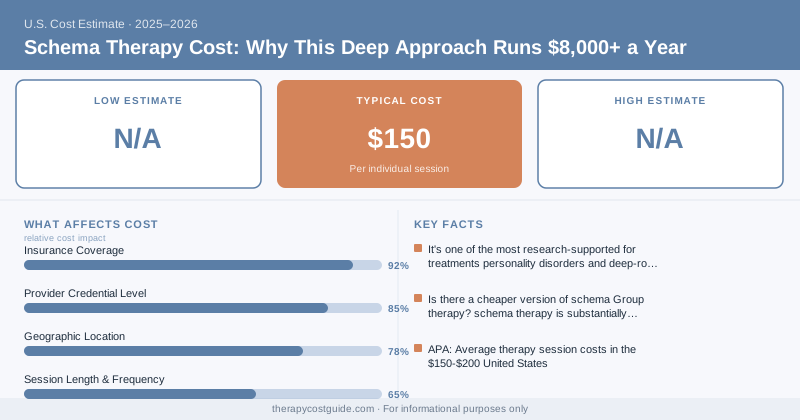
Schema Therapy Cost: Why This Deep Approach Runs $8,000+ a Year
{ if eq .Lang "zh" }{ else }{ end }Most people assume an evidence-based therapy means a quick, cheap fix. Schema therapy proves that wrong. It’s one of the most research-supported treatments for personality disorders and deep-rooted patterns, and it’s also one of the longer, costlier commitments, often $150 to $275 a session across one to two years, for a total in the $8,000 to $25,000 range.
Schema therapy blends CBT, attachment theory, and experiential techniques to target lifelong patterns called “schemas,” the deeply held beliefs that drive self-defeating behavior. The depth is the value, and it’s also the reason the bill runs high.
The Cost Breakdown
| Factor | Typical Range |
|---|---|
| Per individual session | $150 – $275 |
| Sessions per week | 1 – 2 |
| Course length | 1 – 2 years |
| Group schema session | $50 – $90 per person |
| Estimated annual cost (weekly) | $7,800 – $14,300 |
Some intensive schema programs combine weekly individual sessions with group work, which raises the total but can shorten the timeline. The two-times-a-week format is common in research protocols and roughly doubles the cost.
Key Takeaway
Schema therapy’s cost is driven by duration, not hourly rate. At $150–$275 per weekly session over a year or two, plan on $8,000 to $25,000 total. Group schema therapy ($50–$90 per person) is the most affordable format.Why People Pay for It
The case for the expense rests on results with hard-to-treat conditions. A 2006 randomized trial published in the Archives of General Psychiatry found schema therapy significantly more effective than transference-focused therapy for borderline personality disorder, with lower dropout rates. That’s a population where many treatments fail, so the longer course is often justified.
The American Psychological Association recognizes schema therapy among empirically supported treatments for personality disorders. For conditions that have resisted shorter therapies, the investment can prevent years of less effective (and cumulatively expensive) care.
Insurance Coverage
Schema therapy is billed under standard psychotherapy CPT codes, so it’s covered like any outpatient mental health service. The challenge is the same as with other long-term modalities: copays accumulate across a year or two of weekly sessions. A $40 copay over 100 sessions is $4,000.
Personality disorder diagnoses are covered conditions, so claims generally process without trouble. Verify your specific benefits with our guide to does insurance cover therapy, and if the price feels overwhelming, our piece on why is therapy so expensive explains the underlying economics.
Ways to Lower the Cost
Group schema therapy is the biggest saver, delivering the core techniques in a group therapy format at $50 to $90 per person. Training institutes and university clinics with schema-trained supervisees also offer reduced fees.
If your goals are narrower, a shorter approach like acceptance and commitment therapy may address them at a fraction of the total cost.
Frequently Asked Questions
Why does schema therapy cost so much? The hourly rate is comparable to other therapy, but schema therapy is designed for deep, long-standing patterns and typically runs one to two years. The total reflects the high session count, not an inflated session price.
Is schema therapy covered by insurance? Yes, when provided by a licensed clinician and billed under standard psychotherapy codes. Personality disorder diagnoses are covered, but copays add up over the long course.
Is there a cheaper version of schema therapy? Group schema therapy is substantially less expensive, $50 to $90 per person versus $150 to $275 for individual sessions, and research supports its effectiveness for many clients.
{ if eq .Lang "zh" }Disclaimer: TherapyCostGuide provides cost information for educational purposes only. We are not a mental health provider and do not offer clinical advice or treatment. Cost ranges are based on national survey data and vary significantly by location, provider credentials, practice setting, and insurance plan. Always consult a licensed mental health professional for treatment decisions. If you are in crisis, call or text 988 (Suicide & Crisis Lifeline) or go to your nearest emergency room.