Sandtray Therapy Cost: What Sessions Cost and Who It's For in 2025–2026
{ if eq .Lang "zh" }{ else }{ end }What does a $180 therapy session look like when it involves a tray of sand and miniature figurines? More evidence-based than you’d expect.
Sandtray therapy is a structured, projective approach in which a client arranges small figures — people, animals, buildings, symbolic objects — in a shallow tray of sand to create a scene. The therapist doesn’t direct what gets built; they observe what emerges and work with the symbolic content alongside the client. The approach is particularly effective for people who struggle to articulate their inner experience in words — children, trauma survivors, people with dissociation, and adults whose trauma was preverbal or non-narrative.
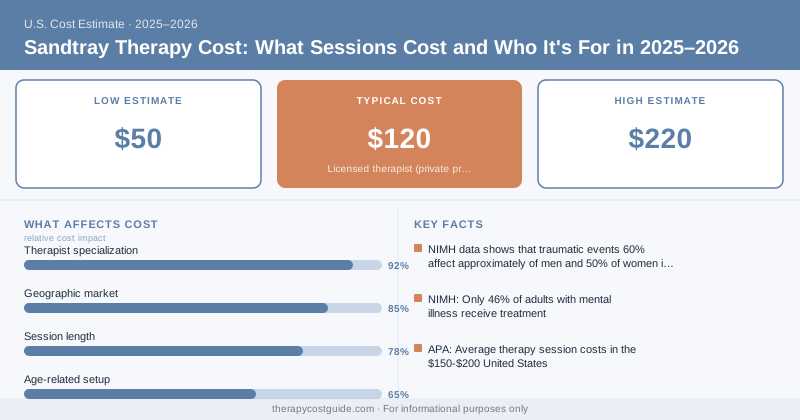
NIMH data shows that traumatic events affect approximately 60% of men and 50% of women in the US at some point in their lives, and treatment-resistant trauma is increasingly being addressed through experiential and nonverbal approaches like sandtray therapy.
Sandtray Therapy Cost at a Glance
| Setting | Cost Per Session | Notes |
|---|---|---|
| Licensed therapist (private practice) | $120 – $220 | Individual, 50–60 min |
| Children’s therapy clinic | $100 – $180 | Often includes play therapy alongside |
| Full course of treatment (12–20 sessions) | $1,440 – $4,400 | Standard protocol range |
| Community mental health center | $30 – $80 | Sliding-scale, sandtray less common |
| University clinic (supervised trainee) | $0 – $60 | Limited availability |
Sandtray is almost exclusively offered in private practice or specialized clinic settings — it’s less common in community mental health due to the equipment investment (a proper sandtray setup with miniature collections can cost a therapist $1,000–$3,000 to establish). That concentration in private practice means cost tends to be higher than general outpatient therapy.
How Sandtray Therapy Actually Works
A single sandtray session typically runs 50–60 minutes. The therapist introduces the tray and collection of miniatures and invites the client to build whatever feels right — no rules about the “right” scene. After building, the therapist may ask open questions: “What’s happening here?” “What does this figure need?” “Where in the scene do you feel most present?”
Over a course of 12–20 sessions, recurring themes, relationships between figures, and changes in the scenes over time become clinically meaningful. The therapist uses those themes to guide verbal processing, integration of traumatic material, and insight work.
The APA recognizes sandtray therapy as an approved adjunct treatment for trauma, particularly valuable for accessing nonverbal and pre-symbolic material that doesn’t respond well to purely verbal approaches like standard CBT. Children are the most common recipients, but adult use is growing — especially for complex PTSD, developmental trauma, and cases where verbal therapy has stalled.
Sandtray Isn't Just for Kids
Sandtray therapy has a strong evidence base for children, but it’s increasingly used with adults who have complex trauma, early developmental trauma, or dissociative symptoms. For adults whose trauma occurred before they had language to describe it — infancy, early childhood — sandtray offers a way to process that material without requiring verbal narrative. If you’ve tried talk therapy for trauma and felt stuck, it might be worth asking a trauma specialist whether an experiential approach like sandtray could help.Does Insurance Cover Sandtray Therapy?
Here’s the practical reality: insurance doesn’t reimburse “sandtray therapy” as a named modality. What insurance covers is licensed mental health treatment provided by a credentialed professional — and when that’s what you’re receiving, the billing code is the same regardless of the technique used.
A licensed clinical social worker (LCSW), licensed professional counselor (LPC), or licensed psychologist who uses sandtray as their treatment approach bills your insurance under standard individual psychotherapy codes (CPT 90837, 90834, etc.). If your plan covers outpatient mental health — which ACA-compliant plans are required to do at parity with medical care — then your sandtray sessions are covered the same as any talk therapy session.
What you need to confirm:
- Your therapist holds an active clinical license in your state (LCSW, LPC, LMFT, PhD/PsyD)
- They’re in-network with your insurance or you have out-of-network benefits
- They’ll bill your insurance directly (most do)
The sandtray modality itself is invisible to the insurance company — and that’s actually in your favor.
Finding a Sandtray Therapist
Sandtray and sandplay therapy have two distinct training lineages: sandplay (Jungian tradition) and sandtray therapy (often more integrative/trauma-informed). Both are legitimate; they have different theoretical underpinnings. When searching:
- Association for Play Therapy (APT): playtherapy.org has a therapist directory; many sandtray therapists are registered play therapists (RPT)
- Sandtray Network: sandtraynetwork.com lists trained sandtray practitioners
- Psychology Today directory: Filter by “play therapy” or “sandplay” in the specialty section
What Affects the Cost?
A few factors push sandtray session costs toward the higher end of the range:
Therapist specialization: Certified trauma specialists or those with advanced sandtray training (the Sandtray Therapist certificate requires significant additional coursework) typically charge more.
Geographic market: Like all therapy, rates in major urban markets (New York, Los Angeles, Boston, Seattle) run higher than national averages — expect $150–$220 in those cities.
Session length: Some sandtray practitioners run 75–90 minute sessions because the tray-building and processing naturally take longer. That longer format is clinically appropriate but costs more.
Age-related setup: Child sandtray sessions often include a larger miniature collection and more elaborate scene possibilities. Therapists who specialize in children typically charge comparable rates to general child therapists — but their overhead for the sandtray setup is built into those fees.
If you’re paying out of pocket, it’s worth asking prospective therapists about sliding-scale availability. Many licensed therapists reserve a portion of their caseload for reduced-fee clients — but you have to ask directly. It’s not usually advertised.
{ if eq .Lang "zh" }Disclaimer: TherapyCostGuide provides cost information for educational purposes only. We are not a mental health provider and do not offer clinical advice or treatment. Cost ranges are based on national survey data and vary significantly by location, provider credentials, practice setting, and insurance plan. Always consult a licensed mental health professional for treatment decisions. If you are in crisis, call or text 988 (Suicide & Crisis Lifeline) or go to your nearest emergency room.