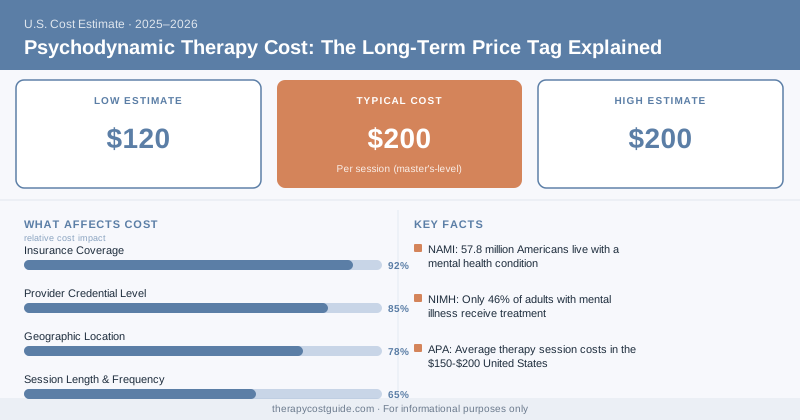
Psychodynamic Therapy Cost: The Long-Term Price Tag Explained
{ if eq .Lang "zh" }{ else }{ end }In 2010, this kind of depth therapy might’ve cost you $120 a session. Today, psychodynamic therapy commonly runs $150 to $300 per visit, and because it’s designed to be longer-term, the number that matters isn’t the hourly rate, it’s the yearly total. Plan on $7,000 to $15,000 a year if you go weekly without insurance.
Psychodynamic therapy traces patterns in your relationships and emotions back to their roots, often early experiences. It’s the modern descendant of psychoanalysis, and like its ancestor, it values depth over speed. That’s the cost trade-off in a nutshell.
What Drives the Price
Per-session rates depend on your therapist’s credentials and your city. The bigger lever is frequency and duration.
| Factor | Lower End | Higher End |
|---|---|---|
| Per session (master’s-level) | $120 | $200 |
| Per session (PhD/PsyD) | $180 | $300 |
| Sessions per week | 1 | 2 – 3 |
| Typical course length | 6 months | 2+ years |
| Estimated annual cost (weekly) | $6,200 | $15,600 |
Some psychodynamic work is intensive, meeting two or three times a week, which multiplies the cost fast. Most people do once-weekly, which keeps things more manageable.
Key Takeaway
Psychodynamic therapy’s hourly rate ($150–$300) is similar to other depth-oriented therapy, but the long duration is what makes it pricey. Weekly sessions for a year land most people between $7,800 and $15,600 out of pocket.Is It Worth the Cost?
Here’s a finding that surprises people. A 2010 review in American Psychologist concluded that psychodynamic therapy’s benefits not only hold after treatment ends but often grow over time, an effect the authors called particularly notable. The American Psychological Association has cited this durability as one of the modality’s strengths.
So while you pay more upfront than you would for a brief model, the argument is that the gains keep compounding after you stop. Whether that justifies the spend depends on your budget and goals.
Insurance Realities
Insurers reimburse standard psychotherapy CPT codes (90834, 90837) regardless of modality. The problem with psychodynamic therapy specifically is volume: even a small copay adds up over 50+ annual sessions. A $30 copay across a year of weekly visits is roughly $1,560.
Many psychodynamic therapists, especially psychologists, are out-of-network and bill cash. You may submit superbills for partial reimbursement. Our guide to does insurance cover therapy explains how out-of-network reimbursement works. If the sticker price feels steep, our explainer on why is therapy so expensive covers the economics.
Cheaper Alternatives to Consider
If cost is your main constraint but you want depth, individual therapy at a community clinic or with a sliding-scale therapist can deliver psychodynamic work for $40 to $90 a session. Psychoanalytic training institutes also run low-fee clinics.
If your concern is specific and symptom-focused, a structured model like CBT reaches goals in fewer sessions, which usually means a smaller total bill.
Frequently Asked Questions
Why is psychodynamic therapy so expensive overall? The per-session rate is normal, but the format is long-term, often a year or more of weekly sessions. The total cost reflects the number of visits, not an unusually high hourly fee.
Does insurance cover psychodynamic therapy? Yes, when billed under standard psychotherapy codes by a licensed provider. The challenge is that copays accumulate across many sessions, and many psychodynamic therapists are out-of-network.
How long does psychodynamic therapy last? It varies widely, from about six months to two or more years. Some intensive formats meet multiple times per week. Duration is set collaboratively based on your goals, not a fixed protocol.
{ if eq .Lang "zh" }Disclaimer: TherapyCostGuide provides cost information for educational purposes only. We are not a mental health provider and do not offer clinical advice or treatment. Cost ranges are based on national survey data and vary significantly by location, provider credentials, practice setting, and insurance plan. Always consult a licensed mental health professional for treatment decisions. If you are in crisis, call or text 988 (Suicide & Crisis Lifeline) or go to your nearest emergency room.