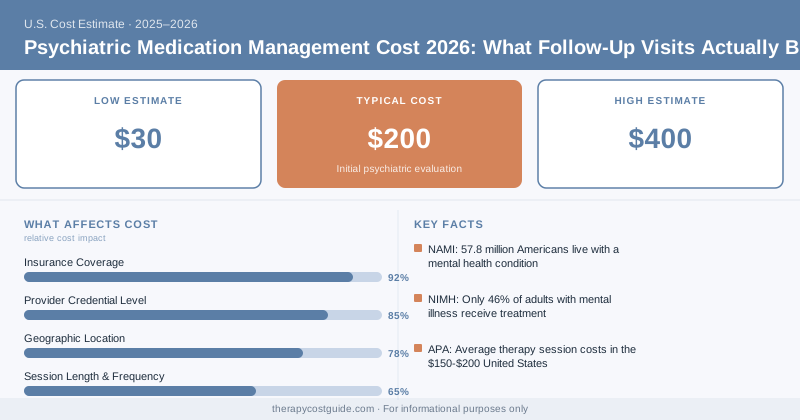
Psychiatric Medication Management Cost 2026: What Follow-Up Visits Actually Bill
{ if eq .Lang "zh" }{ else }{ end }Why does a 15-minute appointment with your psychiatrist cost almost as much as a 50-minute one? Because insurance billing for psychiatric medication management doesn’t scale purely with time — it scales with the CPT billing code used, and that code reflects medical decision-making complexity, not just minutes in the room.
Medication management is the ongoing, shorter follow-up visit that happens after your initial psychiatric evaluation — the appointment where your prescriber checks how you’re responding to medication, asks about side effects, and adjusts your dose or prescription if needed. It’s distinct from psychotherapy sessions and is typically billed under specific evaluation and management (E/M) CPT codes.
Medication Management Cost Breakdown
| Visit Type | Cash Price | With Insurance |
|---|---|---|
| Initial psychiatric evaluation | $200 – $400 | $30 – $75 copay |
| Established patient med management (15 min) | $100 – $175 | $15 – $30 copay |
| Established patient med management (25 min) | $150 – $250 | $20 – $40 copay |
| Established patient med management (complex, 30+ min) | $200 – $300 | $25 – $50 copay |
| Telehealth medication management | $100 – $250 | Similar copay to in-person under parity laws |
The specific CPT code your prescriber bills (commonly 99213, 99214, or 99215 for established patients, reflecting increasing complexity) determines both the cash price and how your insurer calculates your share of the cost. A visit involving a new side effect, a medication change, or coordination with another provider is typically billed at a higher complexity level than a routine “everything’s stable” check-in.
Why Frequency Matters More Than People Expect
Someone newly started on an antidepressant or ADHD stimulant might need medication management visits every 2–4 weeks initially to monitor response and side effects, while someone stable on the same medication for years might only need a visit every 3–6 months. Multiply either frequency by the per-visit cost, and the annual total varies enormously — this is worth discussing directly with your prescriber, since some patients are seen more often than clinically necessary simply because a default follow-up interval was never revisited.
Ask If You're Being Seen More Often Than Necessary
If you’ve been stable on the same medication and dose for over a year, ask your prescriber directly whether your follow-up interval could be extended — from every 3 months to every 6 months, for example. This isn’t about cutting corners on care; it’s a legitimate clinical conversation that many stable, long-term patients never think to have, and it can meaningfully reduce your annual medication management costs without changing your treatment.Controlled Substances Require More Frequent Visits
If your medication is a Schedule II controlled substance — most ADHD stimulants, for example — federal and state regulations generally require more frequent in-person or documented telehealth contact than non-controlled medications like most antidepressants. This isn’t a billing choice by your prescriber; it’s a regulatory requirement tied to controlled substance prescribing, and it’s one of the underlying reasons stimulant medication management can cost more annually than management of a comparable non-controlled prescription.
Insurance and Parity
Under the Mental Health Parity and Addiction Equity Act, your medication management copay should be comparable to a similar-complexity medical specialist follow-up visit, not inflated separately for being a psychiatric service. If your Explanation of Benefits shows a notably higher mental health copay than a comparable medical visit under the same plan, that’s worth raising directly with your insurer.
Bottom Line
Medication management visits cost $100–$300 cash, or a $15–$40 copay with insurance — less than a full evaluation, but frequent enough that the annual total adds up. Revisit your follow-up frequency periodically if you’re stable, confirm your insurer isn’t inflating your mental health copay relative to medical visits, and understand that controlled substance prescriptions carry regulatory requirements that keep visit frequency higher regardless of cost preferences.
{ if eq .Lang "zh" }Disclaimer: TherapyCostGuide provides cost information for educational purposes only. We are not a mental health provider and do not offer clinical advice or treatment. Cost ranges are based on national survey data and vary significantly by location, provider credentials, practice setting, and insurance plan. Always consult a licensed mental health professional for treatment decisions. If you are in crisis, call or text 988 (Suicide & Crisis Lifeline) or go to your nearest emergency room.