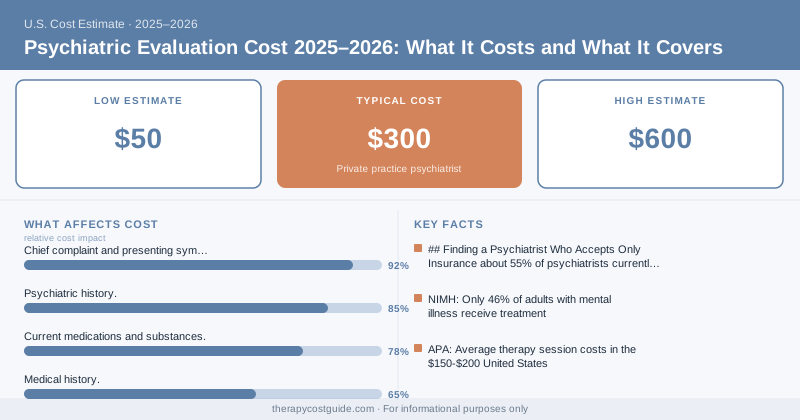
Psychiatric Evaluation Cost 2025–2026: What It Costs and What It Covers
{ if eq .Lang "zh" }{ else }{ end }The first appointment you have with a psychiatrist — the initial evaluation — is typically the most expensive and most important. It’s also the one most people go into unprepared. A good evaluation takes 60–90 minutes. A rushed one takes 30. How you prepare and what you share significantly affects the outcome.
Here’s what it costs, what it covers, and how to make it worthwhile.
What a Psychiatric Evaluation Costs
| Setting | Out-of-Pocket Cost | With Insurance Copay |
|---|---|---|
| Private practice psychiatrist | $300 – $600 | $50 – $150 |
| Telehealth psychiatric evaluation | $200 – $500 | $50 – $150 |
| Hospital outpatient clinic | $400 – $800 | $50 – $150 |
| Community mental health center | $0 – $200 (sliding scale) | — |
| Talkiatry (insurance-based) | $30 – $100 (insured) | $30 – $100 |
The wide range in out-of-pocket cost reflects geography, provider type (MD vs. NP), and whether the provider is in-network. In major metro areas, psychiatric evaluations skew toward $400–$600. Community health centers with sliding scale fees can bring the cost to $50–$100 even without insurance.
What a Psychiatric Evaluation Covers
A complete psychiatric evaluation isn’t a 20-minute check-in. Here’s what a thorough evaluation should include:
Chief complaint and presenting symptoms. What brings you in, when it started, how severe it is, and how it affects daily functioning.
Psychiatric history. Prior diagnoses, hospitalizations, suicide attempts or self-harm, history of trauma (not necessarily detailed exploration — that’s therapy — but documentation of whether it’s relevant). Prior medications and whether they helped.
Current medications and substances. Everything you take, including supplements, over-the-counter medications, and substances. Alcohol, cannabis, stimulants — all matter for the diagnostic picture.
Medical history. Many medical conditions affect mental health directly: thyroid disorders mimic mood disorders, sleep apnea causes depression symptoms, autoimmune conditions have neuropsychiatric components. A psychiatrist should review relevant medical history and sometimes recommend medical workup before starting psychiatric medication.
Mental status examination (MSE). Appearance, behavior, speech, mood, affect, thought content, thought process, perception, cognition, insight, judgment. This is the clinical observation component — a trained clinician learns a lot from how you present, not just what you say.
Diagnostic formulation. An impression with differential diagnosis — not just one diagnosis but the clinical reasoning about what’s going on. Bipolar II is often mistaken for major depression; ADHD overlaps with anxiety; personality disorders co-occur with mood disorders. Good evaluation disentangles these.
Treatment plan. What the plan is: therapy, medication, further testing, referrals.
What to Bring to a Psychiatric Evaluation
Previous diagnosis records and discharge summaries (if any). A list of all current medications with doses. A written summary of your main concerns and timeline — when symptoms started, what makes them better or worse, impact on work/relationships. If you’ve tried psychiatric medications before, know their names, doses, and why they were stopped. Names of your primary care and other mental health providers.How Long It Should Take
An initial psychiatric evaluation should take at minimum 45–60 minutes. Many skilled psychiatrists schedule 60–90 minutes for new patients. Be skeptical of any “intake” appointment under 30 minutes — that’s too short to form a meaningful diagnostic picture.
The trend toward 15–20 minute “medication checks” is a different service — that’s appropriate for stable follow-up, not initial evaluation.
Psychiatric Evaluation vs. Psychological Testing
These are different services with different costs:
- Psychiatric evaluation (described above): $300–$600, conducted by a psychiatrist or psychiatric NP. Focused on diagnosis and treatment planning. May or may not include standardized screening tools.
- Psychological testing (neuropsychological or psychoeducational evaluation): $1,500–$5,000+, conducted by a psychologist. A comprehensive battery of standardized tests assessing cognition, attention, memory, processing speed, academic achievement. Used for ADHD, learning disabilities, TBI assessment, dementia evaluation.
Most patients need a psychiatric evaluation, not psychological testing. Testing is specifically indicated when cognitive or learning issues need formal quantification.
Finding a Psychiatrist Who Accepts Insurance
Only about 55% of psychiatrists currently accept insurance, according to surveys published in JAMA Psychiatry. That’s significantly lower than most medical specialties and is one reason psychiatric care is so expensive for many patients.
The APA’s own data shows that a shortage of psychiatrists — particularly in rural areas — means that even patients who want to pay cash or use insurance often can’t find a provider within a reasonable distance.
Options for finding an in-network psychiatrist:
- Your insurance carrier’s provider directory (filter for psychiatry, in-network)
- Talkiatry — psychiatrists only, operates on insurance reimbursement in most states
- Psychology Today therapist finder (note: also lists psychiatric NPs, not just therapists)
- Your primary care physician for a referral (sometimes gets faster appointments)
- Community mental health centers — typically sliding scale, low-cost or free
Follow-Up Visit Costs
After the initial evaluation, ongoing visits are shorter and less expensive.
| Visit Type | Duration | Out-of-Pocket | With Insurance |
|---|---|---|---|
| Follow-up (monthly) | 20–30 min | $100 – $200 | $30 – $80 |
| Brief medication check | 10–15 min | $75 – $125 | $20 – $50 |
| Therapy + medication (combined) | 45–50 min | $150 – $250 | $50 – $120 |
Bottom Line
A psychiatric evaluation costs $300–$600 out of pocket, or $50–$150 with insurance. It covers your complete psychiatric and medical history, current symptoms, mental status exam, diagnostic formulation, and treatment plan. Budget 60–90 minutes and come prepared. Finding an in-network psychiatrist is the single biggest lever for reducing cost — about 55% of psychiatrists accept insurance, so it’s worth the effort to find one.
{ if eq .Lang "zh" }Disclaimer: TherapyCostGuide provides cost information for educational purposes only. We are not a mental health provider and do not offer clinical advice or treatment. Cost ranges are based on national survey data and vary significantly by location, provider credentials, practice setting, and insurance plan. Always consult a licensed mental health professional for treatment decisions. If you are in crisis, call or text 988 (Suicide & Crisis Lifeline) or go to your nearest emergency room.