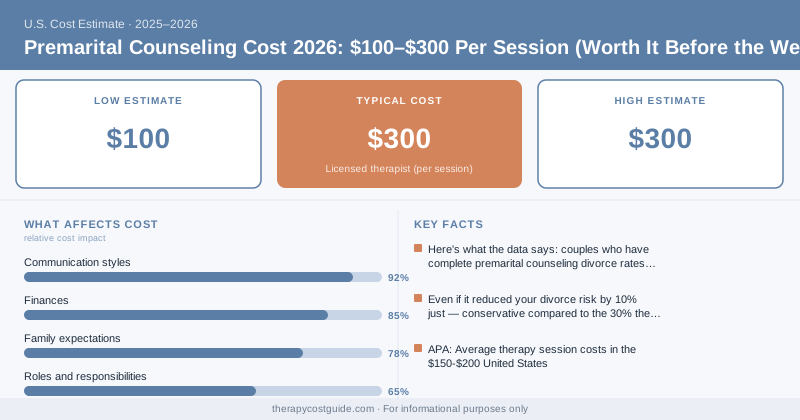
Premarital Counseling Cost 2026: $100–$300 Per Session (Worth It Before the Wedding?)
{ if eq .Lang "zh" }{ else }{ end }$1,500. That’s the average cost of a wedding cake in 2026. Most couples spend ten times that on flowers. And yet the one investment with actual research behind it — premarital counseling — gets skipped because it “feels unnecessary” when things are good.
Here’s what the data says: couples who complete premarital counseling have divorce rates roughly 30% lower than those who don’t, according to research published in the Journal of Marriage and Family. That’s not a small number.
But premarital counseling isn’t one thing. The cost swings wildly depending on who’s providing it — a licensed therapist in Manhattan charges very differently than your pastor, and online programs cost less than a single session with either. Let’s break it all down.
What Premarital Counseling Actually Costs
| Type | Cost |
|---|---|
| Licensed therapist (per session) | $100–$300 |
| Licensed therapist (6–8 session package) | $700–$2,400 |
| Religious/pastoral counseling | Free–$50/session |
| Online program (Prepare/Enrich) | $35–$50 total |
| Online course/video program | $100–$500 |
| Intensive weekend retreat (per couple) | $400–$1,500 |
The biggest cost driver is who you work with. A licensed therapist — psychologist, LMFT, or LPC — brings clinical training and can address underlying mental health dynamics, anxiety, family-of-origin issues, and communication patterns at a deeper level. You’ll pay $100–$300 per session depending on their credentials and your city.
Religious counseling through a church, synagogue, or mosque is often free or low-cost ($10–$50 per session as a suggested donation). Many faith communities require it before performing a ceremony. Quality varies enormously — some clergy are excellent communicators trained in structured programs; others cover logistics and skip the hard conversations.
Online programs like Prepare/Enrich provide a validated personality and relationship inventory plus a debrief session with a trained facilitator. The full program typically runs $35–$50 per couple — one of the best values in the premarital space.
Premarital vs. Marriage Counseling: Different Tools for Different Moments
It’s worth being clear on the distinction. Premarital counseling is preventive — it’s for two people who are doing fine but want to build communication skills, surface potential conflict areas, and align on finances, family, and values before they’re under stress.
Marriage counseling is reactive — it typically starts when there’s already a problem: frequent fighting, infidelity, emotional distance, or a specific crisis. The research on marriage counseling efficacy is more mixed, in part because couples often wait years before seeking help.
Think of it this way: premarital counseling is the annual physical. Marriage counseling is the ER visit. Both have their place, but one is a lot cheaper to deal with proactively.
What You Actually Cover in Premarital Counseling
Structured programs typically address six to eight major topic areas:
- Communication styles — how each partner expresses needs, handles conflict, and processes emotions
- Finances — spending habits, debt disclosure, income differences, financial goals
- Family expectations — in-law boundaries, holiday traditions, parenting philosophies
- Roles and responsibilities — household labor, career priorities, who handles what
- Intimacy and sexuality — expectations, differing drives, vulnerability
- Spirituality and values — not just religion, but core life priorities
The Prepare/Enrich inventory specifically identifies “growth areas” — places where you and your partner score differently — and gives you structured exercises to work through them. Many couples say the inventory results are eye-opening even when they thought they’d discussed everything.
Red Flag Topics Worth Extra Sessions
If premarital sessions surface issues around addiction history, childhood trauma, controlling behavior, or fundamentally incompatible life goals (one partner wants children, the other doesn’t), consider extending counseling beyond the standard package. These aren’t reasons to cancel the wedding automatically — but they deserve more than a single conversation.Does Insurance Cover Premarital Counseling?
No. Virtually never. Health insurance reimburses treatment for diagnosed mental health conditions. Since premarital counseling doesn’t carry a DSM diagnosis, there’s no billing code that gets it covered under your health plan.
A few exceptions exist on the edges: if your therapist identifies that one partner has an anxiety disorder or depression that’s affecting the relationship work, they might bill separately for those individual sessions. But the premarital counseling itself won’t be covered.
Some employers offer Employee Assistance Programs (EAPs) that include a small number of free therapy sessions — typically 3–6. You could use those for premarital work, though 3 sessions barely scratches the surface.
Which Option Makes Sense for You
If you have the budget: A licensed LMFT or LPC who specializes in couples work gives you the most tailored, clinically-grounded experience. Plan for 6–8 sessions ($700–$2,000 total). Look for someone who uses a structured model like Gottman Method or PREPARE/ENRICH training.
If budget is tight: Start with the Prepare/Enrich online program ($35–$50). It’s research-validated, widely used by therapists, and gives you more than most couples learn in two expensive sessions. Add a couple of licensed therapist sessions afterward if the inventory surfaces anything significant.
If your faith community requires it: Go. Religious premarital programs vary, but the structured conversation requirement alone is valuable. Just don’t let it be your only preparation if the sessions feel surface-level.
The Math on “Is It Worth It”
The average divorce costs $15,000–$30,000 in legal fees, not counting the emotional toll. A complete premarital counseling package runs $700–$2,400. Even if it reduced your divorce risk by just 10% — conservative compared to the 30% the research suggests — the expected value calculation is strongly in favor of doing it.
More practically: couples who go through structured premarital work report that the conversations alone — about finances, family expectations, and parenting — were worth the cost even if they’d stayed together anyway without it. You’re not just buying divorce insurance. You’re getting alignment on the things most couples fight about for the first five years of marriage.
The wedding costs what it costs. The counseling might be the best investment on the list.
{ if eq .Lang "zh" }Disclaimer: TherapyCostGuide provides cost information for educational purposes only. We are not a mental health provider and do not offer clinical advice or treatment. Cost ranges are based on national survey data and vary significantly by location, provider credentials, practice setting, and insurance plan. Always consult a licensed mental health professional for treatment decisions. If you are in crisis, call or text 988 (Suicide & Crisis Lifeline) or go to your nearest emergency room.