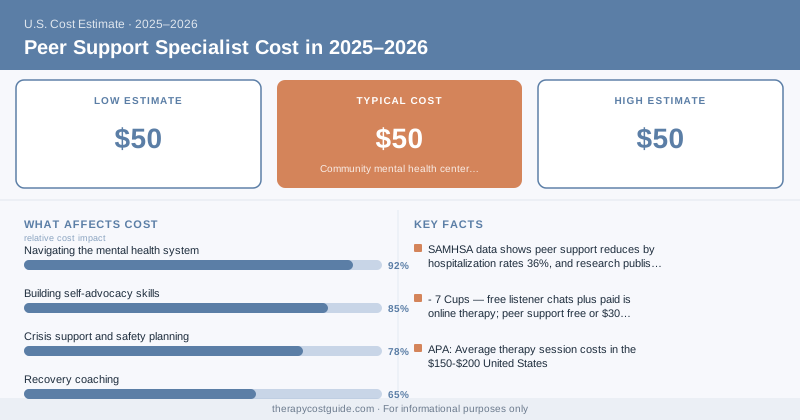
Peer Support Specialist Cost in 2025–2026
{ if eq .Lang "zh" }{ else }{ end }Most patients assume peer support is a free service tacked onto “real” treatment — a nice add-on, not something to seek out deliberately. Wrong. SAMHSA data shows peer support reduces hospitalization rates by 36%, and research published in Psychiatric Services found peer support as effective as professional case management for keeping people with serious mental illness engaged in their recovery. There are over 30,000 certified peer support specialists working in the U.S. right now. And in most cases, it costs you far less than traditional therapy — or nothing at all.
Peer Support Specialist Costs
| Setting / Format | Cost Per Session | Notes |
|---|---|---|
| Community mental health center (peer support) | $0 – $50 | Sliding scale; often free with Medicaid |
| State or county behavioral health program | Free | Publicly funded; varies by state |
| Private peer coaching (independent specialist) | $50 – $120/hour | Not clinical; wellness and recovery coaching |
| Online peer support platform (7 Cups, TalkLife) | $30 – $60/month | Community-based; moderated peer chats |
| Peer support through an employer EAP | Free (covered) | Check your company’s EAP benefits |
| Intensive outpatient program peer support | Varies | Usually bundled into IOP cost |
The cost range reflects a real structural difference: peer support delivered through publicly funded community mental health is almost always low-cost or free if you qualify. Private peer coaching — where an independent specialist offers one-on-one recovery support outside a clinical system — runs $50–$120/hour and is typically not covered by insurance.
What a Peer Support Specialist Actually Does
A peer support specialist is someone with lived experience of mental health challenges, substance use recovery, or both — who’s been trained and certified to support others going through similar experiences. They’re not therapists. They don’t diagnose or prescribe. What they offer is something no clinician can replicate: credible first-person experience with the recovery process.
Peer specialists help with:
- Navigating the mental health system — figuring out what services exist, how to access them, what to expect
- Building self-advocacy skills — how to communicate with providers, push for appropriate care, understand your rights
- Crisis support and safety planning — working alongside clinical staff during difficult periods
- Recovery coaching — setting and tracking goals, building a life outside the illness
- Reducing isolation — particularly important for people leaving inpatient care or stepping down from intensive treatment
Peer support is not a substitute for clinical therapy when you need clinical therapy. It’s a complement — and for many people, the piece that makes the clinical work actually stick.
Certification and Training
Peer support specialists in most states must complete a state-approved training program and pass a certification exam. The specific requirements vary — some states require 40 hours of training, others require 80 hours — but the credential signals someone who’s been formally prepared, not just well-intentioned.
The Mental Health America (MHA) Peer Specialist Certification is one recognized national credential. Many states have their own certification pathways through their department of behavioral health. SAMHSA’s workforce development resources list state-specific training requirements at samhsa.gov.
How Peer Support Is Funded
Peer support services became a Medicaid-billable service through the Affordable Care Act, and today peer support is covered under Medicaid in most U.S. states. Billing occurs under Medicaid code H0038 (self-help and peer services) or state-specific equivalent codes. This means if you’re on Medicaid, you may be able to access peer support at no cost through your community mental health center — even if you didn’t know the option existed. Call your local community mental health center and specifically ask whether they have certified peer support specialists on staff. Many do.Online Peer Support: What the Platforms Offer
If in-person peer support isn’t accessible in your area — or you want something available at 2 a.m. — online platforms have expanded significantly.
- 7 Cups — free listener chats plus paid online therapy; peer support is free or $30–$60/month for enhanced access
- TalkLife — peer-to-peer community with moderated spaces; free with optional subscriptions
- NAMI Online Support Groups — free, moderated peer groups for people with mental health conditions and their families at nami.org/Support-Education/Support-Groups
- AA/NA Online — free peer support for substance use recovery; widely accessible
- Psych Central forums — free community forums with moderated peer discussion
SAMHSA’s own research notes that online peer communities can meaningfully reduce social isolation and improve engagement with formal treatment — particularly for people in rural areas or those with mobility limitations.
One caution: not every “peer community” online is moderated or safe. Platforms that lack active moderation can inadvertently reinforce harmful thinking patterns. Stick to platforms with visible community standards and trained moderators.
Peer Support vs. Therapy: Understanding the Difference
People sometimes choose peer support instead of therapy when what they actually need is clinical treatment. It’s worth being clear about when each is appropriate.
Peer support is a strong fit when you:
- Need help navigating systems, building a support network, or maintaining motivation during recovery
- Are stepping down from intensive treatment and need ongoing connection
- Have mild-to-moderate challenges and are doing reasonably well but want accountability and community
- Can’t afford or access traditional therapy and need something while you work toward it
Clinical therapy is necessary when you:
- Have moderate-to-severe depression, anxiety, trauma, or psychosis requiring evidence-based treatment
- Are experiencing suicidal ideation or self-harm — please reach out to the 988 Suicide and Crisis Lifeline by calling or texting 988 at any time
- Need medication management (which requires a psychiatrist or prescribing nurse practitioner)
- Are in active crisis
The two work well together. Many people in community mental health settings have both a therapist and a peer support specialist — the peer specialist often increases engagement with the therapist.
Finding a Peer Support Specialist
| Resource | How to Access |
|---|---|
| Community mental health center | Search SAMHSA’s treatment locator at findtreatment.gov |
| State behavioral health department | Search your state’s department of behavioral health website |
| NAMI affiliate programs | nami.org — local affiliates often run peer support groups |
| Mental Health America affiliates | mhanational.org/affiliate-directory |
| Veterans peer support (VA) | Contact your VA primary care team; peer support specialists are on staff at most VA facilities |
| Employer EAP | Contact HR — many EAPs now include peer support referrals |
When you connect with a peer support specialist, it’s completely reasonable to ask about their lived experience (most are open about it — that’s the point), their certification, and what a typical session or interaction looks like. You want someone whose experience has some relevance to yours, and whose working style fits how you actually want to use the support.
Peer support is one of the most underused and most cost-accessible tools in mental health recovery. If cost has been your barrier to care, start here. It won’t replace everything — but for many people, a peer specialist is the first person in the system who makes them feel like recovery is actually possible.
{ if eq .Lang "zh" }Disclaimer: TherapyCostGuide provides cost information for educational purposes only. We are not a mental health provider and do not offer clinical advice or treatment. Cost ranges are based on national survey data and vary significantly by location, provider credentials, practice setting, and insurance plan. Always consult a licensed mental health professional for treatment decisions. If you are in crisis, call or text 988 (Suicide & Crisis Lifeline) or go to your nearest emergency room.