OCD Treatment Cost: ERP Therapy, Medication, and What to Expect
{ if eq .Lang "zh" }{ else }{ end }The $250 session quote stopped Marcus cold. He’d already been managing OCD symptoms for three years without treatment, and now the cost of getting help felt like another obstacle. Here’s what he — and you — actually need to know about what OCD treatment costs.
According to the International OCD Foundation (IOCDF), OCD affects approximately 1 in 100 adults in the United States. It’s also one of the most underdiagnosed conditions because people are often ashamed to disclose symptoms. Treatment is effective — but it requires a specific type of therapy that’s more expensive than generic counseling.
ERP: The Gold-Standard Treatment
Exposure and Response Prevention (ERP) is the evidence-based first-line treatment for OCD. It’s a specific type of CBT where the therapist guides you through gradually confronting feared situations or thoughts (exposures) while resisting compulsive responses. It works — and it requires a therapist specifically trained in ERP, not just any therapist who lists CBT on their profile.
ERP therapists charge more than general therapists because of the specialized training. Expect $150–$300 per session with an ERP-trained therapist in most U.S. markets. Major metro areas (NYC, LA, San Francisco) run toward the high end.
| OCD Treatment Component | Low Estimate | Typical | High Estimate |
|---|---|---|---|
| ERP session (50 min) | $150 | $200 | $300 |
| Initial OCD assessment | $200 | $350 | $500 |
| Full ERP course (16–20 sessions) | $2,400 | $3,500 | $6,000 |
| Medication eval + 3 follow-ups | $400 | $700 | $1,200 |
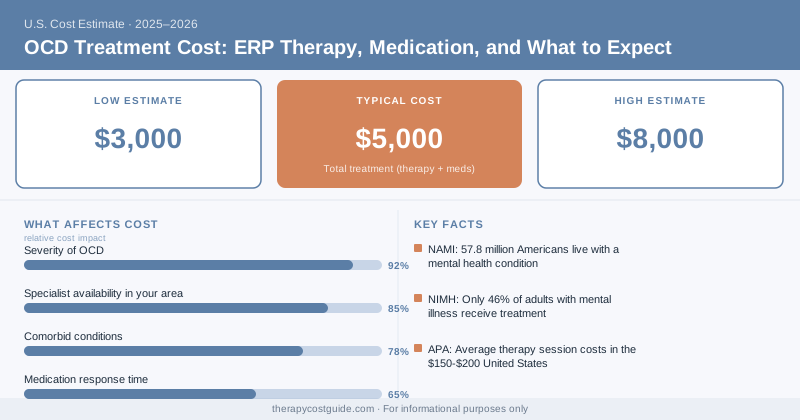
| Total treatment (therapy + meds) | $3,000 | $5,000 | $8,000 |
| With in-network insurance | $500 | $1,200 | $2,500 |
How Long Does OCD Treatment Take?
A typical ERP course runs 16–20 sessions, though severe OCD may require longer. Some patients do well in 12 sessions; others need 24 or more. Sessions are typically weekly, making the active treatment phase 4–5 months.
Unlike general therapy, ERP often includes between-session homework — practicing exposures on your own. This extends the work beyond the therapy hour, which is partly why outcomes are strong.
OCD Medication Costs
SSRIs are the first-line medication for OCD, but at higher doses than typically used for depression or generalized anxiety. Commonly prescribed medications include:
- Sertraline (Zoloft, generic): $10–$25/month at GoodRx
- Fluoxetine (Prozac, generic): $10–$20/month generic
- Fluvoxamine (Luvox, generic): $20–$50/month generic
- Clomipramine (Anafranil, generic): $30–$70/month generic — the only TCA approved specifically for OCD; highly effective but more side effects than SSRIs
With insurance, these are Tier 1 generics with $0–$10 monthly copays. The medication cost itself isn’t the barrier — the barrier is the prescriber visits.
Why OCD Requires a Specialist — And Why That Costs More
General therapists often treat OCD incorrectly. Talking through obsessions, helping a patient “process” intrusive thoughts, or providing reassurance during sessions can actually reinforce OCD patterns. ERP works by doing the opposite — tolerating uncertainty without reassurance.
This means the therapist’s specific training matters enormously. The IOCDF maintains a therapist directory at iocdf.org where you can filter by ERP-trained providers. Paying more for an ERP specialist is not price inflation; it’s paying for a treatment that actually works.
What Affects OCD Treatment Cost
Severity of OCD — Mild to moderate OCD typically resolves in 12–16 sessions of ERP. Severe OCD with significant contamination fears, harm OCD, or comorbid conditions like depression or BPD often needs 20–30+ sessions plus medication.
Specialist availability in your area — In rural areas or small cities, ERP specialists may not exist locally. Telehealth has substantially improved this; online ERP therapy is now available nationally and tends to cost the same as in-person.
Comorbid conditions — Roughly 50–70% of people with OCD have a co-occurring condition. Treating both simultaneously extends treatment time and cost.
Medication response time — It often takes 8–12 weeks at adequate dosing to see the full OCD medication response. If the first SSRI doesn’t work, you may try 2–3 medications before finding one that helps, each requiring prescriber follow-up visits.
Insurance Coverage for OCD Treatment
OCD is a diagnosable mental health condition covered by insurance under mental health parity laws. This means your insurer must cover OCD treatment under the same terms as equivalent medical conditions.
In practice, in-network coverage works like this:
- After deductible: $20–$60 copay per therapy session
- Medication: $0–$15/month for generic SSRIs
- Psychiatry visits: $30–$75 copay
Lower-Cost ERP Options
NOCD (telehealth ERP platform) — Specialized OCD telehealth platform. Typically $200–$400/month depending on your insurance situation. Accepts many major insurers.
OCD-specialized intensive outpatient programs — For severe or treatment-refractory OCD, intensive outpatient (IOP) programs offer multiple sessions per week in a structured format. Costs are higher per month but can compress the total treatment timeline.
University research programs — Many anxiety research centers run OCD studies where ERP is provided at no cost or very low cost in exchange for participation. Check clinicaltrials.gov for current studies near you.
{ if eq .Lang "zh" }Disclaimer: TherapyCostGuide provides cost information for educational purposes only. We are not a mental health provider and do not offer clinical advice or treatment. Cost ranges are based on national survey data and vary significantly by location, provider credentials, practice setting, and insurance plan. Always consult a licensed mental health professional for treatment decisions. If you are in crisis, call or text 988 (Suicide & Crisis Lifeline) or go to your nearest emergency room.