Neuropsychological Testing Cost: Full Battery Prices in 2025–2026
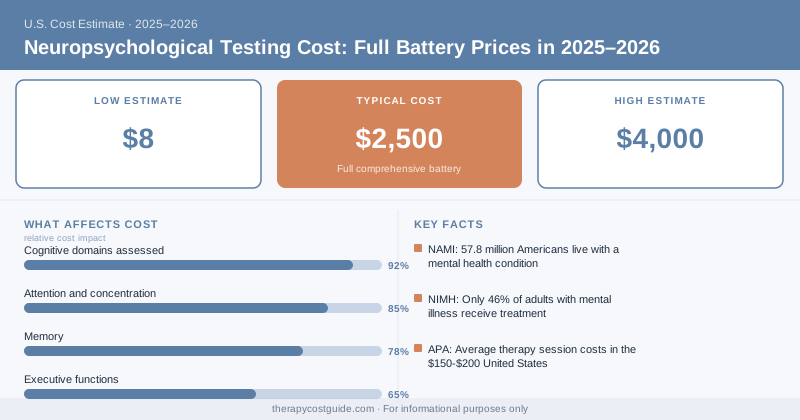
{ if eq .Lang "zh" }{ else }{ end }A full neuropsychological battery is 8–12 hours of testing spread across 1–3 days. You’re looking at a $2,000–$5,000 total fee. Most people who get a referral for neuropsychological testing have no idea what’s involved — or why it costs that much.
Here’s the full picture: what it costs, what it actually measures, and when it’s genuinely necessary versus when a simpler evaluation would do.
Neuropsychological Testing Costs
| Test Type | Cost | Hours of Testing |
|---|---|---|
| Full neuropsychological battery | $2,000 – $5,000 | 8–12 hours |
| Focused neuropsychological battery | $1,000 – $2,500 | 3–6 hours |
| Brief cognitive screening (MoCA, MMSE) | $0 – $150 | 10–30 minutes |
| TBI/concussion protocol | $1,500 – $3,500 | 4–8 hours |
| Dementia evaluation battery | $1,500 – $4,000 | 5–10 hours |
| ADHD neuropsychological evaluation | $1,000 – $2,500 | 3–6 hours |
| Learning disability assessment | $1,500 – $3,500 | 4–8 hours |
| Full comprehensive battery | $2,500 – $4,000 | 8–12 hours |
The fee includes the testing time, the neuropsychologist’s scoring and interpretation time (often 3–5 additional hours), report writing, and feedback session. The clinical labor involved is substantial.
What Neuropsychological Testing Actually Measures
Neuropsychological testing uses validated, standardized instruments to measure brain-behavior relationships across cognitive domains. A full battery typically evaluates:
Cognitive domains assessed:
- Attention and concentration: Sustained, selective, divided attention; processing speed
- Memory: Immediate recall, delayed recall, recognition memory; verbal vs. visual memory
- Executive functions: Planning, organization, cognitive flexibility, inhibition, working memory
- Language: Naming, verbal fluency, comprehension, repetition
- Visuospatial/visuoconstructional skills: Visual perception, spatial reasoning, construction
- Sensory and motor functions: Fine motor speed, dominant/non-dominant hand performance
- Intelligence: Estimated premorbid IQ and current IQ
- Emotional/personality functioning: Embedded validity measures, behavioral questionnaires
The neuropsychologist compares an individual’s scores to age- and education-matched normative data to identify deficits, strengths, and patterns that suggest specific conditions.
What Can Neuropsychological Testing Diagnose?
Neuropsychological testing doesn’t directly image the brain — that’s MRI and CT. What it does is characterize how the brain is functioning behaviorally and cognitively. It can identify patterns consistent with: Alzheimer’s disease and other dementias, traumatic brain injury effects, ADHD (when the presentation is complex or diagnosis is uncertain), learning disabilities, stroke sequelae, multiple sclerosis cognitive effects, epilepsy-related cognitive changes, and effects of psychiatric conditions on cognition. Critically, a skilled neuropsychologist can often distinguish between conditions that look similar clinically — distinguishing early Alzheimer’s from normal aging, or ADHD from anxiety affecting concentration, requires this level of analysis.When Is Neuropsychological Testing Actually Necessary?
Neuropsychological testing is clinically indicated — and insurance-coverable — when:
- Dementia evaluation: Distinguishing Alzheimer’s from vascular dementia, Lewy body dementia, frontotemporal dementia, or normal age-related changes
- TBI assessment: Documenting cognitive deficits after head injury for treatment planning, return-to-work decisions, or legal documentation
- Epilepsy pre-surgical evaluation: Lateralizing language and memory functions before temporal lobe surgery
- Multiple sclerosis: Monitoring cognitive changes over time
- Complex ADHD or learning disability: When diagnosis is uncertain, multiple possible explanations exist, or accommodations require formal documentation
- Psychiatric conditions with cognitive involvement: Distinguishing cognitive effects of severe depression from early dementia
- Occupational or academic accommodation documentation: When comprehensive documentation is required by a court, university, or employer
NAMI and neuropsychological associations note that the U.S. faces a shortage of neuropsychologists — there are approximately 5,000–6,000 board-certified neuropsychologists (ABPP/CN) for a population of 330 million. Wait times of 3–6 months for evaluations are common.
Insurance Coverage for Neuropsychological Testing
Good news: neuropsychological testing is generally covered by insurance when medically indicated with appropriate documentation.
Medicare specifically covers neuropsychological testing (CPT codes 96116 for 1 hour, 96132/96133 for full battery) with a physician referral and diagnosis code. Commercial insurers follow similar logic.
What insurance typically covers:
- Testing for suspected dementia, TBI, or neurological conditions
- Pre-surgical evaluation
- Testing for conditions like MS, epilepsy, and stroke
What’s more likely to be denied or require appeal:
- ADHD testing in adults without compelling medical necessity documentation
- Learning disability testing when school-based testing exists
- Routine cognitive testing without specific neurological indication
Prior authorization is commonly required. Your referring physician’s documentation of medical necessity significantly affects coverage approval.
NCHS data shows that over 6 million Americans have Alzheimer’s disease, with another 6 million in the “mild cognitive impairment” category — representing an enormous and growing demand for neuropsychological evaluation services.
Who Performs Neuropsychological Testing?
Board-certified neuropsychologist (ABPP/CN or ABCN): Doctoral-level psychologist (PhD or PsyD) who completed a 2-year neuropsychology-focused postdoctoral fellowship and passed board certification examinations from the American Board of Professional Psychology in Clinical Neuropsychology. This is the gold standard credential.
Licensed psychologist with neuropsychology training: PhD/PsyD with neuropsychology focus in graduate training but without board certification. Performs the same tests; the credential difference represents additional supervised experience and examination.
Psychometrician/psychological technician: Supervised testing technician who administers tests under the neuropsychologist’s supervision. The neuropsychologist interprets, writes the report, and provides feedback.
To find a board-certified neuropsychologist: the ABPP directory at abpp.org/Applicant/Specialty-Boards/Clinical-Neuropsychology.aspx or the National Academy of Neuropsychology directory at nanonline.org.
Disclaimer: TherapyCostGuide provides cost information for educational purposes only. We are not a mental health provider and do not offer clinical advice or treatment. Cost ranges are based on national survey data and vary significantly by location, provider credentials, practice setting, and insurance plan. Always consult a licensed mental health professional for treatment decisions. If you are in crisis, call or text 988 (Suicide & Crisis Lifeline) or go to your nearest emergency room.