Neurofeedback Therapy for PTSD Cost: What to Expect in 2025–2026
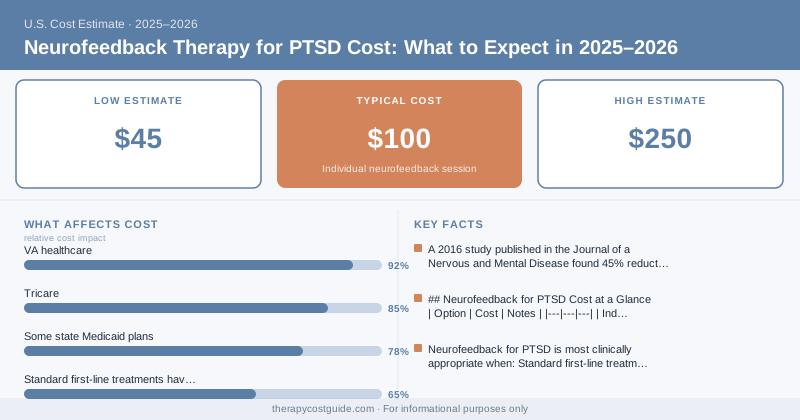
{ if eq .Lang "zh" }{ else }{ end }A 2016 study published in the Journal of Nervous and Mental Disease found a 45% reduction in PTSD symptoms among combat veterans after just 10 neurofeedback sessions. That kind of result — in a population where treatment resistance is common — is part of why clinicians and researchers have paid closer attention to neurofeedback as a PTSD adjunct over the past decade.
But 10–40 sessions at $100–$250 each adds up fast. Here’s what the full picture looks like on cost, coverage, and who’s most likely to benefit.
Neurofeedback for PTSD Cost at a Glance
| Option | Cost | Notes |
|---|---|---|
| Individual neurofeedback session | $100 – $250 | 45–60 min, clinical EEG equipment |
| Full PTSD protocol (20–40 sessions) | $2,000 – $10,000 | Most clinical guidelines recommend this range |
| Home neurofeedback device rental | $500 – $2,000/month | Consumer-grade; limited to simpler protocols |
| VA-provided neurofeedback | $0 for eligible veterans | Select VA facilities; availability varies |
| Tricare coverage (active duty/veterans) | Partial in some cases | Depends on plan and clinical documentation |
The wide range in total cost comes down to how many sessions are needed and where you’re receiving care. PTSD protocols typically run longer than neurofeedback for anxiety or ADHD — complex or chronic PTSD often requires 30–40 sessions before results consolidate.
What Neurofeedback for PTSD Actually Involves
Neurofeedback is a form of biofeedback that trains brainwave activity in real time. During a session, sensors placed on your scalp measure electrical activity (EEG), and software feeds that information back to you — usually through a game, video, or audio cue. Over multiple sessions, the brain learns to self-regulate patterns associated with hyperarousal, dissociation, or emotional dysregulation.
For PTSD specifically, research has focused on correcting dysregulation in the alpha and theta frequency bands — patterns associated with hypervigilance, intrusive symptoms, and emotional numbness. The Association for Applied Psychophysiology and Biofeedback (AAPB) rates neurofeedback at Level 3–4 evidence for PTSD — “probably efficacious” to “efficacious,” meaning there’s credible research support though not yet the same breadth of randomized controlled trial data as first-line PTSD treatments like Prolonged Exposure or EMDR.
Neurofeedback Is an Adjunct, Not a Replacement
Most clinicians using neurofeedback for PTSD position it alongside evidence-based first-line treatments — not instead of them. If you haven’t tried Prolonged Exposure (PE), Cognitive Processing Therapy (CPT), or EMDR, those are typically the recommended starting points. Neurofeedback becomes most relevant when those approaches haven’t achieved adequate relief, or when a patient’s hyperarousal is so severe that they can’t engage with trauma-processing therapy effectively. Talk with your treatment provider about where neurofeedback fits in your care plan.Does Insurance Cover Neurofeedback for PTSD?
This is the hard part: most private insurance plans don’t cover neurofeedback, regardless of diagnosis. The primary reason is that insurers classify it as “experimental” or “investigational” — a designation that lags behind the research, but one that’s slow to change.
Exceptions exist:
VA healthcare: The VA has piloted neurofeedback programs for combat veterans at multiple facilities, and the 2016 Journal of Nervous and Mental Disease study was conducted specifically with VA patients. Veterans who are enrolled in VA healthcare can ask their mental health care coordinator whether neurofeedback is available at their facility — it won’t appear on standard service directories, but it’s available at select sites.
Tricare: Active duty service members and dependents with Tricare coverage may have partial coverage in some cases, particularly if a VA or military treatment facility is providing the service. Private Tricare claims for neurofeedback are inconsistently handled — some get approved under biofeedback codes, others are denied.
Some state Medicaid plans: A small number of state Medicaid programs include biofeedback in their covered services. Coverage under neurofeedback-specific billing is rare; approval is more common when billed as biofeedback.
If you’re paying out of pocket, ask providers whether they offer a package rate for a full protocol — some reduce per-session costs when you commit to 20+ sessions upfront.
Who Is Neurofeedback Most Appropriate For?
Neurofeedback for PTSD is most clinically appropriate when:
Standard first-line treatments haven’t worked. NIMH estimates that roughly 3.5% of US adults are affected by PTSD in any given year, and a meaningful subset don’t respond adequately to PE, CPT, or medication. Neurofeedback is one of several adjunct options being studied for that treatment-resistant group.
Hyperarousal is blocking other therapy. Some PTSD patients are so chronically activated that they can’t tolerate the exposure components of PE or CPT. Neurofeedback can help down-regulate the nervous system enough that other trauma processing becomes possible.
The patient is a veteran or first responder. Combat-related PTSD has the most evidence for neurofeedback, and the VA pathway is the most accessible. Veterans should explore VA availability before committing to expensive private-pay sessions.
What to Ask Before Starting
Before committing to a full neurofeedback protocol for PTSD, it’s worth asking any prospective provider:
- What training do you have in PTSD-specific neurofeedback protocols? General neurofeedback training doesn’t automatically include PTSD expertise.
- Are you a licensed mental health clinician, or does a clinician oversee your work? Neurofeedback for PTSD should be embedded in a clinical mental health context — not delivered as a standalone wellness service.
- What assessment will you do before starting? A full intake, trauma history, and QEEG (quantitative EEG brain map) are standard for responsible PTSD neurofeedback.
- What’s your cancellation policy and package pricing? If you start a protocol and it’s not helping, you don’t want to be locked into a $6,000 prepaid commitment.
The AAPB (aapb.org) and the International Society for Neuroregulation and Research (ISNR) maintain directories of certified neurofeedback providers — a reasonable starting point for finding practitioners with documented training.
{ if eq .Lang "zh" }Disclaimer: TherapyCostGuide provides cost information for educational purposes only. We are not a mental health provider and do not offer clinical advice or treatment. Cost ranges are based on national survey data and vary significantly by location, provider credentials, practice setting, and insurance plan. Always consult a licensed mental health professional for treatment decisions. If you are in crisis, call or text 988 (Suicide & Crisis Lifeline) or go to your nearest emergency room.