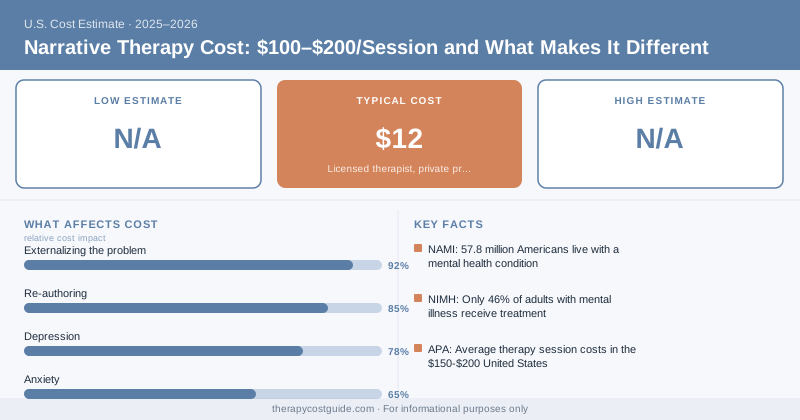
Narrative Therapy Cost: $100–$200/Session and What Makes It Different
{ if eq .Lang "zh" }{ else }{ end }Most people who try narrative therapy didn’t set out to find it — they stumbled onto it after traditional approaches felt limiting. If you’ve ever felt like therapy kept circling back to the same diagnosis-centered story without giving you room to write a different one, narrative therapy might be the modality you’ve been looking for. Here’s what it costs and what makes it different.
Narrative Therapy Cost
| Setting | Per Session | Typical Course | Total Cost |
|---|---|---|---|
| Community therapist / sliding scale | $60 – $100 | 10 – 20 sessions | $600 – $2,000 |
| Licensed therapist, private practice | $100 – $200 | 12 – 25 sessions | $1,200 – $5,000 |
| Therapist with narrative specialty | $150 – $250 | 15 – 25 sessions | $2,250 – $6,250 |
| Online / telehealth narrative therapist | $80 – $160 | 10 – 20 sessions | $800 – $3,200 |
| University training clinic | $30 – $70 | 12 – 20 sessions | $360 – $1,400 |
Narrative therapy tends to need fewer sessions than long-term psychodynamic or trauma-focused approaches, though this varies significantly by presenting concern. Brief narrative therapy — focused on a specific problem — can sometimes resolve in 8–12 sessions.
What Narrative Therapy Actually Is
Narrative therapy was developed by Michael White and David Epston in Australia in the 1970s and 1980s. The central idea is that people make meaning of their lives through stories — and that the dominant stories people carry about themselves often don’t fully represent who they are or what they’re capable of.
The therapy works through two primary techniques:
Externalizing the problem: Rather than saying “I am depressed,” narrative therapy helps you say “Depression has been telling me certain things about myself.” The problem is separated from the person’s identity. This isn’t semantic gymnastics — it creates genuine psychological space to examine the problem rather than identify with it.
Re-authoring: Finding “unique outcomes” — moments when the problem didn’t dominate, when you acted in ways inconsistent with the problem’s narrative. These moments become the foundation for an alternative story about who you are.
This approach is explicitly anti-deficit. It doesn’t catalog what’s wrong with you. It asks: what do these problems say about your values, what matters to you, and what kind of person you’re trying to be?
Who Narrative Therapy Helps
Narrative therapy has good evidence for:
- Depression: Externalizing depression reduces shame and increases agency around managing it
- Anxiety: Naming and externalizing anxiety (“Anxiety has been telling me…”) creates distance from anxious thoughts
- Trauma and grief: Re-storying loss and trauma without erasing it
- Identity issues: LGBTQ+ identity, cultural identity conflicts, life transitions
- Relationship and family issues: Narrative family therapy examines the stories families tell about each other
- Children and adolescents: Externalizing is particularly effective with kids who resist being “the problem child”
According to the APA, narrative therapy has growing evidence support, particularly for depression and trauma in diverse cultural contexts. It’s one of the few Western therapy models that translates well across different cultural backgrounds because it centers the client’s own meaning-making rather than imposing Western psychological frameworks.
Narrative vs. Other Modalities: Cost-Effectiveness
Compared to approaches that typically require more sessions:
Narrative vs. Psychodynamic: Psychodynamic therapy often runs 2–5+ years. Narrative therapy typically accomplishes re-authoring work in months rather than years. Significant cost difference.
Narrative vs. CBT: CBT is typically 12–20 sessions — similar to narrative. But CBT is highly structured and homework-intensive. Narrative is more collaborative and conversational. Similar cost.
Narrative vs. EMDR: For trauma, EMDR processes specific memories; narrative therapy re-frames the meaning attributed to traumatic experiences. Some therapists integrate both. Not directly comparable.
The Letter-Writing Tradition in Narrative Therapy
One of the most distinctive practices in narrative therapy is therapist letters. David Epston famously wrote letters to clients after sessions, documenting the alternative story emerging in therapy. These letters serve as a tangible record of re-authoring work — something you can return to when the problem-saturated story tries to reassert itself.
Not all narrative therapists still use this practice, but if the concept appeals to you, it’s worth asking a prospective therapist whether they incorporate written work into their practice. Some clients find these letters more therapeutic than the sessions themselves.
Does Insurance Cover Narrative Therapy?
Yes — insurance covers narrative therapy just as it covers any other licensed therapy. Insurance doesn’t pay for “narrative therapy” as a brand; it pays for sessions with a licensed mental health provider (LCSW, LPC, MFT, psychologist) using standard psychotherapy billing codes.
The caveat: you need a diagnosable condition. If your therapist can document that narrative therapy is addressing depression, anxiety, PTSD, or another DSM condition, insurance covers it. If you’re seeking therapy for personal growth without a diagnosable condition, it’s typically not covered regardless of modality.
Finding a Narrative Therapist
Narrative therapy isn’t as widely practiced as CBT or DBT. Finding a trained narrative therapist takes more effort:
Psychology Today: Filter by “Narrative Therapy” under therapy types. Look for therapists who can describe their specific narrative approach in their profile.
Dulwich Centre: The organization founded by Michael White’s colleagues. Their website (dulwichcentre.com.au) has a practitioner directory, weighted toward Australia/New Zealand but with some U.S. listings.
Direct interview: Ask potential therapists: “How do you use narrative concepts in your practice? Can you describe externalizing?” A genuine narrative therapist can explain externalizing conversations in accessible terms without using jargon.
Disclaimer: TherapyCostGuide provides cost information for educational purposes only. We are not a mental health provider and do not offer clinical advice or treatment. Cost ranges are based on national survey data and vary significantly by location, provider credentials, practice setting, and insurance plan. Always consult a licensed mental health professional for treatment decisions. If you are in crisis, call or text 988 (Suicide & Crisis Lifeline) or go to your nearest emergency room.