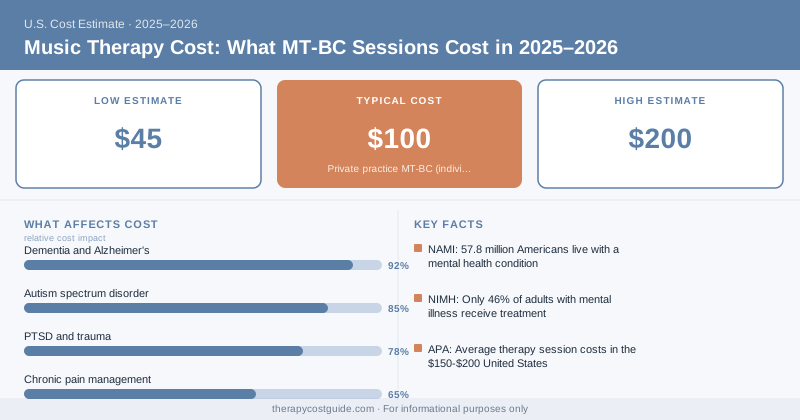
Music Therapy Cost: What MT-BC Sessions Cost in 2025–2026
{ if eq .Lang "zh" }{ else }{ end }Most people assume music therapy means listening to a playlist while you relax. That’s not what it is. A board-certified music therapist (MT-BC) has at minimum a bachelor’s degree in music therapy, 1,200 hours of clinical training, and has passed the national certification exam administered by the Certification Board for Music Therapists (CBMT). What they do in sessions — improvisation, lyric analysis, active music-making, receptive listening — is guided by clinical goals, not comfort.
The American Music Therapy Association (AMTA) reports over 9,000 certified music therapists practicing across the United States, working in hospitals, schools, hospice programs, psychiatric settings, and private practice.
Music Therapy Cost at a Glance
| Setting | Cost Per Session | Notes |
|---|---|---|
| Private practice MT-BC (individual) | $100 – $200 | 45–60 min, clinical goals |
| Group music therapy (clinic/community) | $30 – $80/person | Typically 45–60 min groups |
| Hospice music therapy | Often $0 out-of-pocket | Covered under Medicare/Medicaid hospice benefit |
| Pediatric/school-based music therapy | Often free | IEP-funded or district-covered |
| Inpatient psychiatric program | Included in daily rate | Adjunct to primary treatment |
| Community mental health center | $20 – $60 | Sliding-scale programs |
Where you access music therapy matters enormously for cost. Hospice and pediatric school-based music therapy are the two most consistently covered settings — in both cases, you’re unlikely to pay out of pocket at all.
What Does the Research Say?
The clinical evidence base for music therapy is stronger than most people realize. A 2021 meta-analysis cited by the American Psychological Association found significant effect sizes for music therapy in reducing anxiety and depression in clinical populations — effect sizes comparable to other established modalities like CBT for specific groups.
The AMTA’s own published research database documents evidence across:
- Dementia and Alzheimer’s: Improved recall, mood, and engagement; one of music therapy’s most studied applications
- Autism spectrum disorder: Communication, social interaction, and emotional regulation
- PTSD and trauma: Particularly for veterans; the VA has integrated music therapy into several flagship programs
- Chronic pain management: Reducing pain perception and anxiety in oncology and rehabilitation settings
- Pediatric hospitalization: Reducing procedural anxiety and distress in children
What to Look for in a Music Therapist
The credential to look for is MT-BC (Music Therapist — Board Certified), issued by the CBMT. Some practitioners use titles like “music wellness specialist” or “therapeutic musician” without the MT-BC credential — these may offer value, but they’re not the same as clinical music therapy and typically can’t bill insurance. Verify credentials at the CBMT online directory (cbmt.org). If you’re seeking music therapy for a child through an IEP, the therapist must hold state licensure in addition to MT-BC in states that have it.Does Insurance Cover Music Therapy?
Coverage is inconsistent — this is the honest answer. Here’s how it breaks down:
Medicare: Covers music therapy as part of the hospice benefit (under the Medicare Hospice Benefit, music therapy is listed as a covered supportive service). In other settings, Medicare does not cover standalone music therapy sessions.
Medicaid: Some state Medicaid programs cover music therapy under “creative arts therapy” or “rehabilitative services” categories. Coverage varies significantly by state. New York’s Medicaid, for example, has historically covered creative arts therapies including music therapy; many other states do not.
Private insurance: Most private insurance plans do not cover music therapy as a standalone service. However, if an MT-BC also holds a clinical license (LCSW, LPC, LMFT), they can bill sessions under standard psychotherapy codes, which are broadly covered.
Special education/IEPs: If music therapy is written into a child’s Individualized Education Program (IEP) by the school’s multidisciplinary team, the school district is required to fund it under IDEA. This is the most reliable pathway to fully covered music therapy for children.
Who Benefits Most from Music Therapy?
Music therapy tends to be the most appropriate — and most cost-effective — choice in these situations:
Older adults with dementia: Music therapy has stronger evidence here than nearly any other nonpharmacological intervention. If a family member is in memory care, asking the facility whether they have an MT-BC on staff is worth doing.
Children with developmental differences: ASD, speech delays, sensory processing differences. Group music therapy is particularly effective for social skill building in this population.
Hospice and palliative care patients: If someone you love is in hospice, music therapy is likely available at no cost — many families don’t know to ask. The hospice’s care coordinator can arrange it.
Veterans with PTSD: The VA has piloted music therapy programs at multiple facilities with documented outcomes. Veterans can ask their VA care coordinator about availability; it won’t always be listed on standard program directories.
Finding Affordable Music Therapy
- AMTA therapist locator: musictherapy.org has a searchable directory by location and specialty
- University programs: Schools with AMTA-approved music therapy programs (Berklee, Temple, Florida State, etc.) offer supervised student services at reduced rates
- Group music therapy: At $30–$80/person, group sessions are significantly more affordable and still clinically effective for many goals
- Community music therapy programs: Nonprofits in urban areas often run sliding-scale or subsidized music therapy for specific populations
- Hospice/palliative care: If applicable, this is the most accessible and consistently covered pathway — ask the care team directly
If cost is the barrier, group music therapy or university clinic sessions are the most practical entry points for adults paying out of pocket.
{ if eq .Lang "zh" }Disclaimer: TherapyCostGuide provides cost information for educational purposes only. We are not a mental health provider and do not offer clinical advice or treatment. Cost ranges are based on national survey data and vary significantly by location, provider credentials, practice setting, and insurance plan. Always consult a licensed mental health professional for treatment decisions. If you are in crisis, call or text 988 (Suicide & Crisis Lifeline) or go to your nearest emergency room.