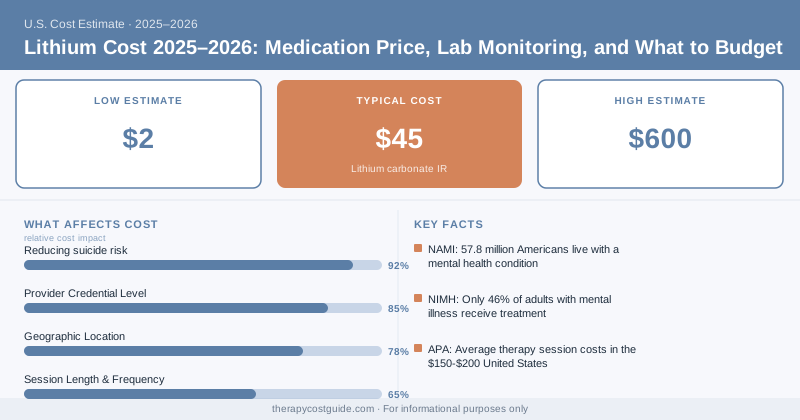
Lithium Cost 2025–2026: Medication Price, Lab Monitoring, and What to Budget
{ if eq .Lang "zh" }{ else }{ end }Lithium is 75 years old, costs under $50/month as a generic, and has more published evidence for bipolar disorder than any other medication in psychiatry. It’s also one of the most misunderstood medications in clinical practice — not because it’s complicated, but because the monitoring requirements make patients (and some prescribers) underestimate its manageability.
Here’s what lithium actually costs to take safely, labs and all.
Lithium Medication Cost
| Formulation | Dose Range | Generic/Month | Notes |
|---|---|---|---|
| Lithium carbonate IR | 300–600mg tablets, taken 2–3x/day | $25–$45 | Most common formulation |
| Lithium carbonate ER | 300–450mg extended release | $30–$55 | Once or twice daily dosing |
| Lithium citrate (liquid) | 300mg/5mL syrup | $40–$70 | For patients who can’t swallow tablets |
Lithium is generic-only — the original brand (Eskalith) is no longer commonly stocked. A 90-day supply typically runs $60–$120 at most pharmacies. GoodRx and pharmacy discount programs can bring the cost lower.
With insurance, lithium typically falls in Tier 1 ($5–$15 copay/month).
What the Monitoring Labs Cost
Here’s where people underestimate the true cost of lithium. Because it has a narrow therapeutic window — the difference between an effective dose and a toxic dose is small — blood levels must be checked regularly. So must kidney function and thyroid, since lithium affects both organs over time.
| Lab Test | Why Needed | Cash Cost | Frequency (Stable) |
|---|---|---|---|
| Serum lithium level | Monitor for toxicity and therapeutic range | $30–$80 | Every 3–6 months |
| Serum creatinine (kidney) | Lithium affects kidney concentrating ability | $20–$40 | Every 6 months |
| eGFR (kidney function) | Chronic kidney disease risk | Included with BMP | Every 6 months |
| TSH (thyroid) | Lithium causes hypothyroidism in 20–40% | $30–$60 | Annually (or if symptoms) |
| BMP (comprehensive panel) | Includes electrolytes, creatinine | $60–$100 | Every 6 months |
For a stable patient on lithium, a reasonable monitoring schedule is: full panel (BMP + lithium level + TSH) every 6 months. Cash cost: $100–$200 per lab visit.
Annual monitoring cost (cash): $200–$400. Annual monitoring cost (with insurance): usually $0–$60 (covered as routine disease management).
Total Annual Cost of Lithium Treatment
| Cost Component | Cash/Year | With Insurance/Year |
|---|---|---|
| Lithium medication | $300–$550 | $60–$180 |
| Lab monitoring (2x/year) | $200–$400 | $0–$120 |
| Prescriber visits (4/year) | $400–$800 | $60–$200 (copays) |
| Total annual | $900–$1,750 | $120–$500 |
These are estimates for a stable patient. During titration (first 3–6 months), more frequent labs and prescriber visits will increase costs. If you develop side effects or toxicity, additional visits and labs will be needed.
Lithium Toxicity: What to Watch For
Lithium toxicity is the most important clinical issue with this medication, and patients should understand it — not to be scared away, but to recognize it early.
The therapeutic range is typically 0.6–1.2 mEq/L (some prescribers target 0.8–1.0 for maintenance). At levels above 1.5–2.0 mEq/L, toxicity symptoms appear. Above 2.0 mEq/L, toxicity can be severe.
Early toxicity signs: fine hand tremor (normal and mild), increased thirst, increased urination, mild nausea, diarrhea.
Toxicity warning signs: coarse tremor, confusion, slurred speech, coordination problems, vomiting.
Severe toxicity: seizures, cardiac arrhythmia, kidney failure, permanent neurological damage.
Toxicity is most likely to occur when:
- You’re dehydrated (hot weather, illness, intense exercise)
- You start a new medication that raises lithium levels (NSAIDs like ibuprofen, ACE inhibitors, some antibiotics)
- You dramatically change your sodium intake (very low sodium diets raise lithium levels)
Why Lithium Is Worth It
Given the monitoring requirements, why is lithium still considered the gold standard for bipolar disorder? The evidence base.
NIMH’s treatment guidelines and meta-analyses consistently show lithium has the strongest evidence of any mood stabilizer for:
- Preventing manic episodes
- Preventing depressive episodes
- Reducing suicide risk — this is the data point most prescribers emphasize. Multiple studies show that lithium significantly reduces suicide attempts and completions in bipolar disorder patients, an effect not consistently replicated by other mood stabilizers
No other psychiatric medication has as robust a track record for suicide risk reduction. For a patient with bipolar disorder who is at elevated suicide risk, that data point alone often justifies the monitoring burden.
Who Manages Lithium Prescriptions
Lithium is primarily managed by psychiatrists, though primary care physicians sometimes prescribe it for maintenance once a patient is stable. It’s not typically available through telehealth-only platforms due to the monitoring requirements.
Lithium Annual Budget Estimate
Without insurance: $900–$1,750/year (medication + labs + visits). With good insurance: $120–$500/year. Most of the uninsured cost comes from prescriber visits and labs, not the medication itself. If you’re uninsured, community mental health centers often provide psychiatric medication management at sliding-scale fees that significantly reduce the prescriber visit cost.Bottom Line
Lithium as a medication is cheap — $25–$50/month. The full cost of treatment, including mandatory monitoring and prescriber visits, runs $900–$1,750/year without insurance. With insurance, it’s much more manageable. The monitoring requirements are real but achievable for most patients who understand why they matter. And the evidence for bipolar disorder — especially suicide risk reduction — makes lithium the first-line maintenance treatment despite being 75 years old.
{ if eq .Lang "zh" }Disclaimer: TherapyCostGuide provides cost information for educational purposes only. We are not a mental health provider and do not offer clinical advice or treatment. Cost ranges are based on national survey data and vary significantly by location, provider credentials, practice setting, and insurance plan. Always consult a licensed mental health professional for treatment decisions. If you are in crisis, call or text 988 (Suicide & Crisis Lifeline) or go to your nearest emergency room.