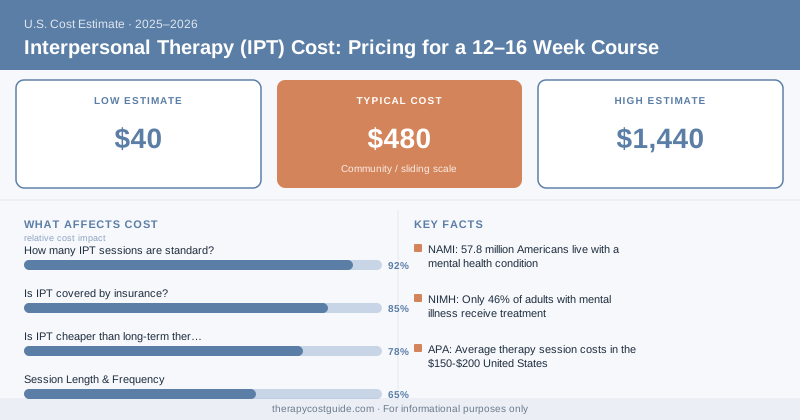
Interpersonal Therapy (IPT) Cost: Pricing for a 12–16 Week Course
{ if eq .Lang "zh" }{ else }{ end }What does a full course of interpersonal therapy actually cost? For most people, it’s 12 to 16 weekly sessions at $100 to $200 each, which works out to roughly $1,200 to $3,200 total. IPT is one of the few therapies with a built-in timeline, and that predictability makes budgeting easier than with open-ended approaches.
IPT focuses on your relationships and life transitions, grief, role disputes, big changes, as the lever for improving mood. It was developed specifically for depression and has strong research backing. Because the protocol is time-limited by design, you can see the finish line (and the final bill) from the start.
Cost Per Session and Total Course
| Setting | Per Session | Full Course (12–16 wks) |
|---|---|---|
| Community / sliding scale | $40 – $90 | $480 – $1,440 |
| Licensed therapist (LCSW, LPC) | $100 – $160 | $1,200 – $2,560 |
| Psychologist | $150 – $200 | $1,800 – $3,200 |
| Online therapy platform | $60 – $100 effective | varies by plan |
The fixed length is the headline feature. Unlike depth therapies that run for years, IPT’s defined window keeps the total in a known range from day one.
Key Takeaway
IPT’s time-limited structure (12–16 weekly sessions) makes total cost predictable: roughly $1,200–$3,200 with a private therapist, or under $1,500 at a sliding-scale clinic. You’ll know your maximum spend before you start.Strong Evidence, Defined Timeline
IPT isn’t a fringe approach. The National Institute of Mental Health funded the landmark Treatment of Depression Collaborative Research Program in the 1980s, which established IPT as an effective treatment for depression alongside CBT. A 2011 meta-analysis in the American Journal of Psychiatry confirmed IPT’s efficacy across a range of depressive and related disorders.
That track record matters for cost because it means the time-limited format isn’t a shortcut, it’s evidence-based. You’re paying for a defined, proven course, not an open-ended commitment.
Insurance and IPT
Like other modalities, IPT is reimbursed by CPT code, not name. A 45-minute session bills as 90834 and is covered under your plan’s outpatient mental health benefit. Because IPT is depression-focused and a covered diagnosis, claims tend to go through cleanly.
After your deductible, copays of $20 to $50 per visit are common. Across a 14-session course, that’s $280 to $700 total. Confirm your benefits using our guide to does insurance cover therapy.
IPT vs. Other Depression Treatments
IPT and CBT are the two best-studied talk therapies for depression, and they cost about the same per session and over a course. The choice is usually about fit: IPT if your distress is tied to relationships and transitions, CBT if it’s tied to thought patterns.
For comparison shopping across formats, our overview of individual therapy costs covers the full range, and EMDR is worth a look if trauma is part of the picture.
Frequently Asked Questions
How many IPT sessions are standard? A typical acute course is 12 to 16 weekly sessions. Some people add monthly maintenance sessions afterward, which adds modest ongoing cost but isn’t part of the core protocol.
Is IPT covered by insurance? Yes, when delivered by a licensed provider and billed under standard psychotherapy codes for a covered diagnosis like depression. Copays typically run $20 to $50 per session after your deductible.
Is IPT cheaper than long-term therapy? Usually, because it’s time-limited. A 14-session course with a private therapist tops out around $3,200, well below the cost of open-ended therapy that runs for a year or more.
{ if eq .Lang "zh" }Disclaimer: TherapyCostGuide provides cost information for educational purposes only. We are not a mental health provider and do not offer clinical advice or treatment. Cost ranges are based on national survey data and vary significantly by location, provider credentials, practice setting, and insurance plan. Always consult a licensed mental health professional for treatment decisions. If you are in crisis, call or text 988 (Suicide & Crisis Lifeline) or go to your nearest emergency room.