Internal Family Systems (IFS) Therapy Cost: $150–$300/Session and the Dick Schwartz Model
{ if eq .Lang "zh" }{ else }{ end }IFS has gone from a niche clinical model to one of the most requested therapy approaches — driven largely by the popularity of books like “No Bad Parts” by Dr. Richard Schwartz and the explosion of therapists marketing “parts work” on social media. But what does IFS actually cost, and how do you know if you’re getting the real thing?
IFS Therapy Cost
| Provider Type | Per Session | Typical Course | Total Range |
|---|---|---|---|
| IFS Level 1 trained therapist | $120 – $200 | 20 – 40 sessions | $2,400 – $8,000 |
| IFS Institute certified therapist | $175 – $300 | 25 – 50 sessions | $4,375 – $15,000 |
| IFS-informed therapist (no formal training) | $100 – $180 | 15 – 30 sessions | $1,500 – $5,400 |
| IFS with telehealth therapist | $120 – $220 | 20 – 35 sessions | $2,400 – $7,700 |
| University / sliding scale | $50 – $90 | 15 – 30 sessions | $750 – $2,700 |
What IFS Actually Is
Internal Family Systems was developed by Dr. Richard (Dick) Schwartz in the 1980s at Northwestern University. The model proposes that the mind is not unitary — it’s made up of multiple “parts,” each with its own perspective, feelings, and motivations. These parts aren’t pathology; they’re adaptive responses to life experiences.
The IFS model has three types of parts:
Exiles: Vulnerable parts carrying emotional pain, shame, or traumatic memories. They’re often young and get “exiled” from consciousness because their pain is overwhelming.
Managers: Parts that work proactively to protect the system from feeling the exiles’ pain. They might show up as perfectionism, control, self-criticism, intellectualizing, or people-pleasing.
Firefighters: Parts that react when exile pain breaks through anyway — often through impulsive behaviors like substance use, binge eating, self-harm, or dissociation. They’re trying to extinguish the fire.
Self: The core of a person — characterized by Schwartz’s 8 C’s (Calm, Clarity, Curiosity, Compassion, Confidence, Creativity, Courage, Connectedness). The goal of IFS is to help Self lead the system, rather than having parts drive reactively.
IFS Training Levels: Why It Matters for Cost and Quality
The IFS Institute offers formal training with three program levels:
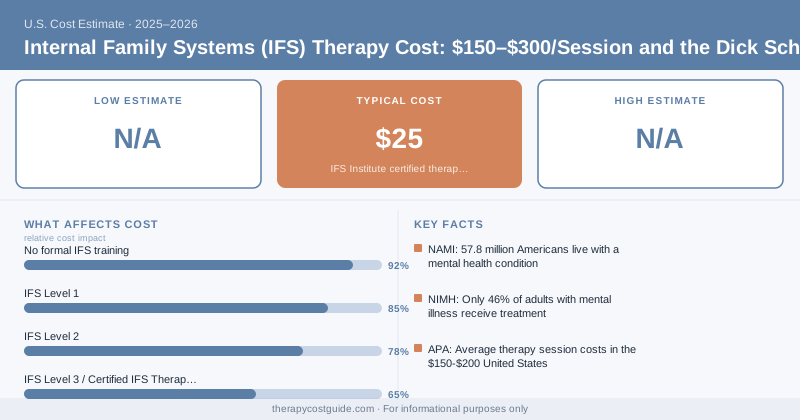
No formal IFS training: Therapists who have read books or attended a webinar. They may use “parts language” but aren’t using the IFS model properly.
IFS Level 1: 8-day intensive training. Foundational competency. Cost range: $120–$200/session.
IFS Level 2: Advanced training in specific applications (trauma, couples, children). $150–$250/session.
IFS Level 3 / Certified IFS Therapist: Extensive training, mentorship, and certification requirements. Fewer than 2,000 certified IFS therapists in the U.S. $200–$300+/session.
This matters because poorly delivered IFS — particularly unsupervised access to exiled parts without adequate stabilization — can sometimes increase distress. Certified practitioners have the training to navigate this safely.
How to Find a Certified IFS Therapist
The IFS Institute maintains a directory at ifs-institute.com/practitioners. You can filter by location, training level, and specialty areas.
When interviewing a potential IFS therapist, ask: “Can you walk me through what typically happens in an IFS session?” A trained practitioner can easily explain the process of accessing parts, working with managers, and approaching exiles with Self energy. If they speak primarily in vague “parts language” without the specific IFS protocol, they may be IFS-inspired rather than IFS-trained.
Cost note: many certified IFS therapists don’t take insurance because the extensive training and typically longer treatment duration doesn’t fit standard insurance billing models. Ask about sliding scale options before assuming you can’t afford it.
Who IFS Helps Best
IFS has research support and strong clinical anecdote for:
Trauma (including complex trauma): IFS doesn’t require direct exposure to traumatic memories the way EMDR or PE does. Parts work approaches trauma indirectly, making it better tolerated by some people with complex trauma histories.
Depression: Identifying the critical/shaming “manager” parts that drive depression and developing a different relationship with them.
Anxiety: Understanding anxious parts as protective rather than broken — and discovering what they’re protecting you from.
Eating disorders: IFS is increasingly used in eating disorder treatment. Food-related behaviors are understood as “firefighter” parts responding to exile pain, not character flaws.
Relationship issues: Recognizing when a protective part is running a relationship dynamic helps create more conscious, Self-led behavior.
The APA and SAMHSA have both recognized IFS as a promising evidence-based approach, though the research base is less extensive than CBT or EMDR. A 2017 meta-analysis in the Journal of Marital and Family Therapy found significant positive effects for depression, anxiety, and physical health conditions.
Does Insurance Cover IFS?
Yes — with the same caveat as narrative therapy. Insurance pays for sessions with a licensed provider addressing a diagnosable condition. IFS isn’t a separately billable modality; it’s a treatment approach within standard licensed therapy.
The practical issue: many IFS-trained therapists in private practice don’t accept insurance at all, or are out-of-network with most plans. This is common with specialty training approaches. Options:
- Use out-of-network benefits: If you have PPO insurance with out-of-network benefits, you may get reimbursed 40–70% of the session cost. You pay upfront and submit a superbill.
- Find an in-network IFS therapist: They exist, but you’ll need to search specifically. Psychology Today’s filter for “Internal Family Systems” shows providers who accept various insurance plans.
- Sliding scale: Many IFS therapists offer reduced rates. Ask directly.
Disclaimer: TherapyCostGuide provides cost information for educational purposes only. We are not a mental health provider and do not offer clinical advice or treatment. Cost ranges are based on national survey data and vary significantly by location, provider credentials, practice setting, and insurance plan. Always consult a licensed mental health professional for treatment decisions. If you are in crisis, call or text 988 (Suicide & Crisis Lifeline) or go to your nearest emergency room.