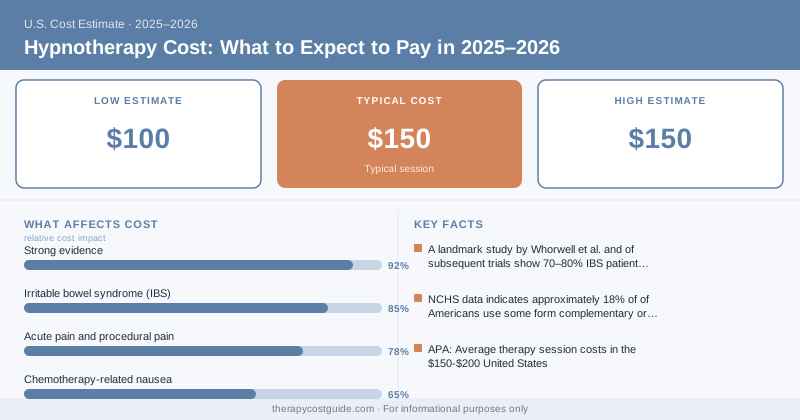
Hypnotherapy Cost: What to Expect to Pay in 2025–2026
{ if eq .Lang "zh" }{ else }{ end }Most patients assume hypnotherapy is either stage magic or pseudoscience. It’s neither. Clinical hypnosis is a real, evidence-based adjunct treatment with decades of controlled research — but the evidence is considerably stronger for some conditions than others, and the credential landscape is a mess.
Here’s the honest cost and evidence picture.
Hypnotherapy Session Costs
| Provider Type | Cost Per Session | Notes |
|---|---|---|
| Licensed therapist/psychologist with hypnotherapy training | $120 – $250 | Can bill insurance for clinical issues |
| Certified hypnotherapist (non-clinical) | $75 – $175 | Cannot bill medical insurance |
| Hypnotherapy for smoking cessation (single session) | $100 – $300 | Many offer “guarantee” sessions |
| Hypnotherapy for IBS (gut-directed) | $120 – $200 | Best evidence application |
| Online hypnotherapy session | $60 – $150 | Live session via telehealth |
| Typical session | $100 – $150 | Most U.S. markets |
Notice the range is lower than most therapy modalities. That’s because many hypnotherapists don’t hold clinical mental health licenses — they have certification from a hypnotherapy training organization, which carries lower overhead and typically lower fees.
What the Evidence Actually Says
Clinical hypnosis has legitimate evidence for specific applications. Let’s be specific rather than vague:
Strong evidence:
- Irritable bowel syndrome (IBS): Gut-directed hypnotherapy (GDH) has the most robust evidence base. A landmark study by Whorwell et al. and subsequent trials show 70–80% of IBS patients improve with GDH, with effects lasting 5+ years in follow-up studies. The British Society of Gastroenterology now includes hypnotherapy in its IBS treatment guidelines.
- Acute pain and procedural pain: Hypnosis reduces pain ratings and analgesic use during medical procedures. Multiple meta-analyses confirm this. Used in burn treatment, dental procedures, and pediatric medicine.
- Chemotherapy-related nausea: APA Division 30 (Society for Psychological Hypnosis) recognizes this as well-supported by evidence.
Moderate evidence:
- Anxiety as an adjunct: Adds incrementally to other treatments; doesn’t replace CBT or medication
- Chronic pain (headache, fibromyalgia): Mixed results; some patients respond well, others don’t
- Smoking cessation: Popular but evidence is surprisingly weak. A Cochrane review found insufficient evidence to determine whether hypnotherapy is more effective than behavioral counseling alone for smoking cessation
Limited/insufficient evidence:
- Weight loss, most specific phobias, insomnia alone (without other treatment), past-life regression (no scientific validity)
What Hypnosis Actually Is — and Isn't
Clinical hypnosis produces a state of focused attention and increased responsiveness to suggestion. It doesn’t make people unconscious, doesn’t allow the therapist to control the person, and doesn’t create reliable access to accurate memories. The “trance” is real in the sense of altered attention and reduced critical evaluation — but it’s not sleep, and you can’t make someone do or believe something they fundamentally object to. The evidence supports hypnosis as an adjunct that enhances the effectiveness of suggestion-based interventions; it doesn’t support the dramatic representations in popular culture.The Credential Problem
This is where hypnotherapy gets complicated. There’s no federal licensing for hypnotherapists, and state regulation varies enormously.
Licensed clinical providers with hypnosis training (LCSWs, licensed psychologists, licensed counselors, physicians) can incorporate hypnosis into their practice and bill insurance for the clinical issue being treated. The hypnosis is a technique within a clinical service, not a separately billed item.
Certified hypnotherapists without clinical licensure hold certifications from organizations like the American Council of Hypnotist Examiners (ACHE), National Guild of Hypnotists (NGH), or many smaller bodies. Training requirements vary from 40 hours to several hundred hours. They cannot bill medical insurance for mental health or medical conditions.
The reliable credential marker for clinical hypnosis: look for providers trained by or certified through the American Society of Clinical Hypnosis (ASCH) or the Society for Clinical and Experimental Hypnosis (SCEH). These organizations require a pre-existing clinical license as a prerequisite for training.
APA Division 30 (Society for Psychological Hypnosis) also maintains standards for psychologists who use hypnosis clinically.
Insurance Coverage for Hypnotherapy
Clinical hypnosis performed by a licensed mental health or medical professional is generally not separately billed to insurance. Instead:
- The provider bills the clinical session (psychotherapy, medical visit) at the standard code
- Hypnosis is a technique within that session, not a separate service
This means: if your psychologist or LCSW uses hypnosis in your therapy session, you pay your standard therapy copay.
If you see a non-clinical certified hypnotherapist, you pay out of pocket. Insurance won’t cover sessions with a provider who doesn’t hold a billable clinical license.
NCHS data indicates approximately 18% of Americans use some form of complementary or alternative medicine annually, with hypnotherapy representing a small but consistent subset of this use.
Finding a Qualified Clinical Hypnotherapist
- ASCH directory: asch.net — search for licensed clinical providers with ASCH membership
- Psychology Today: Filter for “clinical hypnosis” in the specialty area
- For IBS specifically: The Manchester criteria for gut-directed hypnotherapy define the gold-standard protocol; look for practitioners trained in this specific model
Session counts vary by application:
- IBS (GDH protocol): 7–12 sessions (the Whorwell protocol is 12 sessions)
- Procedural anxiety: Often 1–3 sessions
- Chronic pain adjunct: 4–8 sessions
- Smoking cessation: Often 1–3 sessions (though evidence for durability is limited)
For conditions with strong evidence (IBS, procedural pain), the total cost — $700–$2,000 for a full course — compares favorably to years of symptoms and medication costs.
{ if eq .Lang "zh" }Disclaimer: TherapyCostGuide provides cost information for educational purposes only. We are not a mental health provider and do not offer clinical advice or treatment. Cost ranges are based on national survey data and vary significantly by location, provider credentials, practice setting, and insurance plan. Always consult a licensed mental health professional for treatment decisions. If you are in crisis, call or text 988 (Suicide & Crisis Lifeline) or go to your nearest emergency room.