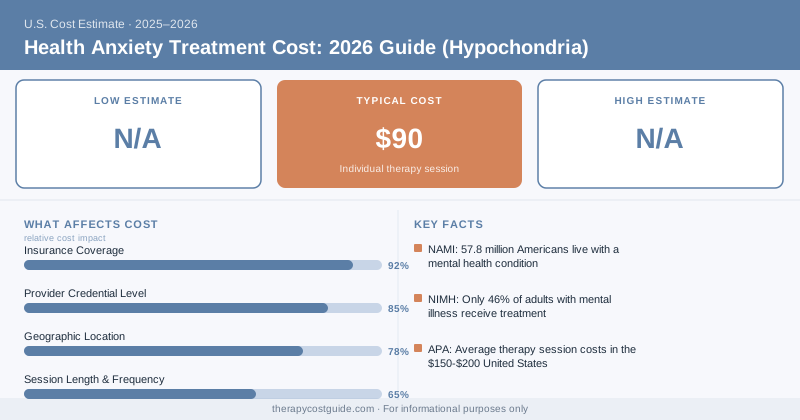
Health Anxiety Treatment Cost: 2026 Guide (Hypochondria)
{ if eq .Lang "zh" }{ else }{ end }The cruelest part of health anxiety is the bill that comes before the diagnosis. Before most people understand they have illness anxiety disorder, they’ve often racked up thousands in ER visits, specialist appointments, and tests that all came back normal. Treating the anxiety itself is usually far cheaper than the cycle of reassurance-seeking that defines the condition.
So let’s compare the two: what therapy costs versus what untreated health anxiety costs.
What Health Anxiety Treatment Costs
The frontline treatment is CBT, sometimes with medication. The numbers are relatively modest compared to the medical spending health anxiety can drive.
| Service | Typical Cost | Notes |
|---|---|---|
| Individual therapy session | $90 – $200 | CBT-based |
| Full CBT course (12–18 sessions) | $1,400 – $3,200 | Before insurance |
| Online/telehealth therapy | $70 – $180 | Often effective for this condition |
| Psychiatry/medication management | $150 – $400 initial | SSRIs if needed |
| SSRI medication (generic) | $4 – $40/month |
A full course of therapy often costs less than a single round of unnecessary specialist workups — and it breaks the cycle rather than feeding it.
Why CBT Works Here
Health anxiety responds well to cognitive behavioral therapy, which targets the cycle of catastrophic interpretation, body-checking, and reassurance-seeking. Sessions run $90–$200, and a typical course is 12 to 18 sessions. Many people respond to brief, focused treatment.
The Anxiety and Depression Association of America notes that anxiety disorders as a group affect about 19% of U.S. adults each year, and health anxiety drives a disproportionate share of unnecessary medical utilization. That’s why treating it pays for itself — it short-circuits the expensive reassurance loop.
Key Takeaway
A full course of CBT for health anxiety runs roughly $1,400–$3,200 — often less than the medical tests and visits the condition drives. Treating the anxiety, not the latest symptom, is the cost-effective move.The Reassurance Trap
The defining behavior of health anxiety is reassurance-seeking — repeated doctor visits, tests, and Googling symptoms. Each one brings brief relief, then more worry. Treatment teaches you to tolerate uncertainty instead, which is uncomfortable but breaks the loop.
Telehealth and Medication
Health anxiety is well-suited to telehealth at $70–$180 a session. When medication helps, SSRIs are the usual choice, requiring psychiatry visits and generic medication at $4–$40 a month. Because health anxiety lives on the anxiety spectrum and often coexists with depression, one provider can usually address the full picture.
Insurance and Cheaper Routes
Therapy and psychiatry for health anxiety are covered as standard mental health care — see does insurance cover therapy. If you’re paying out of pocket, telehealth and sliding-scale clinics keep costs down; our therapy without insurance guide explains how.
Frequently Asked Questions
How is health anxiety different from being cautious about my health? Reasonable caution leads to appropriate care and then peace of mind. Health anxiety is a cycle: a sensation triggers catastrophic fear, you seek reassurance, feel briefly better, then the worry returns — often migrating to a new symptom. When the worry dominates your time and never resolves, treatment helps.
Can therapy really reduce my medical bills? For many people, yes. By breaking the reassurance-seeking cycle, CBT reduces unnecessary ER visits, specialist appointments, and repeat testing. The therapy course often costs less than the medical spending it prevents, making it cost-effective beyond the symptom relief.
Do I need medication for health anxiety? Not necessarily. Many people improve with CBT alone. Medication, usually an SSRI, is added for moderate-to-severe cases or when anxiety is constant. The choice depends on severity and your preferences — discuss it with a clinician familiar with anxiety disorders.
{ if eq .Lang "zh" }Disclaimer: TherapyCostGuide provides cost information for educational purposes only. We are not a mental health provider and do not offer clinical advice or treatment. Cost ranges are based on national survey data and vary significantly by location, provider credentials, practice setting, and insurance plan. Always consult a licensed mental health professional for treatment decisions. If you are in crisis, call or text 988 (Suicide & Crisis Lifeline) or go to your nearest emergency room.