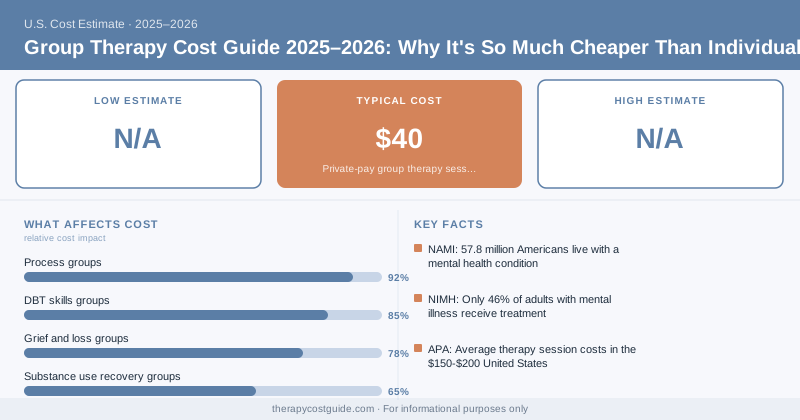
Group Therapy Cost Guide 2025–2026: Why It's So Much Cheaper Than Individual Therapy
{ if eq .Lang "zh" }{ else }{ end }Why does a group therapy session cost a third of what an individual session costs, even though you’re working with the exact same licensed clinician? The answer is simple math with real clinical upside attached — and it’s one of the most underused ways to get quality mental health care without the individual-therapy price tag.
Group Therapy Costs
| Format | Typical Cost |
|---|---|
| Private-pay group therapy session | $40 – $80/session |
| In-network insurance copay | $15 – $40/session |
| DBT skills group (structured, weekly) | $50 – $100/session |
| Hospital-affiliated support group | Free – $20/session |
| 12-step programs (AA, NA, etc.) | Free (donation-based) |
| Online group therapy platforms | $30 – $70/session |
The Math Behind the Lower Price
A therapist running an individual session works with one client for that 45–60 minute block. In a group session, the same therapist works with 6–12 clients simultaneously. The per-person cost drops proportionally — that’s the entire mechanism, and it’s why group therapy isn’t a “discount” version of real treatment, it’s a structurally different economic model applied to the same clinical expertise.
When Group Therapy Outperforms Individual Sessions
For certain conditions, group format isn’t just cheaper — it’s clinically preferable. Social anxiety treatment benefits from real-time practice with peers in a safe setting that individual therapy can’t replicate. Substance use recovery groups provide peer accountability and shared lived experience. DBT skills groups are specifically designed as a group format because the skill-building curriculum works better taught to a cohort practicing together. Ask your therapist whether your specific concern is one where group format is a genuine clinical match, not just a budget compromise.What a Typical Group Looks Like
Most therapeutic groups run 60–90 minutes, meet weekly, and include 6–12 participants plus one or two facilitating clinicians. Common formats include:
- Process groups — open-ended discussion facilitated by a therapist, often for general anxiety, depression, or life transitions
- DBT skills groups — structured curriculum-based groups teaching emotion regulation, distress tolerance, and interpersonal effectiveness
- Grief and loss groups — often free through hospice or hospital bereavement programs
- Substance use recovery groups — ranging from clinical, insurance-billed groups to free peer-led 12-step meetings
Insurance Coverage
Group therapy has its own CPT billing codes distinct from individual therapy, and most insurance plans cover it — often at a lower copay than individual sessions since the per-session cost itself is lower. Some plans require documentation that group format is clinically appropriate for your diagnosis, particularly for structured programs like DBT skills groups.
SAMHSA data consistently shows peer support and group-based interventions play a significant role in sustained recovery outcomes for substance use disorders specifically, which is part of why free 12-step and peer-support options remain such a widely used complement to (or substitute for) paid clinical treatment.
Group Therapy vs. Individual: Making the Choice
Group therapy works best when you’re comfortable in a shared setting, your concern benefits from peer interaction or skill practice, and cost is a real factor in sustaining consistent treatment. Individual therapy remains preferable for highly personal trauma processing, complex diagnostic work, or situations where you need undivided clinical attention on a specific, individualized treatment plan.
Bottom Line
Group therapy costs $40–$80 per session privately, or $15–$40 with insurance — roughly a third of individual therapy pricing — while remaining fully clinician-led and, for many conditions, comparably or more effective. It’s one of the most underused ways to access consistent, quality mental health care on a tighter budget.
{ if eq .Lang "zh" }Disclaimer: TherapyCostGuide provides cost information for educational purposes only. We are not a mental health provider and do not offer clinical advice or treatment. Cost ranges are based on national survey data and vary significantly by location, provider credentials, practice setting, and insurance plan. Always consult a licensed mental health professional for treatment decisions. If you are in crisis, call or text 988 (Suicide & Crisis Lifeline) or go to your nearest emergency room.