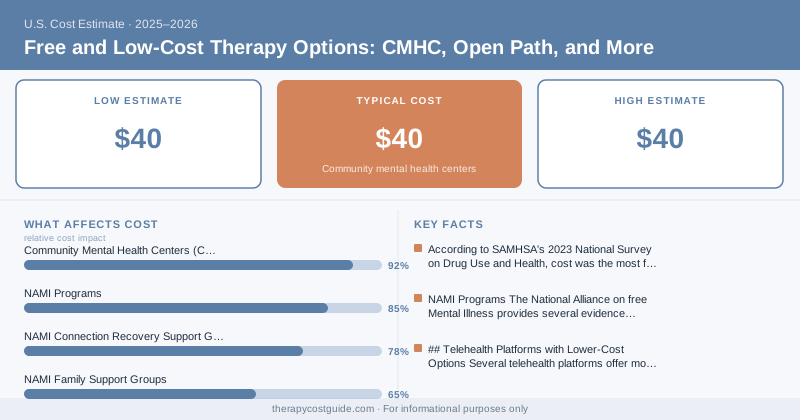
Free and Low-Cost Therapy Options: CMHC, Open Path, and More
{ if eq .Lang "zh" }{ else }{ end }The $200/session therapist rate that comes up in most search results is not the only option — it’s not even close to the only option. There’s a whole ecosystem of free and low-cost mental health care that most people don’t know exists.
According to SAMHSA’s 2023 National Survey on Drug Use and Health, cost was the most frequently cited reason adults didn’t receive needed mental health treatment, cited by 44.8% of adults who perceived a need for but didn’t receive mental health care. The options below don’t fix the insurance system, but they can close the gap for a lot of people.
Tier 1: Genuinely Free Options
Community Mental Health Centers (CMHCs)
Federally funded CMHCs are required to serve all people regardless of ability to pay. They offer individual therapy, psychiatric services, crisis intervention, and case management. Sliding scale fees go down to $0 for people with no income.
Find your nearest CMHC at SAMHSA’s findtreatment.gov or by calling 211.
NAMI Programs
The National Alliance on Mental Illness provides several free evidence-based peer support programs:
- NAMI Connection Recovery Support Groups: Free weekly peer-led groups nationwide for adults with mental illness
- NAMI Family Support Groups: Free for family members of people with mental illness
- NAMI Peer-to-Peer: Free 8-session educational program for adults
- NAMI Helpline: 1-800-950-6264 — information, referrals, support; free
Crisis Resources (Free 24/7)
- 988 Suicide and Crisis Lifeline: Call or text 988 — free, 24/7, trained crisis counselors
- Crisis Text Line: Text HOME to 741741 — free crisis support via text, 24/7
- Veterans Crisis Line: 988, press 1 — specifically for veterans and service members
| Free/Low-Cost Option | Cost Range | What It Offers |
|---|---|---|
| Community mental health centers | $0–$40/session | Full therapy, psychiatry, sliding scale |
| University/graduate training clinics | $20–$60/session | CBT, therapy, supervised students |
| Open Path Collective | $30–$80/session | Licensed therapists at reduced rates |
| NAMI support groups | Free | Peer support, not clinical therapy |
| 988 / Crisis Text Line | Free | Crisis intervention only |
| Federally Qualified Health Centers | $0–$40/visit | Integrated primary + behavioral health |
| Employee Assistance Programs (EAP) | Free (3–12 sessions) | Short-term therapy through employer |
University Training Clinics
Graduate training clinics run by APA-accredited clinical or counseling psychology programs offer therapy delivered by advanced doctoral students under close supervision by licensed faculty. The quality is generally good — students are closely supervised and use evidence-based approaches.
Cost: $20–$60 per session, often on a sliding scale.
What to expect: Sessions with a student therapist who is supervised by a licensed psychologist. Your student therapist will consult regularly with supervisors and follow structured, evidence-based protocols.
How to find them: Search “[your city] psychology training clinic” or check APA’s psychologist locator at locator.apa.org.
Open Path Collective
Open Path (openpathcollective.org) is a non-profit network of licensed therapists who agree to see clients at reduced rates. After a one-time $65 membership fee, you can access:
- $30–$80 per individual session (vs. $150–$250 standard rates)
- $30–$50 per group session
- Sessions with licensed therapists (not trainees)
The network has grown significantly — over 20,000 therapists as of 2024. Coverage isn’t uniform across all cities and specialties, but it’s one of the best options for people who don’t qualify for CMHCs but can’t afford standard therapy rates.
Employee Assistance Programs (EAPs)
If you’re employed, your employer may offer an EAP — typically providing 3–12 free therapy sessions per year with licensed providers. EAP sessions are:
- Completely free
- Confidential from your employer
- Available for immediate concerns (anxiety, depression, stress, relationship issues)
- Limited in scope — not designed for long-term treatment
Check with your HR department. EAP is one of the most underutilized benefits in most workplaces.
Federally Qualified Health Centers (FQHCs)
FQHCs are federally funded health centers required to serve all patients regardless of insurance status or ability to pay, on a sliding-scale basis. Many FQHCs have integrated behavioral health — either on-site therapists and psychiatrists, or warm referral relationships with CMHCs.
Cost: Sliding scale, $0–$40 per visit based on income.
Find an FQHC: findahealthcenter.hrsa.gov
What 'Sliding Scale' Actually Means
Sliding scale therapy means the fee adjusts based on your income. Some practices use a formal income-verification process; others simply ask you to name what you can afford.
Don’t be embarrassed to ask for a lower rate. Most therapists who offer sliding scale genuinely want to serve people who can’t pay full rates. The worst they can say is no, or that they don’t have sliding scale openings.
A common sliding scale structure: 0–100% FPL → $0; 100–200% FPL → $15–$40; 200–300% FPL → $40–$80; 300%+ FPL → full rate.
Telehealth Platforms with Lower-Cost Options
Several telehealth platforms offer more affordable therapy than traditional private practice:
- Open Path (above): $30–$80 on their platform
- Talkspace, BetterHelp: Messaging-based plans from $60–$100/month (less than per-session individual therapy)
- Alma, Headway: Some in-network therapists; may be more affordable with insurance
Disclaimer: TherapyCostGuide provides cost information for educational purposes only. We are not a mental health provider and do not offer clinical advice or treatment. Cost ranges are based on national survey data and vary significantly by location, provider credentials, practice setting, and insurance plan. Always consult a licensed mental health professional for treatment decisions. If you are in crisis, call or text 988 (Suicide & Crisis Lifeline) or go to your nearest emergency room.