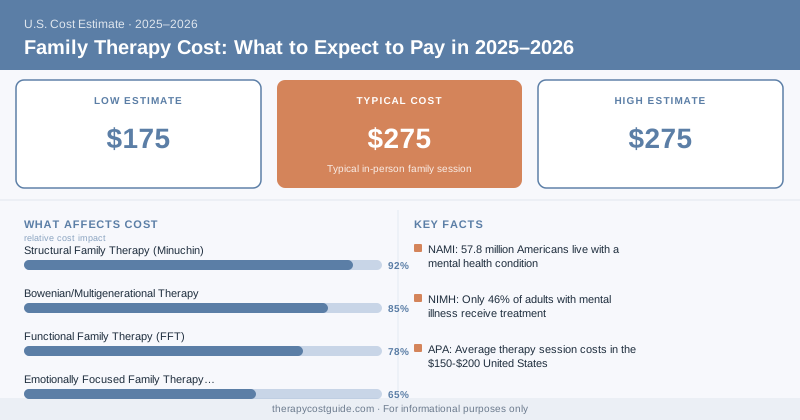
Family Therapy Cost: What to Expect to Pay in 2025–2026
{ if eq .Lang "zh" }{ else }{ end }The average family therapy session runs $150–$350. That’s not dramatically more than individual therapy — but it’s one price covering multiple people in the room, which changes the math considerably.
Family therapy isn’t just “everyone sits together and talks.” It’s a distinct discipline with its own models, evidence base, and credentialing. Here’s what it actually costs and what you’re paying for.
What Family Therapy Sessions Cost
According to APA fee survey data, family therapy sessions with a licensed marriage and family therapist (LMFT) or licensed professional counselor run slightly higher than individual sessions due to session length and complexity.
| Provider Type | Session Cost | Notes |
|---|---|---|
| Licensed Marriage & Family Therapist (LMFT) | $150 – $300 | Core credential for family work |
| Licensed Counselor (LPC/LMHC) | $120 – $250 | Many specialize in family systems |
| PhD/PsyD Psychologist | $175 – $350 | Higher end, often complex cases |
| Community mental health center | $20 – $80 | Income-based sliding scale |
| University training clinic | $25 – $70 | Supervised graduate students |
| Typical in-person family session | $175 – $275 | Most U.S. markets |
Sessions usually run 50–90 minutes. Many family therapists schedule 80-minute “double sessions” for initial assessments, which can run $250–$500 for that first appointment.
The Main Family Therapy Models
The model your therapist uses shapes what the work looks like — and sometimes how long it takes.
Structural Family Therapy (Minuchin): Focuses on reorganizing family boundaries and hierarchies. Often shorter-term, 8–16 sessions for many presenting problems.
Bowenian/Multigenerational Therapy: Explores patterns across generations. Can be longer-term, especially for adult family work.
Functional Family Therapy (FFT): Highly structured, evidence-based model for adolescent behavioral problems. Typically 8–15 sessions.
Emotionally Focused Family Therapy (EFF): Extension of EFT attachment-based work to families. Often 12–20 sessions.
Narrative Family Therapy: Collaborative, focused on rewriting problem-saturated stories. Length varies considerably.
Who Needs to Attend Every Session?
Not everyone needs to come every time. A good family therapist will sometimes work with individuals, sub-systems (parents only, siblings only), or the full family depending on what the session targets. Don’t assume “family therapy” means you can only make progress when every family member shows up. Flexible attendance is often built into the model.How Many Sessions Does Family Therapy Take?
The research on this varies by presenting problem. NIMH data and published meta-analyses show:
- Adolescent conduct and behavior problems: Functional Family Therapy averages 8–15 sessions with significant outcomes
- Family conflict and communication: 10–20 sessions in most structured models
- Divorce and co-parenting: 6–12 sessions, sometimes shorter with focused protocols
- Family grief: 8–15 sessions depending on loss circumstances
- Eating disorders (family-based treatment/FBT for teens): 15–20 sessions is the standard Maudsley protocol
For serious ongoing issues — chronic mental illness in a family member, trauma histories, substance use — treatment can extend to 30+ sessions over a year or more.
Insurance Coverage for Family Therapy
This is where things get complicated. Family therapy coverage varies widely because insurers often only pay for sessions where an identified patient (IP) with a diagnosis is the focus.
- If a child is the IP: Insurance typically covers sessions when the child is present, even if the session is primarily parent-focused
- If an adult family member is the IP: Same logic applies — that person must usually be present for billing purposes
- Couples/marital sessions: Many insurers don’t cover “marriage counseling” per se, but do cover sessions billed as individual or family therapy with a qualifying diagnosis
- LMFTs in your network: Coverage for LMFTs specifically varies by state and insurer — check this before assuming
Typical in-network copays run $20–$60 per session after deductible. Out-of-network reimbursement, if your plan includes it, usually covers 60–80% of the “allowed amount” — which may be lower than what your therapist charges.
According to NAMI, approximately 1 in 5 U.S. adults experiences mental illness annually, and family systems often play a significant role in treatment outcomes — which is why insurance parity laws now require mental health coverage comparable to physical health.
Reducing Family Therapy Costs
Sliding scale practices: Many family therapists at private practices offer reduced fees based on income. Ask directly — most won’t advertise it.
Community mental health centers: Often have family-focused programs, sometimes specifically for adolescent behavioral issues or substance use. Fees are income-based.
University training clinics: Graduate students in MFT programs are supervised by licensed faculty. Sessions are often $20–$60 and quality is typically strong because cases are reviewed weekly.
Employee Assistance Programs (EAPs): Many cover 6–12 sessions of counseling per year, and “family” is often in scope. Worth checking before paying out of pocket.
Group family education programs: Some issues (parenting a child with ADHD, supporting a family member with addiction) are better served by structured group programs that cost $20–$50/session and provide peer community alongside professional guidance.
The real cost calculation for family therapy isn’t just the per-session price — it’s whether 12 sessions now prevents years of escalating problems later.
{ if eq .Lang "zh" }Disclaimer: TherapyCostGuide provides cost information for educational purposes only. We are not a mental health provider and do not offer clinical advice or treatment. Cost ranges are based on national survey data and vary significantly by location, provider credentials, practice setting, and insurance plan. Always consult a licensed mental health professional for treatment decisions. If you are in crisis, call or text 988 (Suicide & Crisis Lifeline) or go to your nearest emergency room.