Exposure Therapy Cost: ERP for OCD and PE for PTSD Explained
{ if eq .Lang "zh" }{ else }{ end }Exposure therapy is the treatment that works but that nobody wants to do. You’re essentially asking someone to repeatedly confront the exact thing they’ve been working hard to avoid. Done right, it’s the most effective anxiety and PTSD treatment available. Done wrong — or with an undertrained therapist — it can make things worse.
The cost calculus matters: fewer sessions, higher per-session intensity, and significantly better long-term outcomes than avoidance-based approaches.
Exposure Therapy Session Costs
| Exposure Therapy Type | Cost Per Session | Typical Sessions | Total Estimated Cost |
|---|---|---|---|
| ERP for OCD (standard) | $130 – $250 | 14–20 | $1,820 – $5,000 |
| Prolonged Exposure (PE) for PTSD | $120 – $220 | 8–15 | $960 – $3,300 |
| Systematic desensitization (phobia) | $100 – $200 | 4–12 | $400 – $2,400 |
| Virtual Reality Exposure Therapy (VRET) | $150 – $300 | 6–15 | $900 – $4,500 |
| Intensive ERP program (clinic, multi-day) | $300 – $600/day | 5–10 days | $1,500 – $6,000 |
The per-session cost is similar to other CBT-based therapies, but specialized training pushes some therapists higher. ERP for OCD in particular requires specific training beyond standard graduate education.
ERP for OCD: The Gold Standard
Exposure and Response Prevention (ERP) is the frontline behavioral treatment for OCD. It involves two components:
- Exposure: Deliberately triggering obsessive anxiety through contact with feared situations or thoughts
- Response prevention: Resisting compulsive behaviors that would temporarily reduce anxiety
ERP works by breaking the obsession-compulsion cycle: when someone prevents the compulsion while exposed to the trigger, the anxiety eventually decreases on its own (habituation) and the brain learns the feared outcome doesn’t occur.
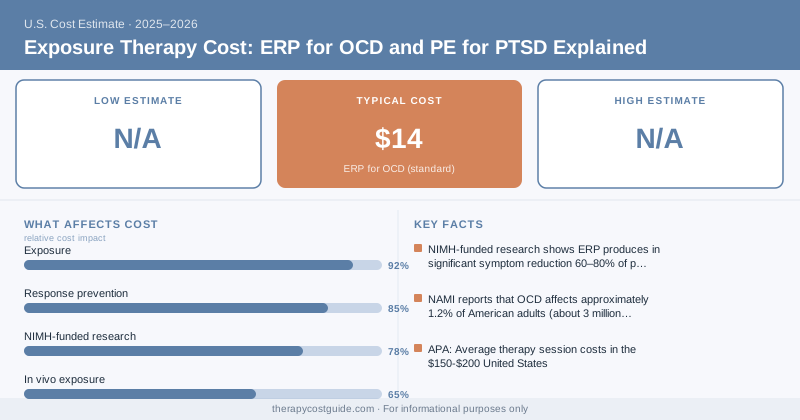
NIMH-funded research shows ERP produces significant symptom reduction in 60–80% of people who complete treatment. A landmark study published in JAMA Psychiatry comparing ERP alone, medication (SRI) alone, and combined treatment found ERP alone produced the largest effect sizes for mild-to-moderate OCD.
Sessions for OCD-ERP typically run 60–90 minutes — longer than standard therapy sessions — because the exposures require adequate time to work. Some therapists bill for longer sessions at proportionally higher rates.
Prolonged Exposure (PE) for PTSD
Prolonged Exposure involves two main components:
- In vivo exposure: Gradually approaching avoided situations that remind the person of trauma
- Imaginal exposure: Repeatedly recounting the traumatic memory in detail to process it
PE typically runs twice weekly for 8–15 sessions — the twice-weekly schedule is recommended because weekly sessions slow the natural habituation curve. That means the total calendar time is 4–7.5 weeks, but the number of sessions (and sessions’ costs) are the same as weekly therapy.
The VA delivers PE as its primary PTSD treatment, with thousands of trained therapists in VA settings available at no cost to qualifying veterans.
Why Avoidance Is Expensive in the Long Run
The cost of not doing exposure therapy is often invisible because it’s distributed over years of gradually narrowing life. Someone with panic disorder who avoids driving gradually stops driving highways, then bridges, then unfamiliar areas, then eventually can’t drive at all. Someone with OCD spends 4 hours a day on rituals instead of living. The total cost of untreated anxiety disorders — in lost productivity, narrowed life options, and downstream depression — dwarfs the cost of 10–20 sessions of exposure therapy. Avoidance is always the expensive option when you include time.Finding an Exposure-Trained Therapist
This matters more for exposure therapy than almost any other modality. Therapists who call themselves “familiar with exposure techniques” but who haven’t done specific training often practice “exposure lite” — they back off when the patient gets anxious, which is exactly the wrong response and can make avoidance worse.
For OCD-ERP specifically, look for:
- Training through the International OCD Foundation (iocdf.org) — the IOCDF maintains a therapist directory at iocdf.org/find-help
- Certification or training through an OCD specialty clinic or academic center
- A therapist who explicitly describes ERP with response prevention, not just “exposure techniques”
For PTSD-PE, look for:
- PTSD Consultation Program (capl.musc.edu) trained providers
- VA-trained PE therapists (available to veterans through the VA system at no cost)
- Psychology Today PE-filtered search
Insurance Coverage for Exposure Therapy
ERP and PE are covered by insurance when delivered by an in-network licensed provider for OCD or PTSD diagnoses respectively. Standard outpatient psychotherapy billing codes apply.
The same challenges as other specialized evidence-based approaches: OCD-ERP specialists disproportionately practice out-of-network because of the intensity of training required and the complexity of the presentations they treat. Out-of-network reimbursement, if your plan includes it, covers 60–80% of the allowed amount.
NAMI reports that OCD affects approximately 1.2% of American adults (about 3 million people), and the average time between OCD symptom onset and receiving appropriate ERP treatment is 14–17 years — partly because many therapists aren’t trained in ERP and treat OCD with less effective approaches.
Intensive Outpatient ERP Programs
For OCD and some PTSD cases, intensive outpatient programs (IOPs) offer a faster, more concentrated version of exposure treatment. These programs typically involve:
- 3–5 hours of therapy daily
- 5–10 consecutive days or spread over 2–3 weeks
- Both individual and group ERP work
- Cost: $3,000–$8,000 total for the intensive program
OCD-specialized clinics like the OCD Institute at McLean Hospital or similar programs at academic medical centers offer this format. The faster pace means less total time off work compared to 20 weekly sessions, which is a real practical advantage for many working adults. Insurance coverage for intensive programs varies and requires pre-authorization.
{ if eq .Lang "zh" }Disclaimer: TherapyCostGuide provides cost information for educational purposes only. We are not a mental health provider and do not offer clinical advice or treatment. Cost ranges are based on national survey data and vary significantly by location, provider credentials, practice setting, and insurance plan. Always consult a licensed mental health professional for treatment decisions. If you are in crisis, call or text 988 (Suicide & Crisis Lifeline) or go to your nearest emergency room.