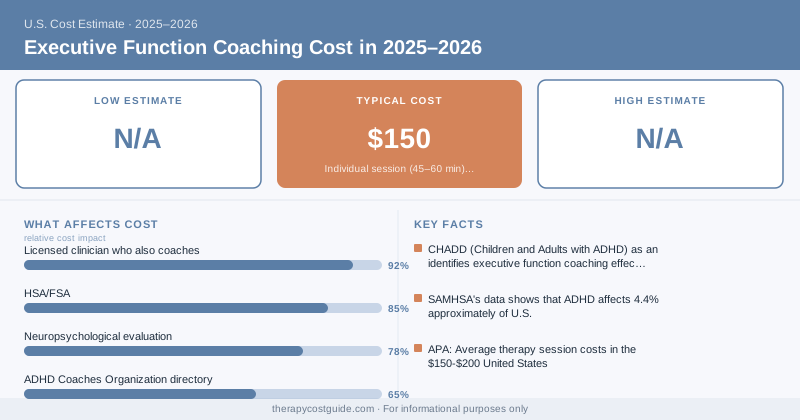
Executive Function Coaching Cost in 2025–2026
{ if eq .Lang "zh" }{ else }{ end }Most people with ADHD have been told to “just make a list.” It doesn’t work — not because they’re not trying, but because list-making is itself an executive function skill. That’s the insight that separates executive function coaching from generic productivity advice, and it’s why people with ADHD are increasingly turning to coaches who specialize in exactly this gap.
Executive function coaching isn’t therapy. It’s a structured, skills-based intervention that targets the specific cognitive processes — planning, task initiation, working memory, time management, emotional regulation — that ADHD and related conditions disrupt. Here’s what it costs and what you’re actually getting.
Executive Function Coaching Session Costs
| Service | Typical Cost |
|---|---|
| Individual session (45–60 min), certified EF coach | $150 – $350/session |
| Monthly package (4 sessions) | $400 – $1,200/month |
| Group coaching program | $100 – $250/month |
| Online platform coaching (Coach.me, ADHD coaches) | $200 – $500/month |
| Student/academic EF coaching | $75 – $200/session |
| Neuropsychological evaluation (EF testing, one-time) | $2,000 – $4,000 |
The wide range at the individual session level reflects real differences in coach credentials and experience. A coach certified through the Institute for the Advancement of AD/HD Coaching (IAAC) or the ADHD Coaches Organization (ACO) commands higher rates — and there’s a reason for that. Certification programs require supervised coaching hours, training in ADHD neuroscience, and ongoing professional development. An uncredentialed “productivity coach” charging $80/hour isn’t the same thing.
What Executive Function Coaching Actually Covers
Executive function (EF) coaching is focused on building systems, not insight. Therapy explores why patterns exist; coaching addresses how to operate differently starting this week.
A typical EF coaching relationship covers: building consistent daily routines, breaking projects into actionable steps, managing deadlines and transitions, reducing procrastination, developing self-monitoring habits, and adjusting strategies when the first approach doesn’t stick. Sessions are collaborative and practical — you’re working through real current tasks, not discussing abstract goals.
CHADD (Children and Adults with ADHD) identifies executive function coaching as an effective complement to ADHD medication, noting that about 40% of adults with ADHD use some form of coaching or skills training alongside their treatment. The research is clear that medication addresses neurological symptoms but doesn’t automatically teach compensatory strategies — that’s where coaching fills the gap.
Who Benefits Most
Executive function deficits don’t require an ADHD diagnosis to be real. People with autism spectrum disorder, traumatic brain injury, learning disabilities, depression, and anxiety all commonly experience EF disruption. Coaching is appropriate across all of these populations, though coaches with ADHD specialization are most relevant for attention-based presentations.
SAMHSA’s data shows that ADHD affects approximately 4.4% of U.S. adults — and EF deficits in that population directly impact employment stability, academic achievement, relationships, and daily functioning. That’s not a small quality-of-life issue; it’s a structural barrier that, with the right support, is genuinely addressable.
Students — especially college students — represent a growing coaching market. Many universities now offer EF coaching through disability services or learning centers at reduced or no cost to enrolled students. That’s worth checking before you pay private-practice rates.
Monthly Packages vs. Per-Session Billing
| Format | Cost | Best For |
|---|---|---|
| Per session, no commitment | $150 – $350 | Trying coaching before committing |
| Monthly package (4 sessions) | $400 – $1,200 | Ongoing structured work |
| Group coaching (6–10 people) | $100 – $250/month | Budget-conscious; peer accountability |
| Intensive onboarding package | $800 – $2,500 | Launch phase, complex EF needs |
| Student academic coaching | $75 – $200/session | K–12 or college students |
Monthly packages almost always come out cheaper per session than booking individually. More importantly, executive function coaching works over time — you’re building new habits and systems, not solving a single problem. Most coaches recommend a minimum of 3–6 months to see durable change. Budget accordingly: that’s a realistic investment of $1,200–$7,200 depending on frequency and the coach’s rate.
Before You Hire a Coach: Key Questions
Not all EF coaches have equivalent training. Ask: Are you certified through IAAC, ACO, or ICF? How many clients with ADHD or executive function deficits have you worked with? What does a typical coaching engagement look like for someone with my profile? Do you coordinate with my therapist or prescriber if I have one? Coaching works best when it’s integrated with other supports — a good coach will welcome collaboration with your treatment team rather than operating in isolation.Insurance and Payment Options
Here’s the direct answer: executive function coaching is almost never covered by health insurance. Coaching is not a licensed clinical service under mental health parity law — it’s a skills-based service that operates outside the medical billing system entirely.
That said, there are three paths worth knowing:
Licensed clinician who also coaches: Some licensed psychologists and licensed professional counselors offer executive function coaching as a licensed service under their clinical credentials. In that case, sessions may be billable under mental health CPT codes — check with your insurer and verify the provider’s billing approach before assuming.
HSA/FSA: Standard executive function coaching from a non-clinician coach is generally not HSA/FSA eligible because it lacks a medical diagnosis requirement. However, if a licensed provider orders or provides the coaching as part of a documented ADHD treatment plan, some FSA administrators will approve it. It depends heavily on your specific plan — get written confirmation before paying from your account.
Neuropsychological evaluation: If you suspect executive function deficits but don’t have a diagnosis, a full neuropsychological evaluation ($2,000–$4,000) typically is partially covered by insurance. That evaluation can establish a formal diagnosis that opens doors to other services — and it tells your coach exactly which EF domains to target.
Finding a Qualified EF Coach
- ADHD Coaches Organization directory: adhdcoaches.org
- CHADD’s ADHD Resource Directory: chadd.org
- Psychology Today: filter by “ADHD” and look for coaches with clinical training
- Your neuropsychologist or psychiatrist: ask for a direct referral — they often know local coaches by reputation
- University disability services: if you’re a student, this is almost always your most affordable option
Executive function coaching isn’t a quick fix. Done well, it’s a structured, evidence-informed process that builds durable skills — skills that compound. The investment makes most sense when you’ve tried simpler approaches and found that knowing what to do and actually doing it reliably are two completely different problems.
{ if eq .Lang "zh" }Disclaimer: TherapyCostGuide provides cost information for educational purposes only. We are not a mental health provider and do not offer clinical advice or treatment. Cost ranges are based on national survey data and vary significantly by location, provider credentials, practice setting, and insurance plan. Always consult a licensed mental health professional for treatment decisions. If you are in crisis, call or text 988 (Suicide & Crisis Lifeline) or go to your nearest emergency room.