Equine-Assisted Psychotherapy Cost: Sessions, Insurance, and What to Expect
{ if eq .Lang "zh" }{ else }{ end }Horseback riding therapy and equine-assisted psychotherapy are not the same thing. This distinction matters more than it might seem, especially if you’re trying to figure out what’s actually being offered — and what it costs.
Hippotherapy (from the Greek hippos, horse) is a physical rehabilitation technique. A therapist uses the horse’s rhythmic movement to address neurological and physical conditions — cerebral palsy, traumatic brain injury, sensory processing disorders. The horse moves; the client benefits from the movement.
Equine-assisted psychotherapy (EAP) is something different entirely. The client doesn’t ride. They stand in a paddock with horses — leading, grooming, observing, interacting — while a licensed mental health therapist and a certified equine specialist facilitate the experience and the reflection it generates. The horse’s behavior becomes a mirror. What comes up emotionally in that interaction becomes the therapeutic material.
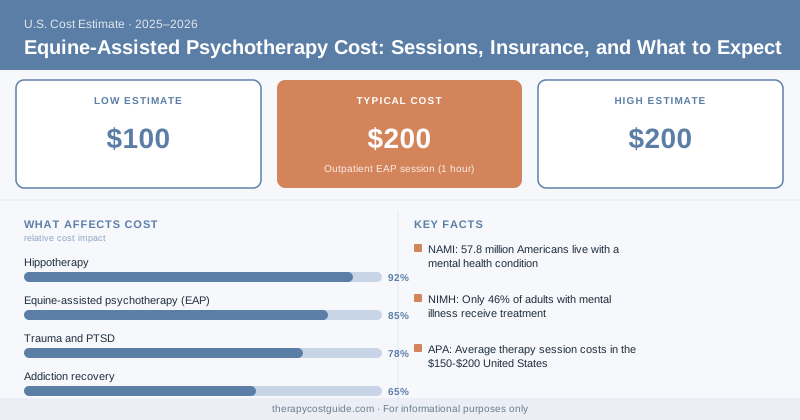
It’s a real clinical approach. And it costs $100–$250 per session for outpatient work.
What EAP Costs
| Setting | Cost | Notes |
|---|---|---|
| Outpatient EAP session (1 hour) | $100 – $200 | Most common; private equine therapy centers |
| Extended EAP session (90 min) | $150 – $250 | Some practices offer longer sessions |
| Residential program per day (includes EAP) | $500 – $1,500 | Full treatment program; EAP is one component |
| Group EAP session (per person) | $50 – $100 | Common in addiction recovery and youth programs |
| Nonprofit / sliding scale | $40 – $80 | Veterans programs, youth at-risk settings |
The range reflects real differences in setting and structure. A private equine therapy center with a licensed therapist, certified equine specialist, facility overhead, and a herd of horses has substantial operating costs. A nonprofit running EAP for at-risk youth may subsidize costs significantly through grants and donations.
The Two-Professional Model
This is what makes EAP structurally — and cost-wise — different from most therapy: it requires two professionals in every session.
- A licensed mental health professional (LCSW, LPC, MFT, psychologist) who facilitates the therapeutic process
- A certified equine specialist who manages the horses and equine environment and reads horse behavior
The two main certifying bodies, EAGALA (Equine Assisted Growth and Learning Association) and PATH International (Professional Association of Therapeutic Horsemanship), train professionals in their respective models. EAGALA specifically requires both roles be present simultaneously; PATH allows more flexibility.
Neither model involves mounted activities for the EAP component — the work is entirely ground-based. This two-professional cost is part of why sessions run higher than solo-therapist modalities.
What Happens in an EAP Session
A session might involve a simple task: lead a horse through a course of cones. Or observe two horses interacting and describe what you see. Or notice what you feel when a horse approaches versus turns away. Nothing is explicitly prescribed. The therapeutic value comes from what the client notices in themselves — and what the therapist helps them name. Horses are acutely sensitive to non-verbal cues (body language, tension, energy) and respond accordingly. Clients often find that interactions with horses surface emotional patterns that talk therapy hasn’t directly accessed.Who EAP Helps
The populations with the strongest evidence base and most established programs include:
- Trauma and PTSD — particularly developmental and relational trauma; also veterans
- Addiction recovery — EAP is common in residential substance use treatment programs
- Youth at-risk — behavioral issues, attachment problems, conduct disorders
- Anxiety and depression — general effectiveness, though less specialized than trauma applications
- Adolescents who resist talk therapy — EAP’s non-verbal, activity-based format often reaches teens who won’t engage with traditional therapy
A 2020 review published in the Journal of Child and Family Studies found evidence supporting EAP for reducing anxiety and improving emotional regulation in at-risk youth, though the authors noted the evidence base is smaller and less controlled than for established treatments like CBT or EMDR.
SAMHSA’s National Registry of Evidence-Based Programs and Practices (NREPP) has included some equine-assisted programs, though the evidence tier is generally “promising” rather than “well-supported” compared to first-line treatments.
Insurance Coverage: Expect Challenges
| Payer Type | Coverage Likelihood | Notes |
|---|---|---|
| Private insurance (in-network) | Low–moderate | Depends on plan; modality often flagged as experimental |
| Out-of-network reimbursement | Moderate (with superbill) | More realistic than in-network for EAP |
| Medicaid | Rare | Some state programs cover if licensed therapist bills as psychotherapy |
| Medicare | Rare | Not typically covered as EAP; may cover therapy component only |
| Veterans benefits / VA | Possible | Some VA programs include EAP; check with local VAMC |
| HSA / FSA | Yes | Qualified medical expense when licensed therapist is involved |
The billing reality: a licensed therapist can bill EAP sessions under standard psychotherapy CPT codes (90834, 90837) for the portion of the session they’re clinically facilitating. Some insurers will reimburse this; others will deny based on “experimental” classification. The equine specialist’s time and facility fees are not separately reimbursable.
EAGALA vs. PATH: What the Certifications Mean
EAGALA (eagala.org): Focus on mental health and personal development. Strictly ground-based (no riding). Requires both a licensed mental health professional AND an equine specialist with EAGALA certification in every session. More common in trauma, addiction, and mental health contexts.
PATH International (pathintl.org): Broader scope — covers hippotherapy (physical therapy on horseback) as well as therapeutic riding and EAP. More flexible on model structure. More common in adaptive riding and physical rehabilitation settings.
When seeking EAP specifically for mental health purposes, EAGALA-certified centers are more likely to have a clinical mental health framework built into their model.
Residential Programs and Retreats
For clients with more intensive needs — active addiction, treatment-resistant depression, complex trauma — residential programs that incorporate EAP as one component are a separate category. These aren’t EAP-only; they’re full treatment programs that include equine work alongside individual therapy, group therapy, and other modalities.
Residential programs typically run $10,000–$60,000 per month (similar to other residential mental health treatment), with EAP as one of several therapeutic elements. If EAP is specifically what you’re seeking, the outpatient per-session model is the more cost-effective access point.
For related non-verbal, body-based approaches that may be used alongside EAP or as alternatives, somatic therapy and brainspotting therapy offer different mechanisms toward similar goals — reaching what talk therapy alone doesn’t always access.
{ if eq .Lang "zh" }Disclaimer: TherapyCostGuide provides cost information for educational purposes only. We are not a mental health provider and do not offer clinical advice or treatment. Cost ranges are based on national survey data and vary significantly by location, provider credentials, practice setting, and insurance plan. Always consult a licensed mental health professional for treatment decisions. If you are in crisis, call or text 988 (Suicide & Crisis Lifeline) or go to your nearest emergency room.