Employee Assistance Program (EAP) Therapy Cost 2025–2026: What's Free and What Isn't
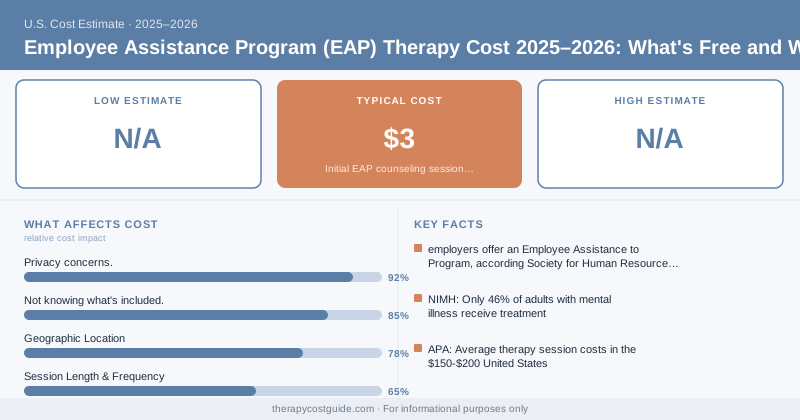
{ if eq .Lang "zh" }{ else }{ end }Here’s a number that should surprise you: roughly 79% of large U.S. employers offer an Employee Assistance Program, according to Society for Human Resource Management survey data — and utilization rates across the industry typically sit under 10%. Millions of workers are paying, in effect, for a free mental health benefit they never touch, often because they don’t understand what it actually covers or worry (usually unnecessarily) about privacy.
What EAP Therapy Actually Costs
| Component | Typical Cost to Employee |
|---|---|
| Initial EAP counseling sessions (per issue, per year) | Free — 3 to 8 sessions typical |
| EAP legal/financial consultation add-ons (many programs include this) | Free — 1 consultation typical |
| Sessions after EAP allotment runs out | Standard insurance copay/rates apply |
| EAP-referred community resource (if uninsured) | Varies, often sliding scale |
The free session count varies by employer contract with the EAP vendor — some offer as few as 3 sessions per concern per year, others offer 8 or more, and a few offer unlimited phone-based support with a capped number of in-person or video counseling sessions.
Why So Few Employees Use a Free Benefit
Two things tend to hold people back, and both are largely misplaced:
Privacy concerns. EAPs are almost always run by a third-party vendor, structurally separate from your employer’s HR or management chain. Employers typically receive only aggregate usage statistics for the whole company, not individually identifiable information about which employees used the service or for what reason. Your session content is protected by the same confidentiality standards as any licensed clinical care.
Not knowing what’s included. Many employees think “counseling” means a single crisis hotline call, when in practice most EAPs include several structured, real counseling sessions with a licensed clinician — plus, often, legal consultations, financial counseling, and referral services for childcare or eldercare.
EAPs Are a Bridge, Not a Full Treatment Plan
EAP sessions are intentionally short-term and solution-focused — designed to address an acute concern (a stressful life event, a short-term crisis, an initial mental health screening) and then refer you onward if ongoing treatment is needed. Think of it as a free, no-barrier front door into the mental health system, not a replacement for longer-term therapy if your situation calls for it. Using your EAP sessions doesn’t use up or affect your regular health insurance mental health benefit — they’re entirely separate systems.What Happens When Your Sessions Run Out
Your EAP counselor will typically help coordinate a “warm handoff” to ongoing care — either through your regular health insurance (standard copay/deductible rules then apply) or to a community resource if you’re uninsured or your insurance access is limited. This referral process is part of the standard EAP workflow, not something you have to figure out alone.
What Else EAPs Commonly Include
Beyond counseling sessions, many EAP contracts bundle in:
- Legal consultation (often one free consultation on issues like divorce, estate planning, or landlord disputes)
- Financial counseling or debt management referrals
- Childcare and eldercare resource referrals
- Manager consultation services (for workplace conflict, though this is a separate track from personal counseling)
How to Find Out What Your Employer’s EAP Covers
Check your employee benefits portal, ask HR directly (this question alone doesn’t reveal you’re using or plan to use the service), or look for EAP contact information on your pay stub or benefits summary — most EAP vendors provide a dedicated phone line and website separate from general HR contact channels.
Bottom Line
EAP therapy is free for most employees — typically 3–8 sessions per concern per year — and confidentially separate from your employer’s HR records. It’s designed as a short-term bridge, not full-scale treatment, so know your session count and ask about the referral process before you need it.
{ if eq .Lang "zh" }Disclaimer: TherapyCostGuide provides cost information for educational purposes only. We are not a mental health provider and do not offer clinical advice or treatment. Cost ranges are based on national survey data and vary significantly by location, provider credentials, practice setting, and insurance plan. Always consult a licensed mental health professional for treatment decisions. If you are in crisis, call or text 988 (Suicide & Crisis Lifeline) or go to your nearest emergency room.