Emotionally Focused Therapy (EFT) Cost for Couples and Individuals
{ if eq .Lang "zh" }{ else }{ end }Sarah and Mike were quoted $250 a session for emotionally focused couples therapy and nearly walked away. Then their therapist told them most EFT couples finish in 8 to 20 sessions, not years. Suddenly the math looked different: a defined course of $2,000 to $5,000, with a strong evidence base behind it.
EFT zeroes in on the emotional bond between partners (or, for individuals, your attachment patterns). It’s one of the most researched couples therapies out there, and the cost reflects both the specialized training therapists need and the fact that most courses are time-limited.
What EFT Costs
EFT is delivered to couples, families, or individuals. Couples sessions run highest because they’re longer and require a therapist trained in the EFT model.
| Format | Per Session | Typical Course |
|---|---|---|
| Couples EFT | $150 – $300 | $1,500 – $6,000 |
| Individual EFT | $120 – $250 | $1,200 – $5,000 |
| Family EFT | $150 – $280 | varies |
| Sliding scale / trainee | $60 – $120 | lower total |
Certified EFT therapists (through ICEEFT) often charge at the top of the range because the certification requires substantial supervised training. That premium is part of why a strong fit can cost more than generic couples counseling.
Key Takeaway
Couples EFT runs $150–$300 per session, with most couples completing treatment in 8–20 sessions for a total of $2,000–$5,000. The time-limited structure keeps the cost more predictable than open-ended couples work.The Research Behind the Price
EFT’s evidence base is what justifies the specialized rates. Research by Dr. Sue Johnson, the model’s developer, found that roughly 70–75% of couples moved from distress to recovery after EFT, with about 90% showing significant improvement, results widely cited in couples therapy literature. The American Psychological Association lists EFT among empirically supported couples treatments.
Those recovery rates are high for couples work, where many approaches struggle. Paying a premium for a certified EFT therapist can mean fewer total sessions, which partly offsets the higher hourly rate.
Insurance and EFT
Couples therapy coverage is the catch. Many insurers don’t reimburse couples sessions unless one partner has a diagnosable condition that the therapy treats. Individual EFT, billed under standard psychotherapy codes, is more reliably covered.
This is a common gap, so check before assuming you’re covered. Our guide to does insurance cover therapy explains the couples-coverage problem in detail, and our overview of couples therapy costs covers the broader landscape.
EFT vs. Other Couples Approaches
Compared to general couples counseling, EFT tends to cost a bit more per session but often resolves in a defined window. The Gottman Method is its main evidence-based rival and runs at similar rates. For individuals working on attachment, individual EFT competes with individual therapy at comparable prices.
Frequently Asked Questions
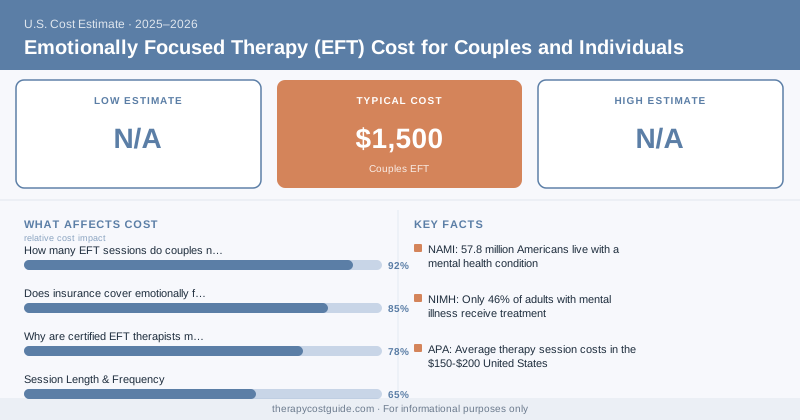
How many EFT sessions do couples need? Most couples complete EFT in 8 to 20 sessions. Severely distressed couples may need more. The defined range makes total cost easier to estimate than with open-ended couples counseling.
Does insurance cover emotionally focused therapy? Individual EFT is usually covered under standard psychotherapy benefits. Couples EFT is often not covered unless one partner has a qualifying diagnosis, since many insurers exclude relationship counseling.
Why are certified EFT therapists more expensive? ICEEFT certification requires extensive supervised training, so certified therapists often charge premium rates. The upside is that a well-trained EFT therapist may help you reach goals in fewer sessions.
{ if eq .Lang "zh" }Disclaimer: TherapyCostGuide provides cost information for educational purposes only. We are not a mental health provider and do not offer clinical advice or treatment. Cost ranges are based on national survey data and vary significantly by location, provider credentials, practice setting, and insurance plan. Always consult a licensed mental health professional for treatment decisions. If you are in crisis, call or text 988 (Suicide & Crisis Lifeline) or go to your nearest emergency room.